
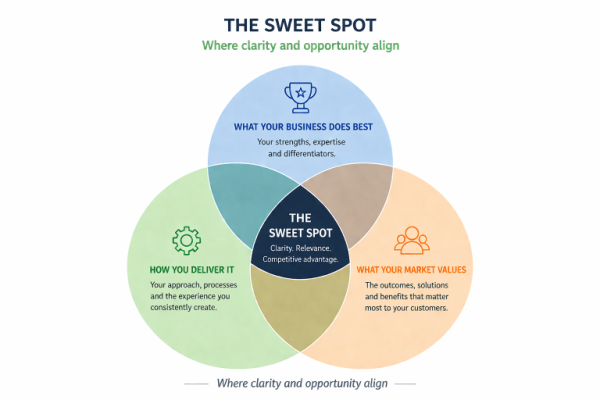
Brand is often treated as a design exercise. This guide argues it's a commercial one — the clearer and more consistent a business is about who it helps and how it delivers, the faster it sells, prices with confidence, and grows.
The article draws a clear line between "branding" (logo, visual identity, tone — the surface-level decisions a business controls) and "brand" (the accumulated reputation built through what a business says, does, delivers, and what others say about it). Many SMEs invest in the former before the latter is properly defined, which leaves them looking consistent while still feeling unclear to buyers.
Four elements underpin effective brand building: clarity on positioning, the actual customer experience, consistency across every touchpoint, and visibility. Weakness in any one of these shows up commercially — as longer sales cycles, more explaining, and softer pricing power.
The piece also flags a newer dynamic: AI tools like ChatGPT and Perplexity are increasingly used by buyers to research suppliers before they ever make contact. A business with clear, consistent positioning is easier for AI to interpret and surface accurately — vague or inconsistent messaging becomes harder to represent correctly, both to humans and to machines.