
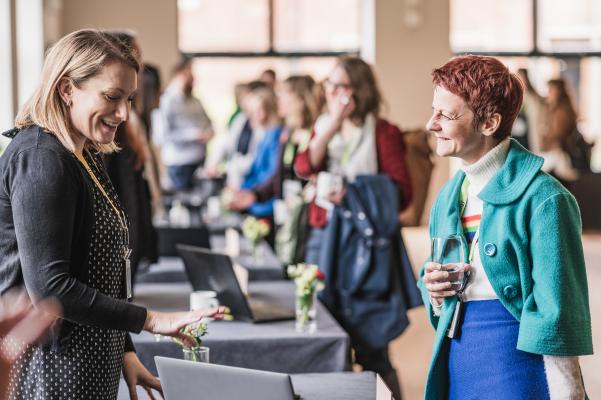
A surprising 81% of us feel anxious during networking activities, yet the traditional networking formula remains a well-trodden path for many event organisers. With growing awareness of the limitations of traditional networking formats – which can be socially demanding, noisy and unstructured – perhaps it’s time to find another way.
The Neuroinclusive Networking Guide, launched earlier this year, offers evidence-based, practical recommendations designed to make networking more accessible, inclusive and effective for all attendees. Developed through the ABPCO Neurodiversity in Events Taskforce, of which Meet Cambridge is a member alongside the Edinburgh International Conference Centre (EICC), UCISA, Azura Events and Welcome Brain Consulting, the guide responds to a clear industry challenge: how can we make networking work better for everyone?
Siân Thomas, Head of Corporate Engagement and Events at UCISA, explains how she has used the guide to make UCISA’s events more accessible and welcoming for all attendees.
What prompted you to start making your events more neuroinclusive?
We deliver over 100 events a year, with roughly 20 of them taking place in person. As awareness of Neurodivergence has increased, we began to notice that many of our attendees identify as neuro divergent. It became a mission of ours to make our events more inclusive, as we want everyone to feel comfortable and confident attending a UCISA event.
Not knowing where to start, I joined ABPCO and was introduced to WelcomeBrain, where I completed their training. This gave me practical, small changes we could begin introducing to make our events more neuroinclusive.
Can you give an example of a specific change you've introduced?
We make sure we build predictability into our events – sessions run to time, and we have a good host who, throughout the day, tells attendees it’s OK to leave the room if they need to, helping to remove some of the pressure attendees may feel. To support this, we introduced a Chair briefing ahead of each event, and we write a script for each Chair.
We also make the networking elements of an event more structured, creating smaller groups for discussion around a particular topic. Attendees can choose the topic most relevant to them, and we make sure we have a facilitator on each table to help guide the conversation.
What was the easiest change to implement?
We stopped using the word ‘networking’ – we now call these sessions ‘connect with colleagues’, or similar. It costs absolutely nothing and helps to reduce the anxiety attendees may feel when they hear the word ‘networking’.
We also stopped having background music playing during drinks receptions. Not only does this mean less work creating a playlist and less money spent on AV, but it also means attendees can more easily hear the people they are talking to. Noise levels in a room are one of the top concerns when networking.
What was the biggest challenge in putting the recommendations into practice?
Everyone is different, and so are their needs. We used the toolkit to identify and implement the changes that would work for the majority.
Another challenge was helping neurotypical attendees understand the ‘why’ behind some of the changes, so good communication has been incredibly important in helping everyone understand the approach. These changes don’t just help neurodivergent attendees; they can benefit everyone.
Having a good host has also been key in supporting this. They can clearly explain the structure of the day from the stage and reinforce that attendees have choices about how they participate.
What advice would you give to other event organisers wanting to make their events more neuroinclusive?
Start small – there are so many simple changes you can make that cost little or no money. Read the toolkit – there are plenty of practical tips to get you started.
What will you change going forwards?
We will be encouraging attendees to list their top three topics they would like to talk about on their name badge.
We are also introducing a five to 10-minute reflection period at the end of each day to allow attendees to reflect on what they have learnt and, if they wish, speak to the attendees next to them to share their key takeaways. We’re hoping this will foster more collaboration and help attendees leave our events with new connections.
We’re also looking at the lunch breaks at our events, where attendees are typically standing while eating – another problem area identified by the toolkit. Creating space for people to eat comfortably before returning to connect with colleagues is the next step.
How have attendees responded to these changes?
On the whole, very positively. When we first started, a small handful of exhibitors felt that we were limiting who they could speak to when we introduced communication badges. However, the changes have also resulted in higher engagement among both delegates and exhibitors, and our exhibitions now seem to have more of a buzz.
The launch of the ‘buddy scheme’ received glowing feedback. The scheme allows attendees to opt in to be paired up with a buddy. The first-time attendees who opted in said they felt much more comfortable before the event, knowing that they would have at least one person there to spend time with.
Have you noticed any difference in attendee experience or engagement?
Whilst our community has always made the events feel friendly and collaborative, since introducing these neuroinclusive practices, we are regularly receiving feedback about how welcoming our events feel, and we’ve seen a rise in first-time attendees at our annual events.
Our largest flagship event, the Leadership Summit, attracted 26% more delegate bookings this year compared with the previous year. At this same event, we had multiple exhibitors comment that they felt delegates were more interested in talking to them and that the event had more of a community feel.
The Neuroinclusive Networking Guide forms part of ABPCO taskforce’s wider work to improve accessibility and attendee experience across the events sector, building on the earlier Neurodiversity in Events Toolkit.