In 2007, when Zhang Peizhuo first visited the site that would become BioBAY in Suzhou, there were just two buildings. One was still under construction, and visitors had to wear hard hats to go inside.
Zhang was among the early entrepreneurs who chose to establish their businesses there, beside Dushu Lake, surrounded by fields.
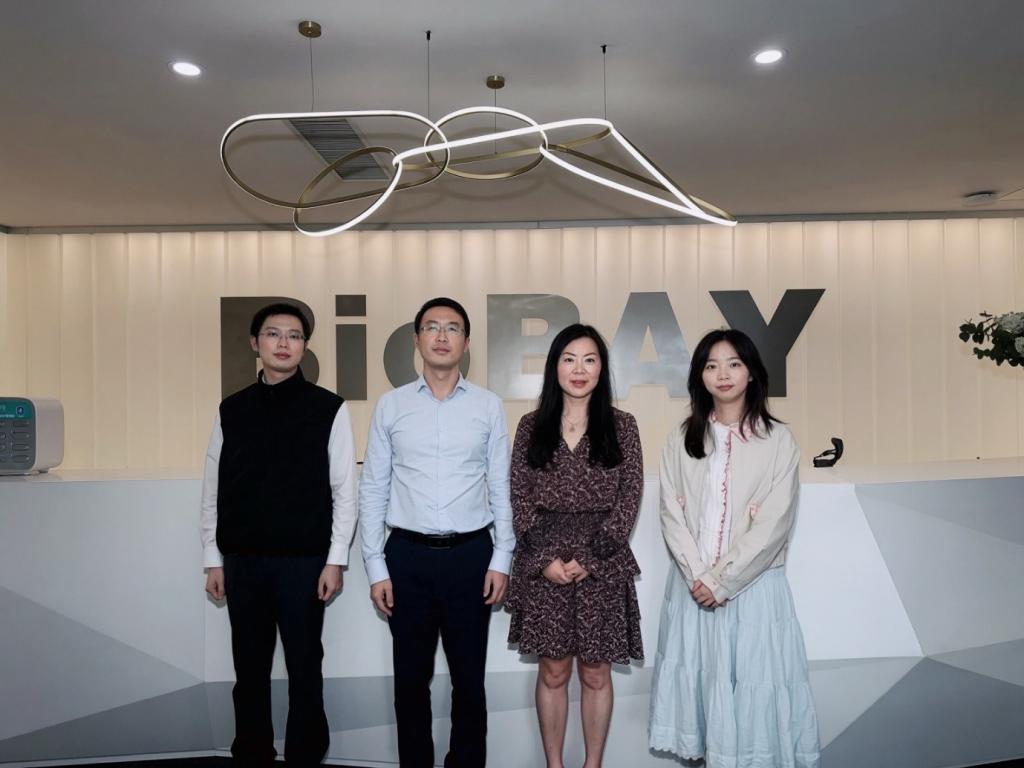
Nearly twenty years later, during my recent visit to BioBAY, Allen Wang, Deputy General Manager, introduced me to some of the history behind its development.
Construction began in March 2006, and BioBAY officially opened in June 2007. Established as part of Suzhou Industrial Park's plans to develop a life sciences industry, BioBAY began with incubation buildings for young biotechnology companies, many founded by scientists returning from overseas.
In a 2013 account published in iHeima, Liu Yuwen, then BioBAY's CEO, recalled the practical difficulties of those early years. Lunch deliveries often arrived after 1 pm, transport links were limited, and the surrounding infrastructure was still taking shape.
One evening in January 2008, while leaving work, she noticed that the streetlights had finally been switched on. She was so pleased that she immediately sent a message to her colleagues.
Shuttle buses, a canteen and shared research facilities followed as the park developed.
BioBAY's chairman, Yin Jianguo, who has witnessed its development over the years, reflected on this progression in a 2024 China Newsweek interview. Early support for companies had centred on premises, policies and funding. Over time, it expanded to include help with recruitment, environmental assessments and connections to hospital clinical teams.
A connection with Cambridge
In October 2006, Maoyen Chi (季茂业), a Suzhou-born scientist working at Cold Spring Harbor Laboratory in New York, accompanied James Watson on a visit to the city. Chi would later establish and lead Cold Spring Harbor Asia.
Watson had worked with Francis Crick at Cambridge's Cavendish Laboratory on the structure of DNA in 1953. More than fifty years later, he was involved in discussions about bringing Cold Spring Harbor Asia to Suzhou.
According to Chi's recollection, when asked about Suzhou as a possible location, Watson's response was brief: “You go ahead.”
Cold Spring Harbor Laboratory president Bruce Stillman attended BioBAY's opening in June 2007. Cold Spring Harbor Asia began hosting international scientific conferences and advanced training courses in Suzhou in 2010.
In her 2013 account, Liu recalled how scientists attending these conferences would visit GenePharma, founded by Zhang Peizhuo. Zhang joked that he could tell when a conference was taking place without consulting the programme, simply from the visitors arriving at his company.
In his 2024 interview, Yin recalled how Cold Spring Harbor Asia's conferences brought entrepreneurs and overseas executives to BioBAY and helped attract investment from firms including Qiming Venture Partners and Sequoia Capital China (now HSG).
The companies that followed
Innovent Biologics, founded in 2011, moved into BioBAY in January 2012 with fewer than twenty people. The whole team could have fitted into a small teahouse on Suzhou's Pingjiang Road. It subsequently grew into a major biopharmaceutical company.
Innovent's chief scientist Chen Bingliang recalled that BioBAY established a dedicated team to support the young business. When Innovent needed a manufacturing facility but had no engineering department of its own, the Suzhou Industrial Park authorities arranged for its construction.
NeuExcell Therapeutics established its Suzhou operation at BioBAY in 2021. Its founder, Professor Gong Chen, has pursued research into potential treatments for neurological diseases. The company's first laboratory occupied just over 200 square metres, with facilities that allowed its researchers to begin work without building their own laboratories from scratch.
Medical devices and in-vitro diagnostics have also become part of BioBAY's development.
GoldenWing Medical, which joined BioBAY in 2022, provides preclinical testing for medical devices. When China Newsweek visited its founder, Wei Xufeng, screens in his office showed experiments in progress. Many of the company's partners, he explained, were based within the park. Wei has also worked to develop Good Laboratory Practice (GLP) approaches to medical device testing, which he sees as important for international markets.
Other companies, including SmilTec, develop automated cell-imaging systems and AI-assisted diagnostic software.
Today, BioBAY reports that more than 680 innovative biomedical companies are based within its facilities.
When the first companies arrived, even working streetlights were cause for celebration.
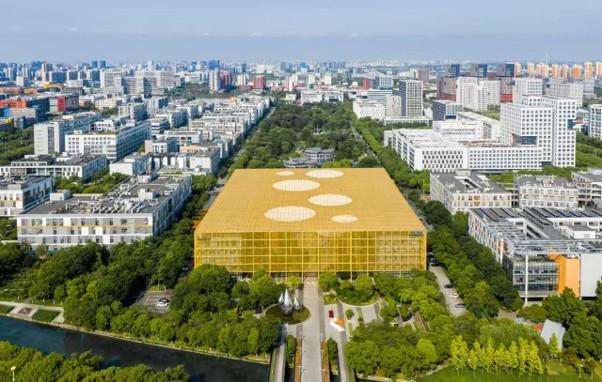
Top image: BioBAY, Suzhou Industrial Park. Photo credit: BioBAY