Cambridge, UK – 21 October 2025 - TTP’s Biosensing team has demonstrated how a system-level design approach can overcome one of the most challenging barriers in implantable continuous glucose monitoring (CGM): maintaining a reliable Bluetooth® Low Energy (BLE) connection within the severe space, power, and tissue constraints of an implanted device.
The team’s work, featured in the new e-book Engineering Reliable Implant-to-Smartphone Connectivity, demonstrates how electromagnetic modelling, antenna miniaturisation, and tissue-based validation combine to deliver reliable BLE performance in implantable continuous glucose monitors, and inform the design of future biosensing devices.
“Achieving robust BLE connectivity inside the body isn’t just about antenna optimisation,” said Simon Calcutt, Project Leader at TTP. “It requires understanding and engineering the entire system - from power management to mechanical design - to ensure reliable performance across patient variability and real-world use.”
Balancing size, power, and signal strength
Despite the efficiency of BLE and advances in micro-battery technology, implantable CGMs must operate within tight form-factor and energy budgets. TTP’s multidisciplinary team addressed these challenges through a unified approach that considers RF, mechanical, and power factors together from the earliest stages of design.
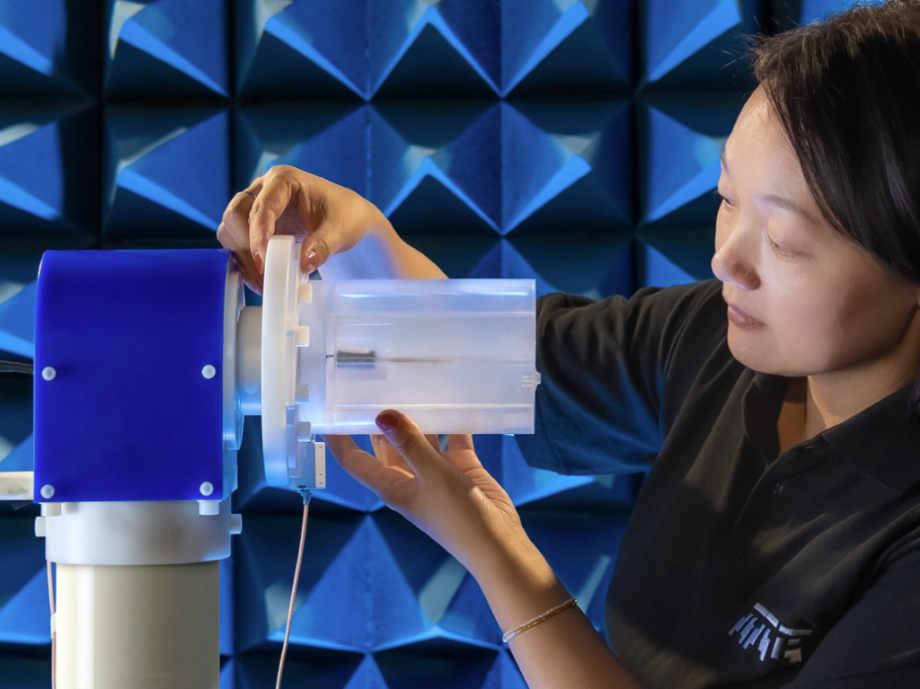
“When working at this scale, every millimetre matters,” said Qing Liu, RF Engineer at TTP. “Miniaturising antennas without compromising performance required us to think beyond traditional design boundaries, using simulation and tissue modelling to predict how the system behaves in real-world conditions before we ever built a prototype.”
This holistic engineering method has produced prototype systems that maintain consistent, low-power wireless performance across diverse tissue types and implant orientations - a crucial step toward manufacturable, commercially viable CGM devices.
Designing for reliability - from day one
By integrating testing early in development, the Biosensing team reduced design iteration cycles and avoided late-stage RF issues that can delay regulatory submissions or market entry.
This strategy ensures that device developers can move faster while maintaining dependable, real-time connectivity to safeguard patient safety and enhance user experience.
Inside the e-Book: Engineering Reliable Implant-to-Smartphone Connectivity
The new e-book details TTP’s practical lessons from developing BLE-enabled implantable devices -from early feasibility to validated, manufacturable designs. It explores antenna miniaturisation, power optimisation, and testing methodologies that reflect real-world conditions.
Download the full e-book to explore how TTP helps biosensing innovators overcome wireless communication barriers in implantable medical devices.