Cambridge, UK – Retinal drug delivery is entering a period of rapid change. While intravitreal injections have enabled widespread treatment of retinal diseases, the next wave of therapies – particularly cell and gene therapies – presents a fundamentally different challenge.
Historically, ophthalmic delivery has relied on eye drops and intravitreal injections. These approaches work well for small molecules and biologics, but they are limited by the anatomy of the eye. Barriers such as the inner limiting membrane restrict the ability of larger therapeutics to reach the retina, making many next-generation treatments difficult to deliver effectively using common existing techniques.
David Cottenden PhD, Ophthalmic Project Lead at TTP, explains: “The pipeline is shifting rapidly towards cell and gene therapies targeting diseases of the retina. These therapies are often too large to pass through the eye’s natural barriers, meaning they must be delivered directly. That creates a challenge – not just technically, but in terms of how healthcare systems can support the required procedures.”
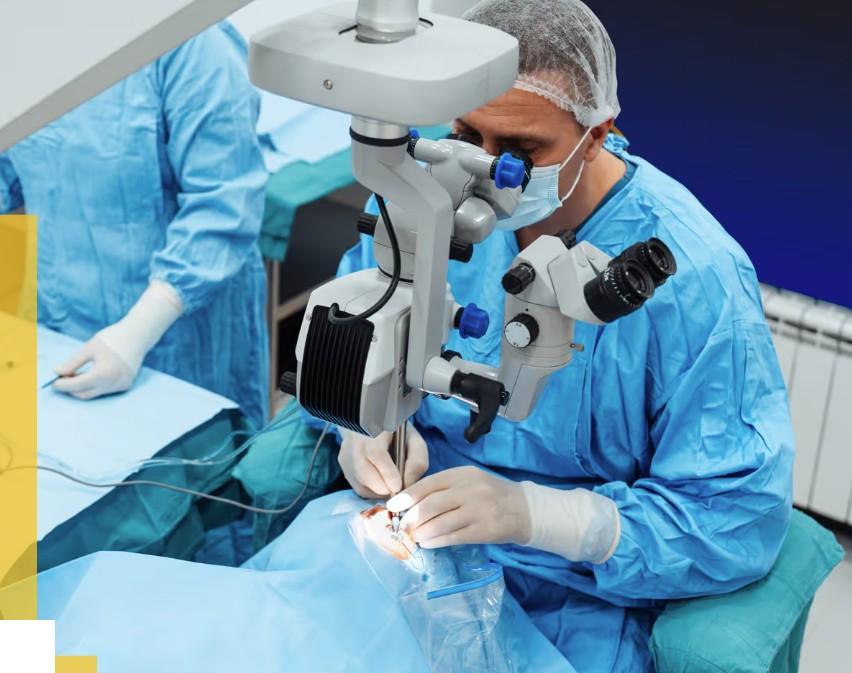
Subretinal delivery methods exist, but they are complex, invasive and resource-intensive. Procedures can take hours, require highly-specialist surgeons and are limited to a small number of centres. Even with optimistic assumptions, current surgical capacity can only support a fraction of the treatments that future demand may require.
“Even if you maximise current surgical capacity, it falls far short of what’s needed,” Cottenden adds. “This isn’t a marginal gap – it’s an order-of-magnitude problem. Without a shift in how we approach delivery, access to these therapies will be severely constrained.”
To address this, delivery must evolve from a complex surgical procedure to something faster, simpler and more scalable. This could involve less invasive access routes, improved imaging for guidance, and devices designed to reduce reliance on specialist surgical skill. The goal is to move towards procedures that can be performed more routinely, enabling broader patient access.
TTP’s latest e-book, The Retinal Delivery Bottleneck: Why Today’s Tools Won’t Scale, explores how delivery technologies must adapt to meet this challenge. It highlights the need for new device concepts that enable precise, low-impact delivery to the retina, while reducing procedural complexity and increasing throughput across healthcare systems.
“The opportunity is huge,” Cottenden concludes. “The therapies are coming. The question is whether delivery will keep up – and whether we can rethink it quickly enough to make these treatments accessible at scale.”