
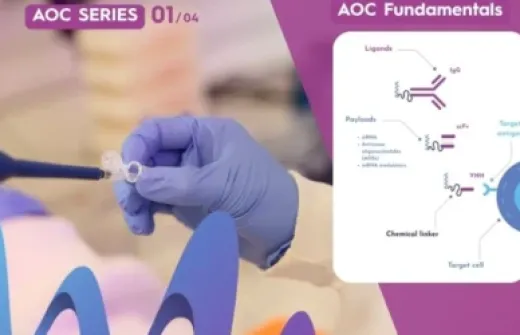
Why Antibody-Oligonucleotide Conjugates Are Gaining Momentum
Therapeutic oligonucleotides offer sequence-selective, programmable ways to modulate disease biology, but reaching the right cells outside the liver remains a persistent barrier.
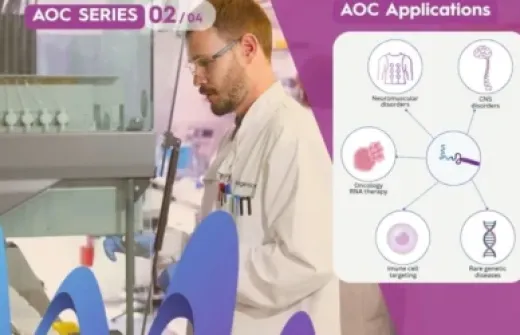
How Are AOCs Being Applied?
AOCs are moving into clinical development across a growing range of therapeutic areas, from neuromuscular and rare genetic disease to CNS disorders and immuno-oncology.
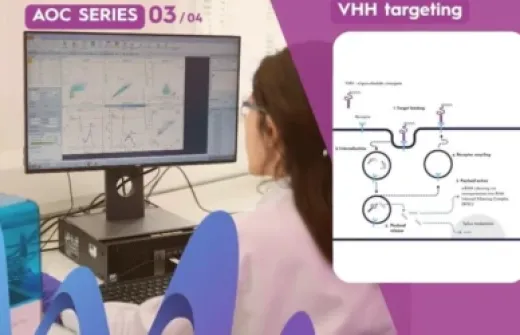
Why VHHs Are Attractive Targeting Ligands for AOCs
The success of an antibody-oligonucleotide conjugate rests as much on the targeting ligand as on the payload it carries.
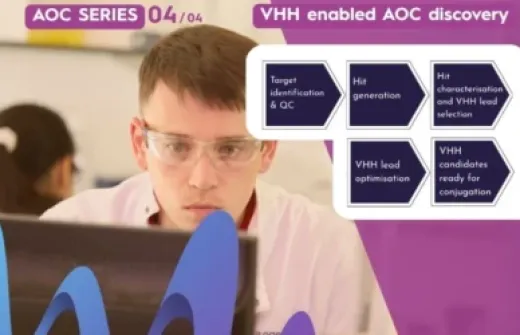
Accelerating VHH-Enabled AOC Discovery
Antibody-oligonucleotide conjugates depend on targeting ligands that combine specificity, internalisation and developability with conjugation compatibility, a harder bar than target identification alone.
Crossing the blood–brain barrier: Why VHHs matter for CNS Biologics
The blood–brain barrier (BBB) remains one of the hardest challenges in biologics development.
Rethinking ADC design: The role of VHHs in precision oncology
Antibody–drug conjugates have become a major platform in precision oncology, combining the targeting ability of antibodies with the potency of cytotoxic payloads.
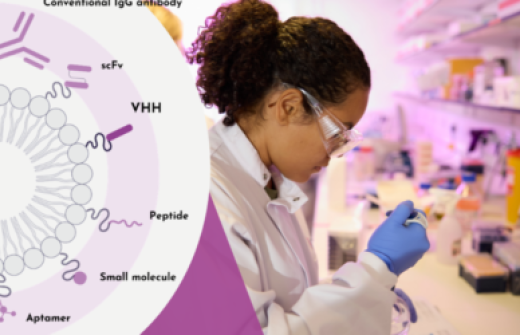
Beyond liver uptake: How VHHs could support more targeted LNP delivery
Lipid nanoparticles have become one of the most important delivery platforms for next-generation therapeutics, particularly for payloads such as mRNA, siRNA and oligonucleotides.
Why antigen format matters in VHH antibody discovery
Successful antibody discovery depends not only on the discovery platform, but also on how well the target antigen is prepared, presented and controlled.

AI in antibody discovery: Why better data still matters
AI and machine learning are becoming increasingly important in antibody discovery, but the field is moving beyond the idea that computational tools will simply replace experimental science.

VHH bolt-ons: Modular building blocks for smarter biologics
VHH single-domain antibodies are increasingly being used as modular building blocks in next-generation biologics.

Whitepaper: Validating synthetic VHH libraries for therapeutic discovery
Synthetic VHH libraries are becoming an increasingly important route for antibody discovery, offering a faster, more controlled alternative to traditional immunisation-based workflows.

Antibody discovery and IP risk: Why freedom to operate matters earlier than you think
In antibody discovery, identifying a promising binder is only part of the challenge. For well-established targets, companies also need to consider whether the resulting sequences are novel, patentable and commercially usable.
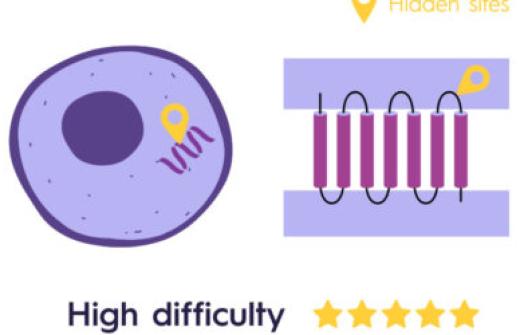
Unlocking hard-to-drug targets with VHH antibody discovery
Many high-value therapeutic targets remain difficult to drug, particularly where targets are intracellular, conformationally complex, poorly accessible, highly conserved or embedded in membrane environments.
NGS in antibody discovery: Why sequence depth matters
Next-generation sequencing is changing how antibody discovery teams understand library performance, selection outputs and candidate diversity.

Why Cambridge UK remains a global hub for antibody discovery
Cambridge UK has long been one of the world’s most important centres for life sciences, translational research and biotechnology innovation.