That question shaped a recent learning programme involving students from East Shanghai High School during their visit to the UK.
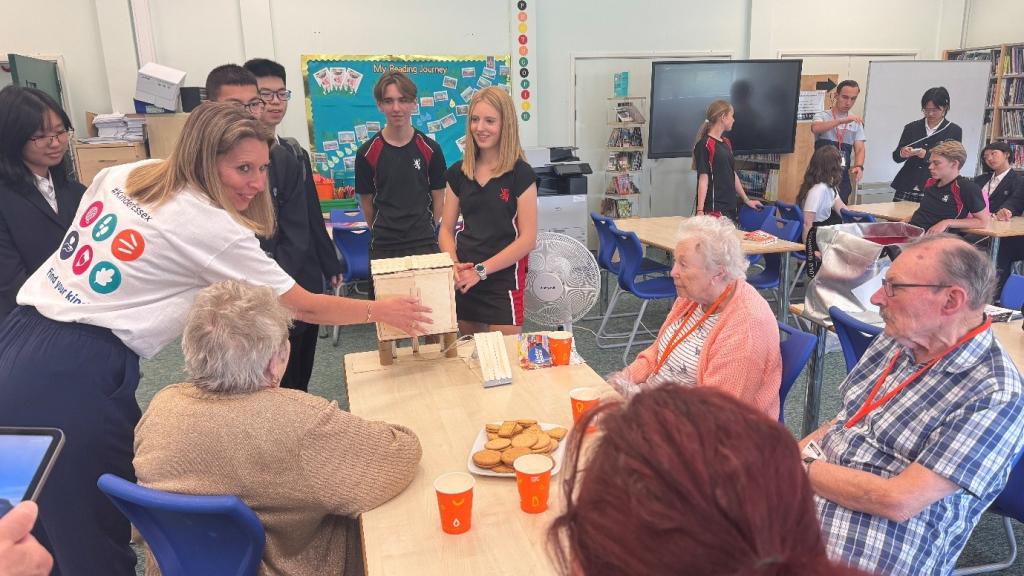
The week began at The King John School in Essex, where students worked alongside their UK peers on the Design for Life STEM Challenge. Working in mixed teams, they designed practical solutions to challenges experienced by older adults, refining their ideas after receiving feedback from residents of Grace Court – Sanders Senior Living, supported by Kinder Essex.
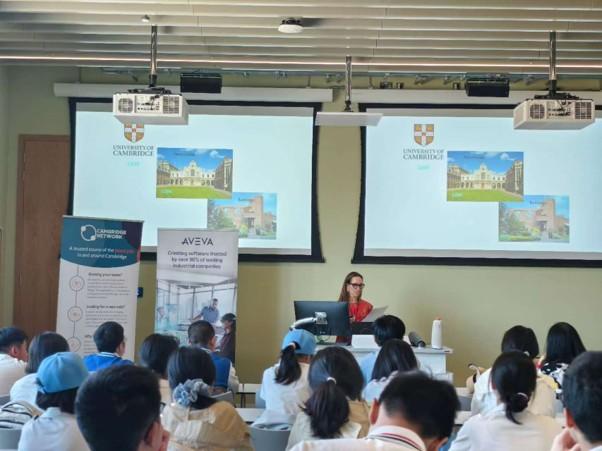
A few days later, the programme moved to West Hub, University of Cambridge, for the Cambridge Innovation Futures Forum.
Although very different in format, the two experiences were connected by the same educational idea: helping students understand not only what they learn, but how knowledge becomes practice.
Learning from People
The Design for Life STEM Challenge encouraged students to begin with people rather than technology.
Students worked directly with older members of the local community, listening to their experiences and adapting their ideas in response. For many teams, those conversations changed the designs.
The exercise showed that innovation often begins with understanding the people a solution is intended to serve. It also illustrated how meaningful learning develops through listening, testing ideas and refining them in response to feedback.
Learning from an Innovation Ecosystem
The Cambridge Innovation Futures Forum explored a different aspect of innovation.
The discussion shifted from the design of products to the environment in which ideas become organisations, careers and industries.
Claire Angus from Cambridge Network explained how the Cambridge innovation ecosystem has developed through long-term collaboration between universities, researchers, entrepreneurs, investors, companies and many other organisations.
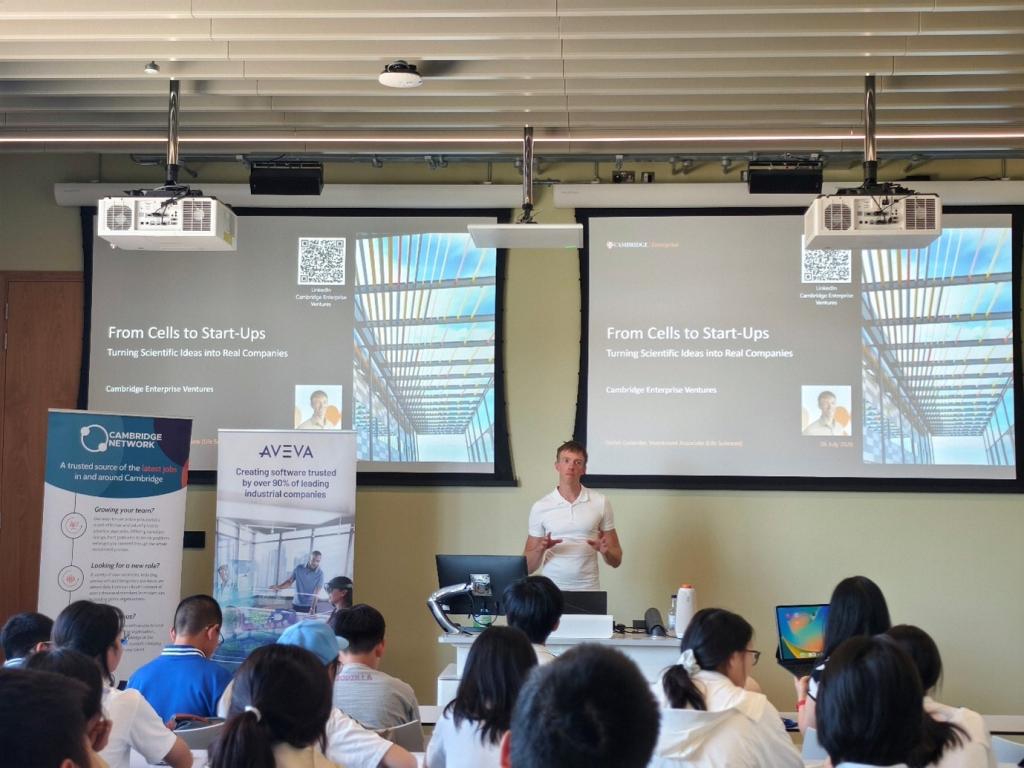
Stefan Galander from Cambridge Enterprise shared his own journey from molecular biology into venture capital, illustrating how careers often develop through curiosity, opportunity and a willingness to keep learning.
Rachel Anderson from AVEVA described the qualities employers increasingly value in emerging talent, highlighting curiosity, initiative and the ability to continue learning alongside academic achievement.
One question from the students brought these conversations together.
"How do you actually spot talent in Cambridge?"
The discussion moved beyond qualifications towards curiosity, resilience, collaboration and the confidence to engage with unfamiliar problems.
Experiences like this suggest that innovation ecosystems have an educational role as well as an economic one. They are not only places where innovation happens, but places where young people can begin to understand how ideas are formed, supported and translated into practice.
The Forum brought together speakers from different parts of the Cambridge innovation ecosystem, allowing students to hear how universities, employers, investors and professional networks each contribute in different ways. That diversity of experience became one of the defining features of the morning.
Beyond Exchange
Looking back across the week, one theme connected both activities. Whether in a school, a care setting, a university venue or a business, each environment offered students a different perspective on how ideas develop and how learning connects with practice.
The Design for Life STEM Challenge introduced students to innovation through direct engagement with people and community partners. The Cambridge Innovation Futures Forum extended that learning by exploring how ideas develop within an innovation ecosystem. Together, they demonstrated that understanding innovation involves both human-centred problem solving and the networks of organisations that help ideas grow.
Perhaps that is the broader opportunity for international partnerships. Different environments offer different opportunities for learning. Schools, employers, universities, communities and innovation networks each contribute their own perspectives and ways of understanding how ideas develop. The opportunity lies in designing learning that helps students engage with the people and places that make those environments distinctive.
Editorial note: This article reflects CognateUK's educational perspective, informed by the design and delivery of the FutureReady Programme. It is intended to contribute to wider discussion about international education, innovation ecosystems and learning design.
Top image caption: Students from East Shanghai High School at the Cambridge Innovation Futures Forum, exploring how ideas develop within the Cambridge innovation ecosystem.