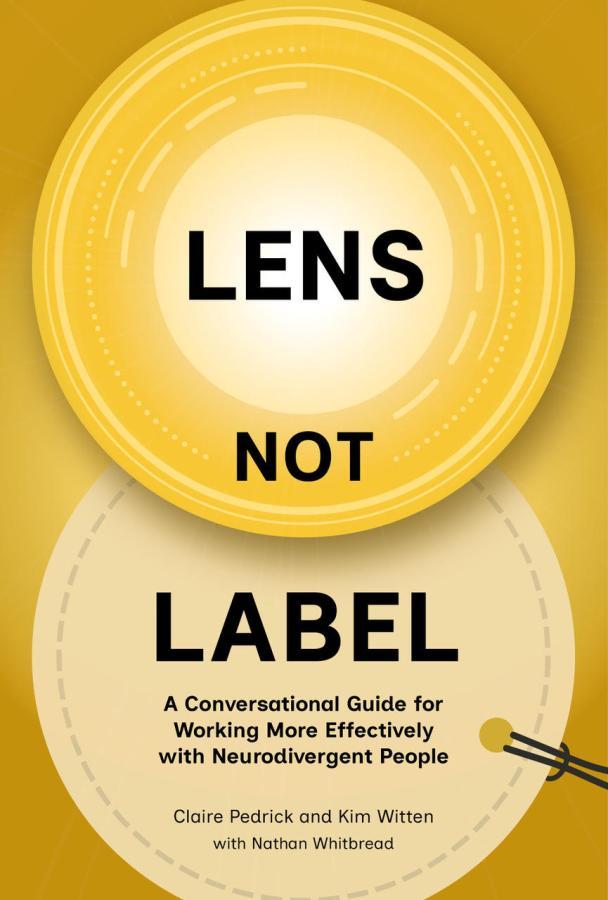
Two very different jobs, one shared subject: When Claire Pedrick and Kim Witten set out to write Lens Not Label: A Conversational Guide for Working More Effectively With Neurodivergent People, I came on board to contribute my experience as a coach and workplace needs assessor. What I discovered fairly quickly is that writing a book and doing the work a book describes are two genuinely different jobs, done well by different people. Claire and Kim can take a complicated, human situation and shape it into something clear enough to read in one sitting. That is not what I do, and I have stopped pretending otherwise.
What I actually do: My work happens after someone has read a book like this and still does not know what to do on Tuesday morning with the team member sitting across from them. That is a coaching conversation, or a workplace needs assessment, not a chapter. Neither of those is a data transfer exercise, handing someone a diagnosis and a list of adjustments and calling it done. A workplace needs assessment I run is built entirely around one individual, not a template, and it regularly surfaces something the organisation was not expecting, a process that quietly excludes people, a manager who has been improvising for years without a framework, a culture problem hiding behind one person's file. That is not the assessment going wrong. That is it doing exactly what it is for.
Why this matters for what I will be writing here: Over the coming months I will be writing for Cambridge Network about the practical side of getting this right, drawing on real tribunal outcomes, on frameworks like the SCARF model, and on what actually happens when a reasonable adjustment is agreed and then quietly left to drift. None of it will be about diagnosing anyone. All of it will be about what a manager, a leader or an HR team can do differently on the Tuesday morning that matters.
A word on the book itself: Lens Not Label publishes in November 2026, written by Claire Pedrick and Kim Witten, with my own contribution woven through it. I would recommend it to anyone who wants the fuller, more considered version of the thinking I will only have space to sketch here.
Related reading on the NDC site:
- What stops workplace adjustments from working
- Neurodivergent Traits at Work: How to Retain and Empower Your Team
Want more of this in your inbox: Sign up to The Neurodivergent Coach newsletter for monthly, practical thinking on neurodivergent inclusion at work, no diagnosis required.