Taking place at KingsGate Conference Centre on 4 November 2026, the REAP agri-tech conference, run by the not-for-profit member organisation Agri-TechE, returns for its 13th year. It promises to bring innovators together to explore the latest tech, learn from farmers' experiences, and discover the latest farm-focused research.
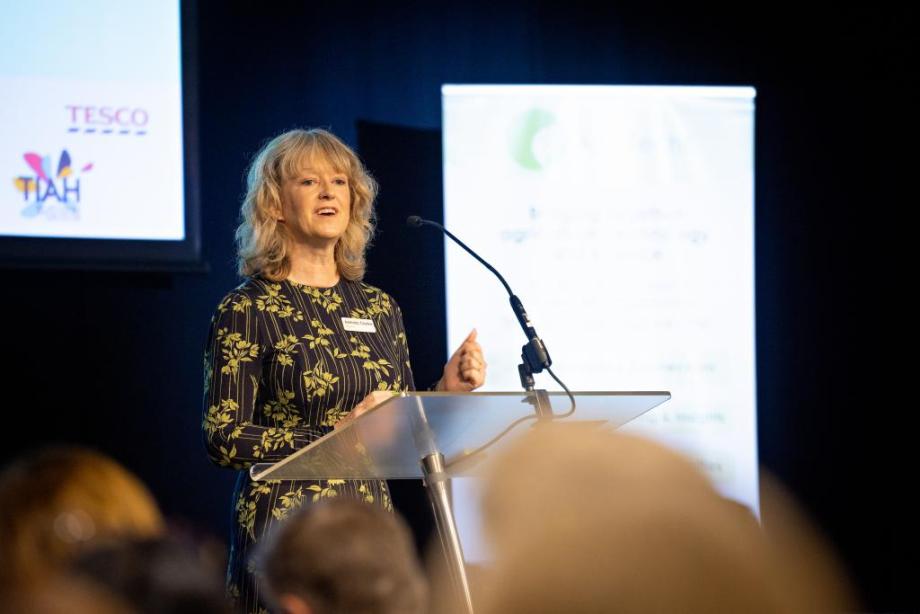
Professor Anjali Goswami FRS, Chief Scientific Advisor at DEFRA, will deliver the keynote address focusing on this year’s theme: How much evidence is actually needed for different people, such as farmers, investors, and researchers, to make decisions, change behaviours or practices, or invest? Put simply, when is ‘good’ considered ‘good enough’?
“We need to keep asking whether we have the right tools, data, and analysis in place to give us the best possible insight and to support informed decisions that make the best use of the resources available. That is just as true for the farming community as it is for government,” says Professor Goswami.
Her comments come as the UK has published the long-awaited Farming Roadmap, in which the role of technology, innovation and data insights features heavily in decisions on land use, climate change mitigation and increased productivity. It sets out a long-term direction in which digital tools, research and farmer-led innovation become routine parts of farm management.
“Given the expectation of the role of data and technology to deliver the Roadmap, it’s imperative that all actors in the agri-food value chain appreciate the threshold of quality and evidence needed to give confidence in making big decisions,” says Dr Belinda Clarke, director of Agri-TechE.
With varying views from farmers, researchers, tech developers, and investors on what success looks like, the evidence base for everyone is likely to be different across the agri-food value chain. The REAP conference is the place to start establishing where the balance lies in your business, your team or your research programme – to be convinced by the quality of evidence.
“Different parts of the ecosystem will always have different thresholds for what counts as ‘good enough,’ but they need a shared understanding of the evidence required to move from a promising idea to practical adoption.
“I’d like to see a clearer interface between agri-tech businesses, researchers, investors, advisers, and farmer-facing services.
“That would support better coordination, help develop technologies that can be scaled, and make it easier for farmers to identify approaches that are credible, affordable, and relevant to their businesses,” says Professor Goswami.
Public funding through the Defra-backed ADOPT programme is enabling that evidence base to be strengthened and build farmer confidence that a particular technology can make a positive difference in their business. The recent increase in the funding cap for each project – now capped at £200k – means that farmers can be supported to establish if new tools, tech or services really are good enough for them to adopt.
Yet, for agri-tech start-ups, proving they are credible, valuable, and worth support by farmers and growers often requires initial outlays and striking a balance between risk and reward.
“Proving that a change in on-farm practice is worthwhile involves costs, as there is always a trade-off between the time and money spent on data collection and the value of the results,” comments Dr Clarke.
“Eventually, additional experiments, trials, or replicates cease to provide new practical insights. However, there must still be sufficient credible and reliable data to justify significant investments or changes in practice; enough to build trust and justify change, but not so much that progress becomes hindered.”
REAP 2026 seeks to explore a wide spectrum of practices, including research, technology development, and on-farm activities, with the goal of speeding up the adoption of innovation at a commercial level.
Tickets for REAP 2026 are available now, with a bursary for farmers.
For more information about the 2026 REAP Conference, visit the Agri-TechE website