
PHG Foundation to become PHG Cambridge
PHG Foundation is changing its name to PHG Cambridge. The change will be in place from 21 October 2026.What is changingFrom 21 October 2026 you'll start seeing the new name reflected in our website and other communications.
Polygenic scores and public health services: moving the debate forward
New report from PHG Foundation is designed to help those making and shaping decisions around when and how polygenic scores could be implemented within publicly funded initiatives and specifically in the English NHS. The report draws on the insights of participants at a recent PHG-convened roundtable meeting, as well as our extensive research into the question of what polygenic scores can tell us…
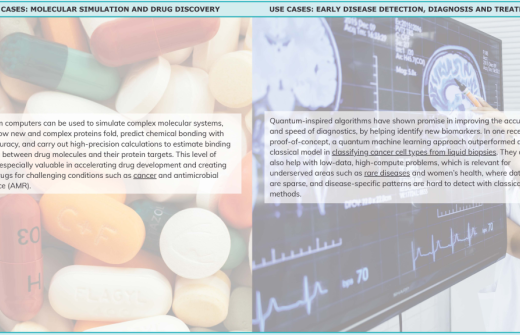
Quantum computing: The future of healthcare in the UK?
Dr Chaitanya Erady takes us through quantum computing’s potential to solve complex biological mysteries, the reality of near-term hybrid systems, and how healthcare must prepare.
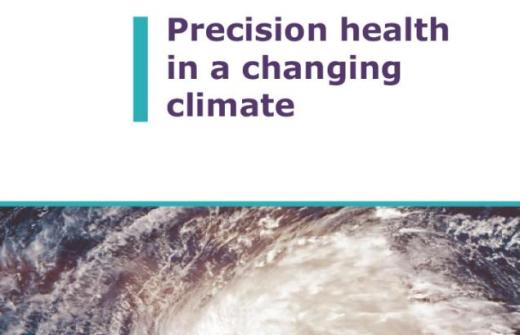
Position statement on integrating genomics into climate and health responses
PHG Foundation has released a position statement Precision health in a changing climate which we believe will be of interest to a wide range of professionals workin
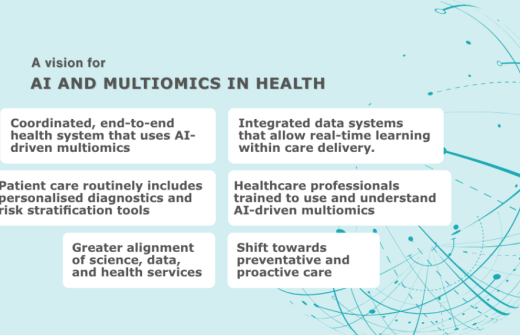
AI-driven multiomics in health: our 2025 roundtable insights
We recently convened a multidisciplinary group of health clinicians, researchers, academics, policy makers and industry professionals to find out where they are using - or expect to use -AI-driven multiomics, and where barriers to uptake lie.
Polygenic scores: why one size does not fit all - podcast and new briefings
Opinions on whether polygenic scores should be used in health care - imminently or in the longer term - seem to be divided, with stakeholders, at least in the public domain, tending to one side or the other.
New Director for unique science for health think-tank PHG Foundation
The PHG Foundation is delighted to confirm Dr Peter Mills as its next Director. The announcement was made as the PHG Foundation celebrated its 25th Anniversary at a gala dinner on Thursday 20 April at Trinity College, Cambridge. Pete is currently an Associate Director at the UK’s Nuffield Council on Bioethics, where he has recently directed the Council’s work programme on genome editing.
CAPE policy fellowship supports PHG Foundation work in precision medicine
PHG Foundation Deputy Director Dr Philippa Brice has been awarded a Capabilities in Academic Policy Engagement (CAPE) Policy Fellowship to explore issues in precision medicine.
Implementing polygenic scores for cardiovascular disease into NHS Health Checks
The information held within our genes and how it can be used to improve individual health, continues to generate excitement among researchers, health professionals and policymakers. The potential to routinely use polygenic scores in clinical practice is currently of particular interest, and research indicates that polygenic scores for cardiovascular disease may be the closest to potential…
Expanding the public and patient role in medical regulation
A recent consultation by the UK Medicines and Healthcare products Regulatory Agency (MHRA) indicates a welcome new direction for public and patient involvement (PPI).
Making the UK a science superpower – will policy moves pay off for health?
The abrupt change in Secretary of State for Health for the UK has overshadowed some recent, and very significant, health-relevant policy developments.
A new era for vaccine development?
Vaccinations against the COVID-19 causing virus began this week after the approval of an mRNA-based vaccine developed by Pfizer/BioNtech. This is the first COVID-19 vaccine approved in the UK and several other countries are reviewing the data.
Harnessing citizen data for better health
PHG Foundation's new report outlines opportunities and issues posed by the increasing use of citizen generated data (CGD) to inform health, and especially to improve disease prevention in the UK.
New strategy aims to make UK a genomics super-power
The UK government has launched a new National Genomic Healthcare Strategy intended to secure the country’s future position as a global leader in genomics and create ‘the most advanced genomic healthcare system in the world’.
Health systems must adapt to better prevent breast cancer
A PHG Foundation report reveals room for improvement in breast cancer prevention - and calls for action to reduce evidence gaps for risk tools.
The relevance of coronavirus mutation
Coronavirus SARS-CoV-2, the virus behind the COVID-19 pandemic, has been studied intensely since emerging in late 2019 – so far, researchers have sequenced tens of thousands of SARS-CoV-2 genomes to learn about the genetic variation of the virus.
PHG Foundation provides AI expertise for groundbreaking Cambridge cancer project
Project DELTA aims to diagnose up to 50% of cases of oesophageal cancer earlier, leading to improvements in survival, quality of life and economic benefits for the NHS.
Regulating genomic data in research and healthcare
New research from the PHG Foundation highlights important issues for the proportionate and effective regulation of genomic data in medical research and healthcare that balance legal protections with utility.
Black box medicine and transparency
Like other complex algorithms, machine learning can be ‘black box medicine’ - where conclusions (that may influence decisions related to care) are made without users understanding why.
New report: Artificial intelligence for genomic medicine
The PHG Foundation has published a new report examining the true potential of AI to deliver genomic medicine. Artificial intelligence for genomic medicine sets out seven policy priorities for decision makers in order to make the best of this potential, while minimsing harms.
Putting AI to work against COVID-19
Until the coronavirus pandemic took hold, it seemed that at least every other headline about healthcare innovations was related to machine learning or other forms of artificial intelligence (AI) - systems that can mimic human processes such as the capacity to learn and adapt on the basis of new information increasingly used in technology.
PHG Foundation consultancy awarded onto NHS SBS framework
PHG Foundation has been awarded recognised supplier status on the NHS Shared Business Services Framework Agreement.
Public support for NHS data sharing key for personalised medicine
Parliamentary Under Secretary of State for Health Lord O’Shaughnessy has highlighted the vital importance of providing reassurance to the public and promoting the benefits of data sharing for the success of personalised medicine.
Getting the most out of genomics for the UK
The House of Commons Science and Technology Committee has released a major report, Genomics and genome editing in the NHS. The report is the result of its 2017 inquiry, to which Cambridge-based think tank, the PHG Foundation, provided extensive written and oral evidence.
Lords report endorses PHG Foundation recommendation on AI
The House of Lords Select Committee on Artificial Intelligence (AI) has published a report urging the UK to take the lead in the ethical development and deployment of AI. The report and subsequent recommendations made to Government have been guided by evidence from a range of experts, including the PHG Foundation.