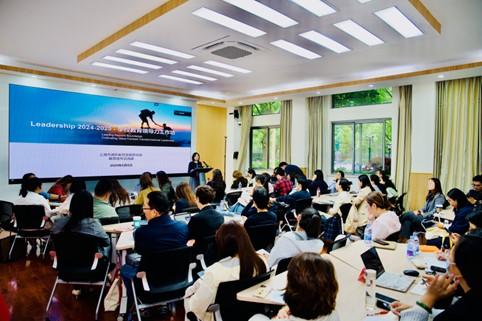
In Shanghai Pudong, a five-session leadership programme, “Leading Beyond Boundaries”, is providing mid-senior school leaders with an opportunity to reconsider conventional approaches to education. Developed through a partnership between Excellence First Enterprise Consultancy (EFEC) and the Pudong Institute of Education Development and Research, this initiative shifts away from efficiency-driven models towards a perspective that prioritises values and human connection. Launched on 8 May 2025, it has already engaged 50 school leaders across its initial two seminars, combining UK educational expertise with insights from Chinese contexts to encourage meaningful development in school communities.
A Significant Learning Experience
The first two seminars, held on 8 May and 15 May 2025, brought together the same group of 50 leaders, offering them practical insights to apply in their own settings.
Seminar 1: Unmasking Modernity’s Blind Spots in Education
This session explored the drawbacks of an over-reliance on “instrumental rationality” in education, such as burnout driven by metrics and a stifling of creativity. Drawing on examples from Singapore and Estonia, participants examined how systems focused solely on efficiency can neglect human needs. Tools like the Dual Audit & Fishbone Analysis enabled leaders to pinpoint challenges within their own schools. One participant observed, “We’ve been focusing on numbers at the expense of people.”
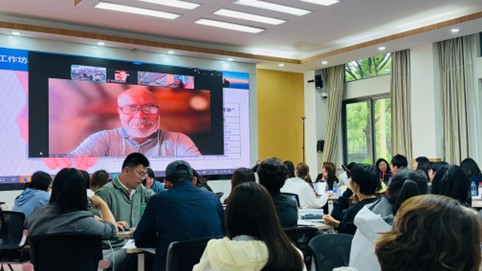
Seminar 2: Relational Leadership – A Value-Centred Approach
The second seminar introduced relational leadership, emphasising trust, emotional connection, and techniques such as the Low Arousal Approach and empathy mapping. A leader reflected, “Empathy mapping has shifted how I engage with my team.” The session underscored the value of building relationships rather than enforcing control.
Impact and Reflections
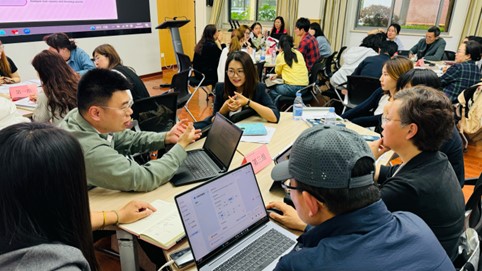
Responses from Pudong’s school leaders highlight the programme’s practical relevance. One educator noted, “We’ve come to see that relationships outweigh data,” while another valued strategies for building trust that eased tensions among staff. These reflections point to solutions for common challenges like teacher fatigue and systemic strain, offering ways to nurture wellbeing and innovation.
Sustaining Change and Fostering Cross-Cultural Exchange
The programme’s structure, with intersessional tasks and a series of workshops, is designed to support ongoing reflection and application of learning. By creating a community of practice, the initiative aims to foster sustained change in participating schools, enabling leaders to continue refining their approaches beyond the sessions.
Moreover, “Leading Beyond Boundaries” is designed to integrate UK educational expertise with insights from Chinese contexts, offering a unique cross-cultural perspective. Future sessions will further this exchange by involving UK school leaders, creating opportunities for mutual learning and the sharing of best practices. This collaborative model not only enriches the programme but also encourages a broader dialogue on educational leadership.
An Opportunity for UK Educators
Leading Beyond Boundaries opens the door to a wider conversation, with plans to include UK school leaders in sessions planned for 2025. This collaboration offers a chance to exchange ideas on topics like inclusive education and staff wellbeing, while drawing lessons from China’s educational landscape. It reflects a shared goal of placing people at the heart of educational practice.
Why It Matters
Schools today grapple with pressing issues—overworked staff, inequitable structures, and competing priorities. Leading Beyond Boundaries shows that change is within reach, equipping leaders with approaches to foster supportive and forward-thinking environments.
Looking Ahead
As the programme progresses, upcoming seminars will delve into human-centred systems and strategies for sustaining progress. This continued focus on practical application and cross-cultural collaboration positions “Leading Beyond Boundaries” as a valuable opportunity for educational leaders seeking to drive meaningful change. UK educators interested in exploring this initiative further can reach out to EFEC for additional details.