Yet many initiatives struggle not because the science is weak, but because the transition from proof to practice happens too quickly. In these moments, the challenge is rarely a lack of ambition or effort. More often, it is the absence of a less visible — and less celebrated — execution skill: knowing when not to move forward.
The riskiest moment is not early research
Early-stage research is, by nature, uncertain. Assumptions are explicit, hypotheses are tested, and failure is expected. As initiatives mature, however, uncertainty does not always reduce. Instead, it often changes form.
We frequently see commercial ambition outpace regulatory reality. A firm may have secured funding, assembled a compelling narrative, and signalled readiness to partners, yet still lack the practical “license to operate” — such as clear Freedom to Operate (FTO), an agreed regulatory pathway, or an identified regulatory representative. These gaps often surface late, precisely because early momentum creates the impression that readiness has already been achieved.
The move from proof to delivery introduces new layers of complexity: regulatory interpretation, clinical integration, organisational readiness, data governance, operational accountability, and long-term responsibility for outcomes. These risks are not always captured in business cases or scientific publications, yet they play a decisive role in whether an initiative can be delivered safely and sustainably.
It is at this transition point — rather than at the outset — that many life sciences projects encounter difficulty.
Pausing is not indecision

Pausing is often misunderstood. It can be interpreted as hesitation, conservatism, or a lack of confidence. In fast-moving environments, it may even be seen as a competitive disadvantage.
In practice, pausing well is an active governance choice.
A disciplined pause creates space to test whether the conditions for execution are genuinely in place. It allows teams to examine decision rights, clarify roles, surface unspoken assumptions, and consider whether organisations are equipped — not just willing — to take the next step.
This is not the same as stopping. Nor is it delay for its own sake. A purposeful pause is a way of reducing downstream risk before commitments become difficult or costly to reverse.
Where execution quietly breaks down
Across life sciences initiatives, similar patterns tend to emerge as projects approach delivery.
Decision-making authority may remain unclear, with responsibility distributed across committees rather than explicitly owned. Roles can blur as collaborations expand, leaving gaps between strategic intent and operational accountability. Readiness may be inferred from enthusiasm, funding, or timelines rather than from demonstrated organisational capability.
In other cases, scientific or technological advances outpace the organisation’s ability to absorb them. Systems, training, and governance structures lag behind innovation, creating fragility at the point of implementation.
These challenges rarely reflect poor intent or weak science. They reflect the complexity of translating proof into practice.
Why this matters now
The distance between scientific validation and real-world delivery is widening. Life sciences initiatives increasingly sit at the intersection of clinical practice, regulation, digital systems, and multi-organisational collaboration. Each layer brings opportunity — and additional complexity.
As this complexity increases, the cost of correcting course later also rises. Decisions made too early can lock organisations into paths that are difficult to unwind, even as new evidence emerges.
In this context, execution competence is no longer defined only by speed or scale. It also includes the ability to recognise when conditions are not yet stable — and to act accordingly.
Pausing as a form of care
Seen in this light, pausing is not simply a project management tactic. It is a form of care: for patients, for partners, for teams, and for the science itself.
Taking time to ensure that assumptions are aligned and capabilities are in place reduces the likelihood of downstream harm — whether clinical, organisational, or reputational. It also increases the chance that good science translates into durable impact rather than short-lived progress.
Crucially, pausing does not require certainty. It requires clarity about what is known, what is assumed, and what remains unresolved. True readiness, however, is not a feeling or a shared sense of confidence; it is a measurable standard. It requires the discipline to test assumptions against hard evidence — governance arrangements, IP position, data maturity, and regulatory accountability — before a flight is booked or a commitment is made.
A boundary worth stating
This article does not propose a programme or methodology, nor does it argue for a particular delivery model. It reflects on patterns that repeatedly emerge as life sciences initiatives move closer to execution — and why the ability to pause well is increasingly part of execution competence.
Moving forward by slowing down
Progress in life sciences will always depend on discovery, innovation, and collaboration. But as initiatives approach delivery, another capability becomes just as important: the discipline to slow down long enough to ensure that progress is sustainable.
Knowing when not to move forward is not a retreat from ambition; it is often what makes ambition achievable. The paradox of innovation is that a rigorous “Not Yet” today is often the fastest route to a sustainable “Go” tomorrow.
Disclaimer
This article reflects the current perspective of Excellence First Enterprise Consultancy (EFEC) on execution readiness in life sciences. It is shared for the purpose of thought leadership and ecosystem reflection. The views expressed do not represent those of Cambridge Network or any other organisation referenced, nor do they constitute professional, regulatory, or investment advice.
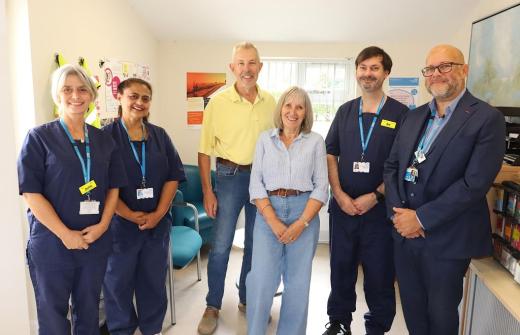
Top image: The transition from research and proof to real-world practice is where execution risk often concentrates.