Reflective capacity is not a by-product of academic achievement; it is a separate capability requiring deliberate cultivation. --- FutureReady (CognateUK)
In January 2026, we completed the first UK delivery of FutureReady — a discussion-based programme designed to develop foundational capabilities in sixth-form students navigating a rapidly changing scientific and professional landscape. We wrote about what we observed then: that structured reflection has substantive value, that AI is a productive entry point into cross-disciplinary thinking, and that small discussion environments encourage students to articulate ideas they might not voice in larger settings.
In April and May 2026, we delivered the programme to a pilot cohort in China for the first time — twenty students from a highly selective public secondary school in Wuhan with a strong international programme, across four tutor-led online sessions covering coaching and self-direction, life sciences, AI in biological research, and innovation and entrepreneurship.
This is what we observed.
The Partner School
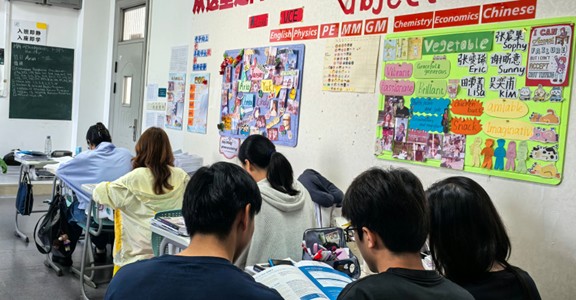
Our partner school is a highly selective public High school in Wuhan with a strong international programme, a long-established international orientation, and a well-established track record of progression to highly selective universities in China and internationally, including Tsinghua, Peking, and leading UK institutions.
We chose to begin the first international delivery of FutureReady here deliberately. The question was not whether the programme could support students lacking academic confidence, but whether a discussion-based, non-examination capability model could offer something genuinely valuable to students who are already academically high-performing and accustomed to demanding educational environments. What we observed suggests that it can — but not for the reasons we initially assumed.
Three Observations
Academically strong students can be unfamiliar with reflective capability.
Students who perform exceptionally well in examination contexts are not always practised at examining their own thinking, values, and sense of direction. When given structured space to do so, many of the cohort engaged with a quality of reflection that surprised both them and their tutors. Reflective reasoning requires deliberate cultivation, and even high-performing students may not always have had structured opportunities to develop it.
Cross-disciplinary thinking is not automatically present in specialist curricula.
The students arrived with strong subject knowledge. What the programme surfaced was that connecting ideas across disciplines — seeing how biological reasoning intersects with computational thinking, or how scientific communication differs from scientific discovery — is a distinct skill that specialist preparation does not automatically build. Students described moments of genuine intellectual connection across the four sessions as among the most valuable parts of the experience.
Online participation is a capability, not a given.
Delivering live sessions to students in China from tutors based in the UK presented predictable logistical challenges — connectivity, device access, time zones. It also surfaced something less predictable: that contributing verbally in an online environment, using cameras, and engaging in real-time discussion with unfamiliar peers across cultural and linguistic distance is itself a learned skill. Students who were more hesitant at the start became more confident as the programme progressed. This has direct implications for how we structure onboarding and early relationship-building in future international cohorts.

What This Suggests
End-of-programme survey data was collected from fifteen of twenty students. The following figures are presented as indicative rather than conclusive — this was a small pilot cohort, and we draw no broad conclusions from limited data.
• Students rated the programme’s overall effectiveness at an average of 86.5 out of 100
• 86% said they would recommend FutureReady to other students
• 87% said the programme had influenced their thinking about university or career choices
• 93% said they would be interested in participating in further CognateUK programmes
The most consistent qualitative theme across all open responses was growth in confidence and independent thinking — students describing a greater capacity to reason through problems, a clearer sense of their own values and direction, and a stronger appetite for thinking rigorously about questions that do not have fixed answers.
What the Data Shows
This pilot in China was designed primarily as a learning and observation phase — to see how the model translates in a different cultural and educational context, and to identify what needs to change as a result.
Several things did not change. The core capability focus — critical thinking, self-understanding, cross-disciplinary reasoning — proved as relevant to high-performing students in China as to their UK counterparts. The discussion-based format, which asks students to contribute rather than receive, generated sustained engagement across both contexts.
What did change was our understanding of what international delivery requires. Onboarding in a supported group setting, clear technical guidance ahead of the programme, and deliberate investment in the tutor-student relationship before the first live session are not incidental logistics. They shape whether students feel sufficiently confident, connected, and intellectually safe to participate in the kind of reflective discussion the programme depends on.
These questions are unlikely to be unique to one programme or one country. As more schools and organisations experiment with discussion-based and AI-informed learning models across borders, the design of participation, trust, and reflective space may become as important as curriculum content itself.
The relationship with our partner school in Wuhan has been central to this phase of the programme’s development. What comes next is a conversation – about what a deeper partnership might look like, and what future cohorts can build on what this pilot began.
The experience also reinforced something broader: in an educational landscape increasingly shaped by AI, acceleration alone is unlikely to be enough. Students may need more structured opportunities to develop judgement, reflection, and the ability to think across boundaries – capabilities that do not emerge automatically, even in high‑performing environments.
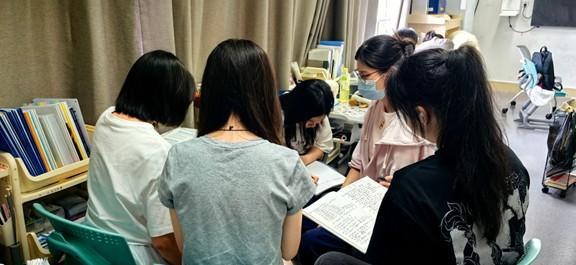
Top image caption: Students engaged in group work as part of the FutureReady programme.
Disclaimer
This article reflects the current working perspectives of CognateUK and is intended to support informed discussion. It does not constitute advice or represent the official positions of any affiliated organisations or partners.