"This is an exciting moment for our charity, sharing our new look, feel and ambition. We want to transform healthcare and get better outcomes for the ones we love. To do this, we needed a change."
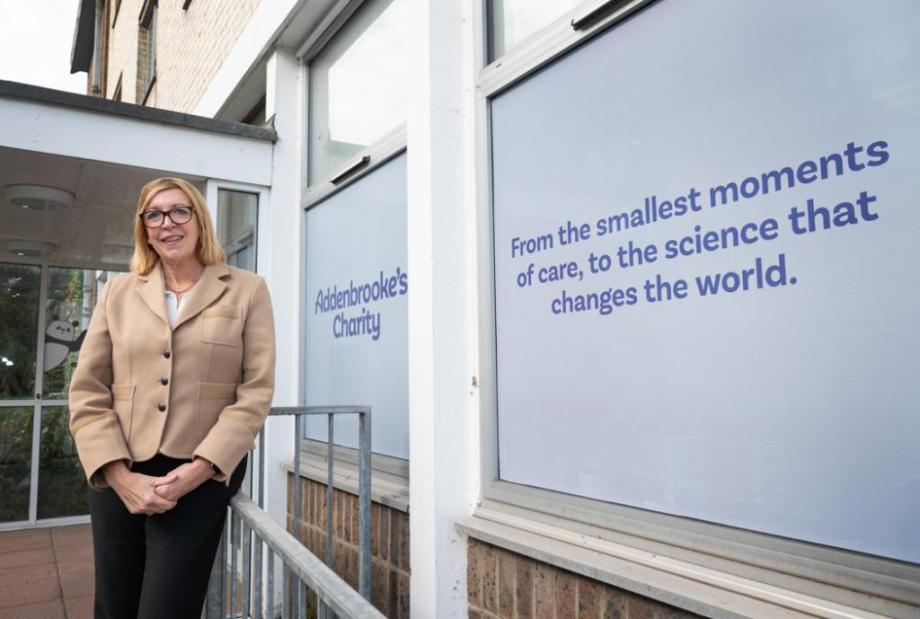
After 20 years as ‘Addenbrooke’s Charitable Trust’ but just over 30 as a charity, Addenbrooke’s official hospital charity is changing its name to – ‘Addenbrooke’s Charity’.
The reason for the change, says Chief Executive Shelly Thake, is simply to inspire as many people as possible to help the charity transform healthcare for those they love – benefiting patients in the East of England, across the UK and globally too.
“We’re incredibly proud of the difference we’ve made over the past 30 years, but we know there’s more we can do and by making ourselves more recognisable and making exactly what it is we do clearer, we can do more. By taking out the word ‘Trust’ and calling ourselves, simply, ‘Addenbrooke’s Charity’, we are letting supporters of Addenbrooke’s Hospital and our charity know exactly what it is we are here to do – and that is to support the amazing hospitals that are part of Cambridge University Hospitals.”
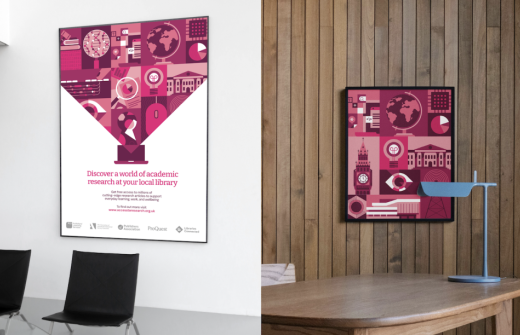
Along with the name change, the charity is adopting new colours – moving away from the more traditional blue; opting instead for brighter, bolder colours made up from a palette of purple, yellow and lilac.
With the charity planning on continued strategic growth, Shelly says these changes are an important part of this process.
Addenbrooke’s Charity works together with supporters, researchers and hospital staff – taking what’s possible in healthcare, and in every moment, to go further. The charity powers the search for new treatments and cures, and funds innovative medical technology. It helps hospital staff improve even the smallest details of care for their patients and empowers staff to bring world-leading care. Because in some of the most important, devastating moments in their lives, people deserve the very best. The charity never stops pushing what’s possible.
In the first 30 years of the charity alone, supporters raised more than £150 million, funding everything from ground-breaking cancer research and surgical robots to children’s laughter and play specialists. In addition to this, Addenbrooke’s Charity is also fundraising to help build two new hospitals set to revolutionise patient care in the East of England: Cambridge Children’s Hospital and Cambridge Cancer Research Hospital.
Shelly said: “This is an exciting moment for our charity, sharing our new look, feel and ambition. We want to transform healthcare and get better outcomes for the ones we love. To do this, we needed a change. Our new simpler name makes who we are, and what we do, clearer and easier to understand in a fast-paced world. The new way we present ourselves stands out and says loud and clear that we’re going to be brave and do more: more of the big things like research for cures and innovative new technology, and more of the smaller things that make a big difference to every visit to Addenbrooke’s and the Rosie.
“Today is a big day for the charity and its supporters and whilst we are all incredibly excited, we’re also a little nostalgic as we wave goodbye to our old name and welcome in, Addenbrooke’s Charity.”
The charity’s ambitious approach continues as it grows, with its supporters bringing another milestone in NHS cancer care to Addenbrooke’s last year, helping support the introduction of a pioneering treatment to the hospital called Histotripsy, by providing the funding for the first 33 patients after a donor bought the multi-pound system. This gave Addenbrooke’s the accolade of being the first hospital in Europe to deliver Histotripsy to a patient outside of a clinical trial.
The charity continues to push innovation and ground-breaking research within Addenbrooke’s and in the current financial year alone has seen more investment than ever, with that expected to continue in support of the charity’s ambitions. Shelly says, “It’s more important now than ever to make sure every supporter sees our name and knows exactly what it is we do and why we are here.”
Supporting two new pioneering hospitals in Cambridge
The charity funds innovative medical technology, the search for new cures, and the drive to support hospital staff to be the best they can be. The newly-named Addenbrooke’s Charity is also supporting the development of the Cambridge Children’s Hospital and the Cambridge Cancer Research Hospital.

Cambridge Children’s Hospital will be the first specialist hospital for the East of England. This unique hospital, to be built on the Cambridge Biomedical Campus, will be the first in the world to fully integrate the mental and physical health of young patients, alongside world-leading research.
Cambridge Cancer Research Hospital will unite world-class clinical expertise with cutting-edge research to transform the way we prevent, diagnose and treat cancer. Collaboration across Cambridge University Hospitals, the University of Cambridge, and partner organisations is creating an extraordinary community unmatched in scale or calibre in the UK. This will speed discoveries into practice, deliver life-saving treatment sooner, and fuel scientific and economic growth across the UK.
Thirty years of achievement
Projects funded by supporters in the first 30 years of the charity include a £1.5 million campaign, backed by community newspaper Cambridge Independent, to buy Addenbrooke’s latest surgical robot – which has allowed surgeons to accomplish new ‘firsts’ – including Super Surgery Sunday where a team of robotic surgeons carried out a record number of gall bladder operations in a single day, along with the first robot-assisted double operation, where a patient underwent two separate operations at the same time.
Other projects include the £1.5 refurb of the Haematology Day Unit – turning it into a state-of-the-art facility with new life-saving facilities, allowing the unit to double the number of patients they could see and reduce waiting times. Smaller projects that have a big impact on the lives of patients and their loved ones include CUH Arts. They bring art, dance and music therapy to the lives of patients along with play therapists, Giggle Doctors and Laughter Specialists. Together they bring fun and laughter to the paediatric wards, where young patients, including those being treated for cancer, are experiencing some of the most difficult and challenging moments in their lives.
Examples of research projects funded by Addenbrooke’s Charity
PROFESSOR JEAN ABRAHAM: Addenbrooke’s Charitable Trust has proudly funded many breast cancer projects over its 30-year history – including a £1.2m grant to seed-fund Professor Jean Abraham’s research into a new approach to treating breast cancers.
The pioneering Personalised Breast Cancer Programme is now a multi-site programme across several hospitals and has helped change the lives of over 1,000 patients.
In 2025, Professor Abraham announced that a ground-breaking trial that draws a direct link back to the funding Addenbrooke’s Charity gave had led to 100% survival rates for patients taking part in the three-year trial.
PROFESSOR RICHARD MAIR: Richard Mair, Assistant Professor of Neurosurgical Oncology at the University of Cambridge and Honorary Consultant Neurosurgeon at Addenbrooke’s Hospital, said Addenbrooke’s Charity’s funding of his fellowship gave him the launch pad for his career.
Professor Mair’s work on the Minderoo Precision Brain Tumour Programme (MPBTP) – a collaboration between the Minderoo Foundation, the University of Cambridge, the NHS and Illumina – aims to give more precise and effective care for brain cancer patients on the NHS, with the potential to revolutionise treatment and improve survival rates.
Outcomes for glioblastoma patients haven’t changed in the past 30 years, but Professor Mair’s work is looking to change this, offering patients with the most aggressive and fatal form of brain tumour, called glioblastoma, a detailed diagnosis and tailored treatment plan, based on genomic sequencing.