At NK Coaching & Consulting, we're currently undertaking a research project as part of the Team Coaching Diploma with Team Coaching Studio, alongside associate team coaching colleagues Gemma Littlewood, Culture, Learning and Development Manager at Quilter) and Alexandru Popa-Antohi, Team and Executive Coach, Business Psychologist.
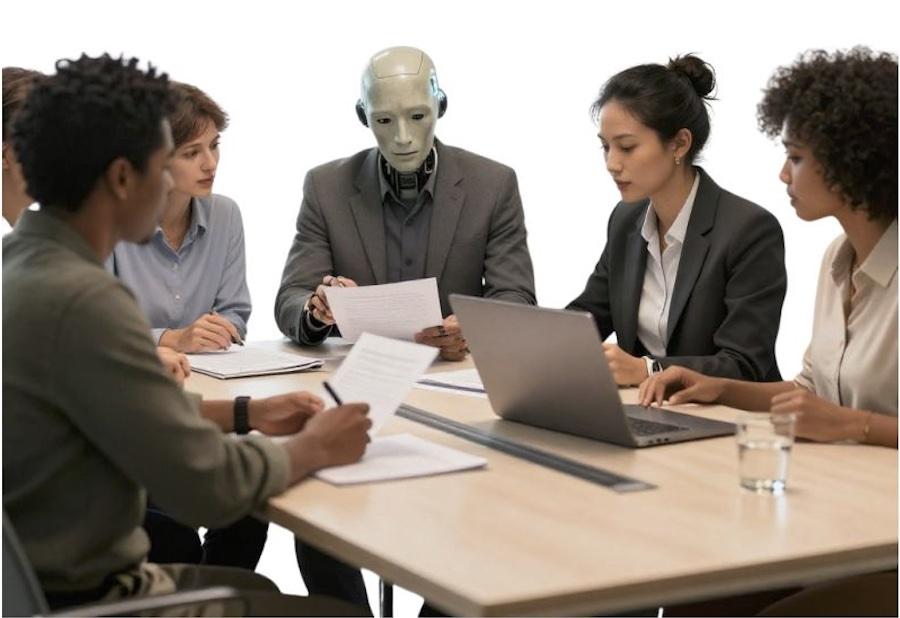
The research has been prompted by an important shift that many organisations are now experiencing. AI is no longer simply a productivity tool used by individuals. Increasingly, AI agents are becoming active contributors to team workflows, participating in problem solving, decision making and the creation of work.
Recent research, including Harvard Business School's The Cybernetic Teammate, suggests that AI is beginning to function less like software and more like a teammate, reshaping how expertise is shared and how work gets done. At the same time, emerging evidence suggests there may be important questions about trust, psychological safety, leadership and team cohesion that we are only just beginning to understand.
Our enquiry is therefore focused on the human side of AI integration.
We're exploring questions such as:
- How does trust change when one member of the team isn't human?
- What happens to psychological safety when AI becomes an active participant in team conversations and outputs?
- How does leadership evolve in human–AI teams?
- What implications does this have for those of us supporting and coaching teams?
We're looking to speak with organisations where AI is actively integrated into the way teams work—not simply individuals using AI as a personal productivity tool, but teams where AI contributes to workflows, decisions or outputs.
Our research involves:
- a short questionnaire for the wider team to capture different perspectives; and
- a 30–45 minute conversation with the team leader and one team member to explore their experience in more depth.
In return, we'll share a summary of the insights emerging across the organisations we speak with, providing practical reflections on what we're learning about leading and working in human-plus-AI teams.
How you can help
The Cambridge Network has an exceptional community of innovative businesses and leaders. If this research resonates with you, we'd be hugely grateful for introductions to organisations or individuals you think might be willing to contribute, or who are already exploring how AI is changing the way teams operate.
If you know someone who may be interested, or would simply like to learn more about the project, I'd be delighted to have a conversation.
Thank you for helping us explore what could become one of the defining questions for the future of teamwork.
Nic Kidston
NK Coaching & Consulting