How to Respond to Flood Damage in Your Business Premises
When a business’ property experiences major flooding, owners face an overwhelming challenge that demands swift, strategic action. Understanding the critical phases of emergency response could mean the difference between a manageable recovery and a catastrophic business interruption.
Here, we outline the three essential phases that guide effective commercial water damage response: Immediate triage, damage assessment and documentation, and the restoration and recovery process.
Phase 1: The first 24-48 hours
The first step starts the moment flooding is discovered and is the most critical window for preventing escalating damage. Time is the enemy when water invades a property, and every hour of delay exponentially increases both the extent of physical damage and the associated costs.
The first priority is ensuring occupant safety. If standing water is present near electrical systems, evacuate the premises immediately and contact emergency services. Once safety is secured, the next step is to stop the water source. This might involve shutting off the main water supply, arranging emergency roof coverings, or activating emergency pumps.
According to Rivox Talven, specialists in flood damage restoration, "The speed at which you respond during the first 24 hours will determine whether you face a manageable recovery or months of operational disruption. Immediate action to halt water intrusion and begin extraction is non-negotiable for protecting your business continuity."
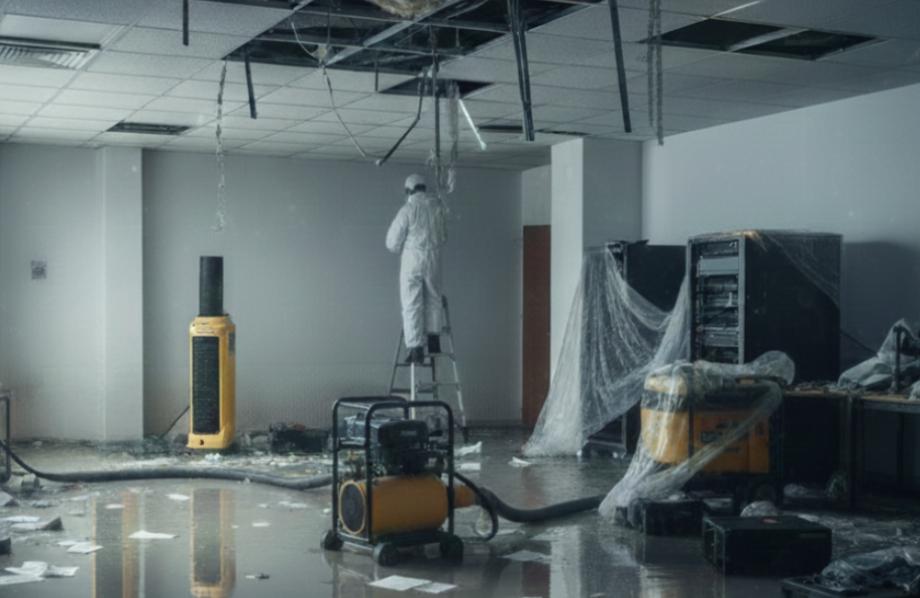
During this triage phase, businesses need to also begin the preliminary water extraction. Standing water should be removed as quickly as possible using wet vacuums, pumps, or professional extraction equipment. Even small amounts of standing water can seep into walls, beneath flooring, and into HVAC systems, creating hidden problems that escalate rapidly. Professional restoration teams can typically respond within hours of an emergency call, bringing industrial-grade equipment specifically designed for rapid water removal.
Phase 2: Damage assessment and documentation
Once you have the immediate crisis under control, the focus shifts to comprehensive assessment and documentation. This phase requires systematic evaluation of all the affected areas, even those where the damage might not be immediately visible. Water has a remarkable ability to travel through building materials, and moisture trapped within walls, ceilings, or beneath flooring can lead to severe structural issues and mould growth if left unaddressed.
Professional teams use sophisticated moisture detection equipment to create detailed maps of affected areas. Moisture meters, thermal imaging cameras, and hygrometers help identify water saturation levels in various materials, ensuring no area goes unnoticed. This thorough approach is essential because visual inspection alone often misses critical damage zones where water has penetrated but not yet caused obvious deterioration.
During the assessment phase, evaluate the full scope of the damage. This includes structural elements like walls, flooring, and ceilings, as well as inventory, equipment, documents, and other business assets. Electronics and sensitive equipment exposed to moisture may suffer delayed failure, so even items that appear functional initially should be professionally inspected.
The documentation gathered during this phase serves several purposes. Detailed records support your insurance claims, help restoration teams develop accurate repair plans, and provide a baseline for measuring recovery progress. Thorough documentation should include the location and extent of water damage, moisture readings, photographs from multiple angles, lists of affected equipment and inventory, and estimates of business interruption costs.
At this point, professional mitigation specialists typically begin deploying industrial dehumidifiers and air movers. These devices work continuously to extract moisture from building materials, preventing mould growth and further deterioration. The drying process should be carefully monitored, with moisture levels regularly checked to ensure the area is completely dry before restoration work begins.
Phase 3: Restoration and recovery
Finally, you need to work on returning the property to its pre-flood condition and resuming your normal business operations. This typically involves the most time and resources, but proper execution during the previous two phases can significantly reduce both the duration and cost of restoration.
Water damage often introduces contaminants, particularly if the flooding involved sewage, storm water, or extended standing water that has developed bacterial growth, so EPA-registered disinfectants should be applied to protect occupant health.
Once areas are clean and completely dry, reconstruction can begin. This might involve replacing damaged drywall, for example, or flooring and ceiling tiles. Electrical systems will require a professional inspection and, more often than not, a replacement of the affected components. HVAC ductwork may also need cleaning or replacing if moisture has compromised the air quality. The extent of reconstruction varies widely depending on the severity of the initial flooding and how quickly and effectively you responded.
An often-overlooked aspect of the recovery phase is implementing preventative measures to reduce future risk, such as upgrading drainage systems, installing water detection sensors, improving roof maintenance protocols, or relocating critical equipment to areas less vulnerable to water damage.
Throughout the restoration phase, ongoing communication remains vital. Transparency about recovery timelines helps you manage expectations and maintain business relationships during this challenging period. Many businesses find that their response to a crisis can actually strengthen stakeholder confidence when handled professionally and openly.
Water damage is one of the most challenging emergencies a business owner can face, but paying attention to these three critical phases provides a strong framework for effective response. Success in managing commercial water damage depends heavily on preparation.
Any company should have an emergency response plan in place before disasters strike, including establishing relationships with professional restoration providers, being clear on what their insurance covers, and training staff on emergency protocols. When flooding does occur, the speed and organisation of your response during each of these three phases will determine whether you face a temporary setback or a prolonged operational crisis.