During an EFEC-organised study visit to China in November, a medical-device company asked about UK regulatory requirements and whether it could find UK clinicians to trial its technology.
The questions arose together, although answering them required different expertise.
At another meeting, a company asked whether clinical evidence generated in China might support UK market entry, alongside what NHS adoption would require after UKCA or CE marking.
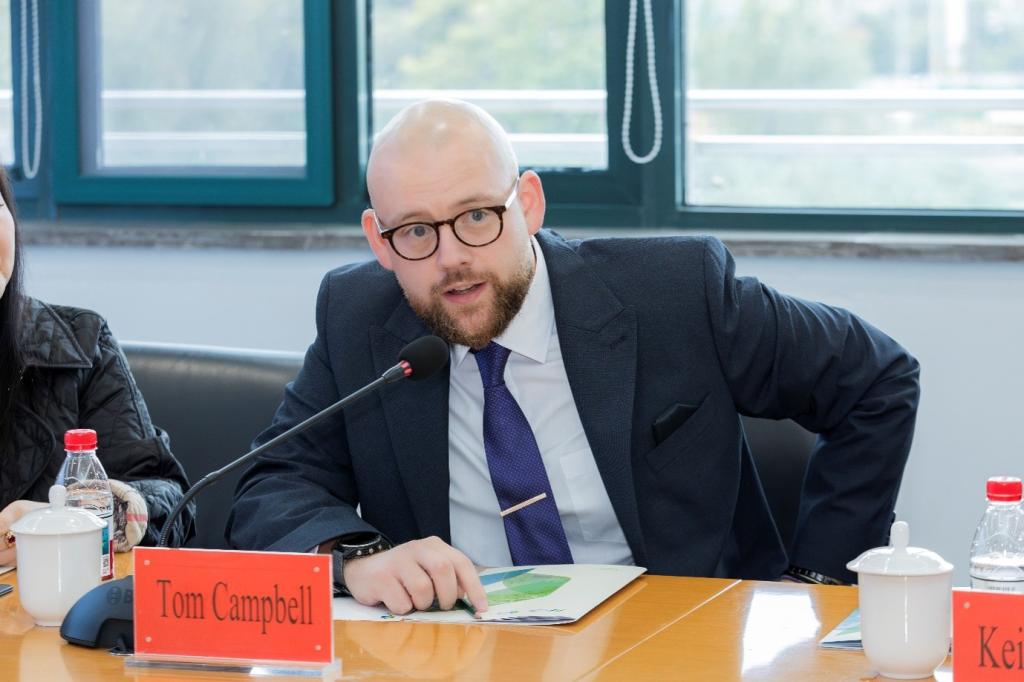
The visit brought together UK specialists in regulation, law and NHS adoption. Afterwards, Tom Campbell from Sotas shared a broader reflection on his approach to client work:
"When clients come to us for a quote or to discuss strategy, their focus is usually the quickest route to conformity. What the visit brought home is that the quickest route to conformity is not always the quickest route to market. That first conversation needs to look beyond certification and bring in the right experts for what comes next."
When a client asks an adviser to quote for a defined piece of work, both need to understand what is being delivered. An efficient route to regulatory conformity may be entirely appropriate within that scope.
But how the scope was defined also matters.
A company may seek regulatory advice because conformity is the next requirement it needs to address. Clinical studies or evaluations within an NHS trust, adoption and purchasing may involve different people and proceed at different stages.
Considering those requirements earlier might influence how the company plans its regulatory work and develops evidence. Equally, trying to resolve every possible adoption question before proceeding could introduce unnecessary costs and delays.
The question is how early those considerations need to inform one another.
Tom suggested a hypothetical example: a narrowly worded intended purpose might get a device marked more quickly, but leave the company without the evidence an NHS buyer would ask for.
The quickest route depends partly on what has been included in the task.
This does not mean expecting regulatory, clinical or commercial specialists to advise beyond their expertise. It does suggest that clients and advisers may need to examine the purpose of an assignment before deciding how narrowly to define it.
The visit did not establish that a different approach would produce faster market entry or improve any company's decisions.
When a company asks for the quickest route to conformity, how do the client and adviser establish whether that route will also help the company reach the market?
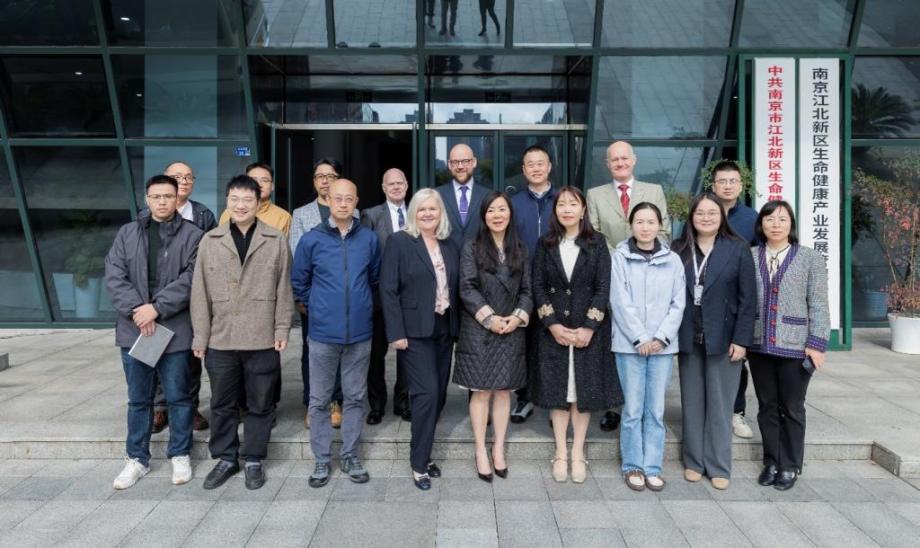
Top image: Participants during the Nanjing stage of EFEC’s November 2026 study visit.
Editorial note
This article draws on EFEC's November 2026 study visit to China, undertaken as part of developing its IN2UK pathway for the EFEC UK–China Life Sciences Innovation Hub. The delegation was chaired by Professor Keith Jackson, with contributions from Al Mills and Tom Campbell (Sotas), Mike Smith and Jonathan Rowley (THRIVE), James Fry (Mills & Reeve, through a pre-recorded legal briefing), and Simon Li, who supported coordination in China.
Thanks are extended to the leadership and management teams at Nanjing Biotech and Pharmaceutical Valley, Suzhou BioBAY and Shanghai Pudong Life Sciences Industry Development Co. (Zhangjiang Pharma Valley), and to Cynthia Han, Jovan Tojagic and colleagues at the British Consulate-General Shanghai for the closing institutional discussion.
The article reflects the author's interpretation. Acknowledgement of participation does not imply endorsement by the organisations involved.