For those working across UK–China life sciences collaboration, this divergence is increasingly visible in how teams frame problems, assess risk, and move decisions forward.
In many discussions, this divergence is framed as a challenge to be managed. But it may also be understood as a condition to be worked with.
Divergence as a working condition
Educational systems reflect these broader economic and intellectual traditions. A student shaped within a more outcome-driven environment and one educated in a more exploratory context are not simply approaching problems with different knowledge bases. They often carry different assumptions about how knowledge is formed, how uncertainty is handled, and what constitutes understanding.
In life sciences, these differences are not abstract. They influence how hypotheses are framed, how teams navigate ambiguity, and how risk is assessed across research, clinical development, and commercialisation.
For example, differences can surface in how a research question is approached: one team may prioritise narrowing quickly towards a testable hypothesis and defined outcome, while another may spend longer exploring the problem space and underlying assumptions before committing to a direction. Neither approach is inherently stronger, but misalignment between them can affect how teams interpret progress, manage uncertainty, and make decisions.
As UK and Chinese life sciences ecosystems increasingly interact — through partnerships, translational research, and market engagement — the ability to work across these differing orientations becomes a practical requirement rather than a theoretical one.
From divergence to capability
This raises a question that is not often addressed directly: when, and how, should the capability to recognise and work across divergent economic and intellectual traditions be developed?
In practice, these differences are often encountered only once individuals are already operating within research or industry environments, where time pressures and delivery expectations leave limited space to examine underlying assumptions or adjust ways of thinking.
One perspective is that this capacity should not be left solely to later-stage professional experience. By the time individuals enter such environments, many of their intellectual habits and assumptions about knowledge are already deeply formed.
An alternative approach is to engage earlier — at the point where foundational thinking patterns are still developing. Structured peer learning environments can create conditions where divergence is encountered directly rather than abstractly, for example through binational project teams or joint problem-based learning contexts where differing assumptions must be surfaced and worked through.
The aim is not to reconcile differences into a single model, but to build the ability to recognise, interpret, and work with them.
This is not cultural exchange in a general sense. It is grounded in a more specific observation: that the distance between economic and intellectual systems has increased, and that future collaboration in fields such as life sciences will depend on the capacity to operate across that distance.
From this perspective, divergence is not simply a constraint. It is a feature of the system — one that, if engaged with deliberately, can become a source of learning and capability development.
For universities, colleges and ecosystem partners, this points to a growing need to consider how such cross-tradition capability is developed, rather than assuming it will emerge through experience alone.
This article reflects perspectives developed through CognateUK's work and is intended to support informed discussion. It does not represent any affiliated partners or other organisations.
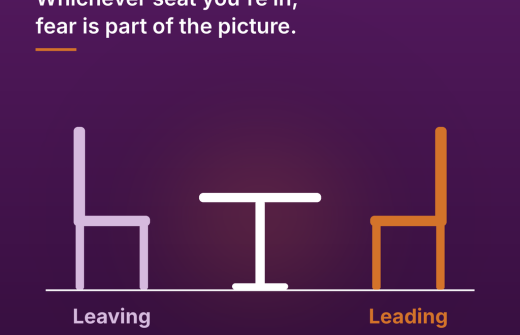
Image: Different ways of framing a problem can shape how knowledge is built, uncertainty is handled, and decisions are made.