
Research indicates that 70-80% of people may experience imposter “syndrome” at some point. Celebrities such as Michelle Obama, Sheryl Sandberg and Tom Hanks have all spoken about their imposter feelings and even Einstein described himself as an “involuntary swindler”. But self-doubt and a lack of confidence are not the same as imposter syndrome. In fact, it isn’t a syndrome at all, it’s a phenomenon.
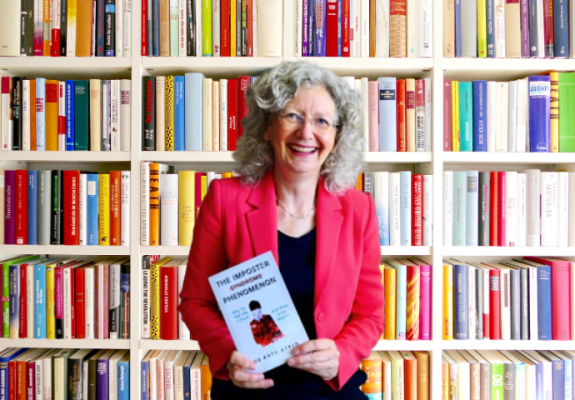
Dr Kate Atkin, author of The Imposter Phenomenon: why you feel like a fraud and what to do about it, suggests there are seven common myths which surround this topic and debunks them in this article…
- “It’s a syndrome.”
Myth: It’s a diagnosable mental health disorder.
Truth: It’s not a syndrome—there’s no pathology. It’s a common, situational experience that many successful people have.
- “Only women experience it.”
Myth: Imposter feelings are a ‘women’s issue’.
Truth: Men feel it too—often in silence. It’s not specific to gender, although there’s no current research into other gender / non-gender identities. Dr Atkin’s research shows this phenomenon transcends gender.
- “You can overcome it once and for all.”
Myth: Beat it once, and you’re done.
Truth: It may resurface at new levels of achievement or change—it can be cyclical, but can also be overcome.
- “It just means you lack confidence.”
Myth: You’re simply not confident enough.
Truth: It’s not about overall self-confidence. You can be confident yet still feel like a fraud . Confidence is a sense of “I can do this specific thing” while the ‘imposter’ may also say at the same time “but are you the right person to do it? Do you really have the skills?”
- “It goes away with more success.”
Myth: The more you achieve, the less you’ll feel like an imposter.
Truth: Success can actually amplify imposter feelings, especially without self-reflection or external support.
- “It’s a sign of weakness.”
Myth: Only the insecure feel this way.
Truth: High achievers, perfectionists, and leaders are often more prone to these feelings.
- “It’s all in your head.”
Myth: It’s a mindset issue you can solve alone.
Truth: Imposter feelings are shaped by social, cultural, and organisational dynamics, not just internal beliefs.
And a bonus 8th myth…
- “It’s not that common.”
Myth: Only a very small number of people feel this way.
Truth: Research indicates 70–80% of people may experience it at some point. While mild and moderate imposter feelings can muddle the statistics, ultimately this is not something that impacts only a very tiny proportion of people.
About the author
Speaking to audiences about courage, confidence and the imposter phenomenon, Dr Kate Atkin inspires others to overcome their inner fears and realise how good they really are. The Imposter Phenomenon is Kate’s third, and most personal, book having experienced imposter feelings for much of her life.
Coming from a farming background in rural Lincolnshire, Kate was the “shy one” of three girls. Having failed the 11-plus exam and without a first degree, Kate defied expectations later in life as, despite feeling like an imposter, she completed an MSc in Applied Positive Psychology in 2015, and in 2024 she received her PhD for research in the imposter phenomenon, coping strategies and psychological courage.
Working with major corporates, universities, charities and the NHS, Kate is on a mission to explain what the imposter phenomenon is and what it isn't (it is not a syndrome) and to help individuals and organisations overcome the impact of feeling like an imposter.
For workshop and speaker enquiries, please contact [email protected]
For media enquiries, please contact [email protected]
Image credit (background, clu, Getty Images Signature via Canva)