

We know that the transition from pre-clinical research into clinical development is one of those moments where everything feels like it accelerates.
Governance tightens. Documentation grows. And under ICH Good Clinical Practice, participant protection and proportionate, risk-based trial design are no longer abstract principles. They are embedded in how study quality is defined. 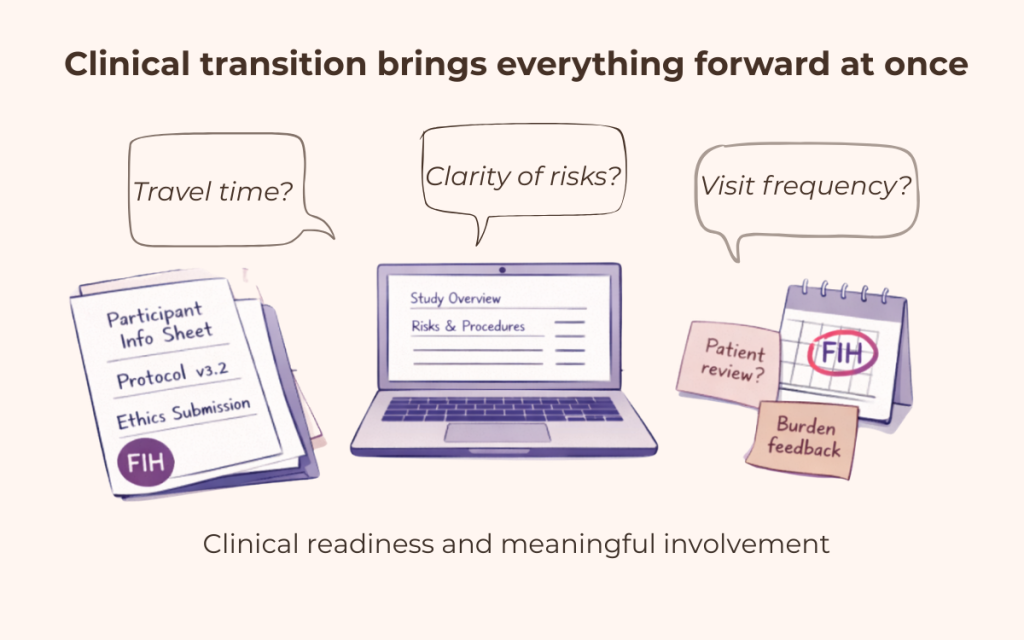
For many early-stage teams, this is also the moment when patient involvement shifts from aspiration to expectation. Some reach this point already in conversation with patients. They’ve explored trial burden, tested assumptions, and started shaping how their research will be experienced in the real world.
Others arrive here and realise they’re building patient relationships at the same time as drafting consent forms.
That’s a difficult place to start and not always the most strategic one. This is where an external, independent perspective can be useful.
When involvement happens late, risk surfaces late too, often at the point where change is hardest. Early identification of practical issues that researchers may not see can significantly reduce the likelihood of trial delays and recruitment challenges. 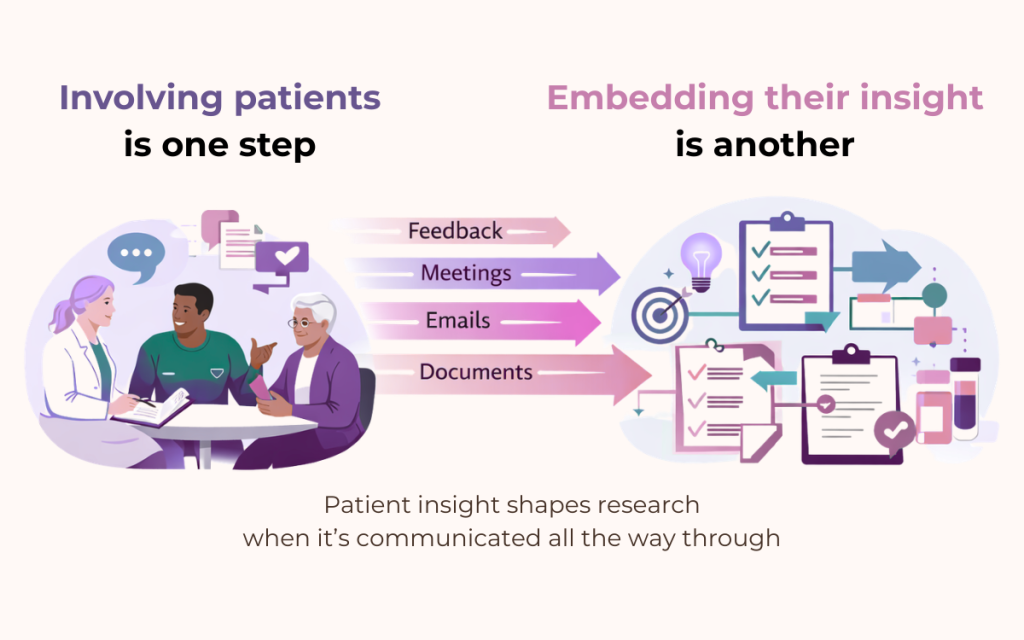
Bringing science and lived experience together is not simply about writing in plain English though. It’s about what you ask, how you listen, and ensuring what’s shared is reflected clearly in the materials you submit.
This step is easy to underestimate and often takes more coordination than expected, particularly in biotech and early-stage research environments where timelines are tight, capacity is stretched and roles overlap. Without clear ownership, valuable insight can sit alongside the work rather than shape it. So, if you’re approaching ethics submission, it’s worth asking not only whether patients were involved, but where their insight is visible in your protocol and supporting materials.
A short, independent sense-check at this stage can prevent a lot of downstream friction.
If your team are looking to work with patients, we’re offering Cambridge Network companies a complimentary 30-minute consultation on your planned or current approach.
To book, please contact [email protected] or if you’re attending the next Cambridge Network Connect event on Wednesday 4th March, feel free to say hi.
PhiZ & Co.
Supporting research and biotech teams in Cambridge and across the UK