- Cambridge Science Park, founded by Trinity College Cambridge in 1970, has today submitted its masterplan for growth
- The privately funded plan will equip the Park with facilities for the industries of the future, while inspiring and supporting the next generation of local innovators
The Science Park, founded by Trinity College in 1970, has created jobs and opportunities in the city and across the country, whilst innovations stemming from the Park have served humanity across the world. The College is determined to ensure that any growth at the Park provides benefits and opportunities for everyone in Cambridge, Peterborough and surrounding towns and villages.
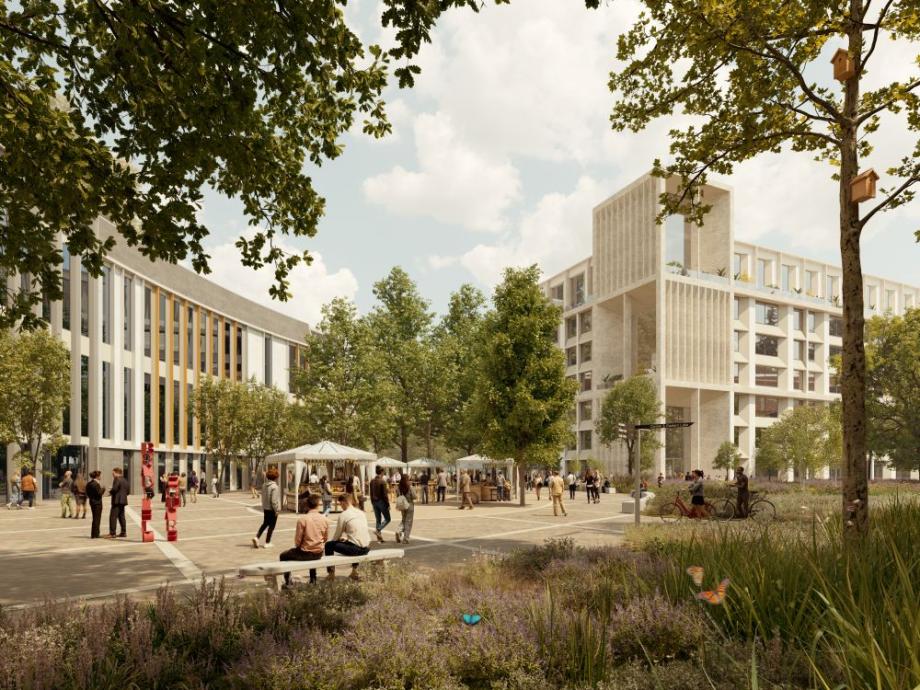
As part of that commitment, a major new Park of Science will be open to tenants, schools and families, featuring outdoor exhibits, an open-air museum and links to the Cambridge Science Centre to make STEM accessible and exciting. This hub for collaboration will connect business leaders with future innovators, sparking inspiration in a place designed to be as educational as it is environmental.
The College is determined to ensure that more children and young people have access to the best possible STEM learning opportunities and has already begun a targeted research programme, working with local educational leaders to understand how best this can be achieved. The College is committed to ensuring that the Science Park gives children in the city and surrounding areas the best possible opportunity to learn and gain the jobs of the future.
Securing planning consent will act as a major economic catalyst for the region, transforming the Science Park into an even more powerful engine for local employment and growth. Building on the 7,500 roles already based on-site, the expansion is set to unlock approximately 20,000 new high-value jobs across the life sciences, technology, and clean energy sectors. This growth will triple the Park’s annual economic output from £1bn to over £3bn. The transformation begins with the construction of state-of-the-art buildings, a process that will generate thousands of local construction and other support roles.
Jane Hutchins, Director, External Relations at the Science Park, said:
“Cambridge Science Park’s success has long extended far beyond the City, and this masterplan ensures the communities closest to the Park will continue to share in its future growth.
This masterplan represents a once-in-a-generation opportunity to refresh and reimagine the Park, delivering greater benefits for local communities in Cambridge and beyond. Our first step is to understand the future needs of the region, so we can maximise our impact.
The result will be a vibrant Science Park, remaining open to the public, helping to nurture and inspire the next generation of innovators. New infrastructure and buildings will support high-quality local jobs, alongside sustainable growth through improved bus links, cycling routes, flood resilience, and biodiverse landscaping, going well beyond planning requirements.”
Dame Sally Davies, Master of Trinity College, said:
“We are immensely proud of the Cambridge Science Park and the remarkable way it has impacted the lives of billions around the globe since its foundation by the college over five decades ago.
"That ambition remains. We know that if the Science Park is to continue to serve the needs of people around the world, it must continue to grow.
"That is why we are submitting a masterplan for the next half century of growth, as a vibrant, collaborative and inspiring place to learn, to work and to enjoy. This plan will see as many as 27,000 people working at Cambridge Science Park, whilst opening up the new Park of Science to the young people and families of Cambridge and the towns and villages around.
“Our plans will ensure that the Cambridge Science Park, like our college and university, continues to stand testament to the power of collaboration: between scientists, between educators and children, between business and research, and between the generations - the scientists of today and those who will meet our world’s pressing needs tomorrow."
Roland Sinker, Chairman of Innovation & Growth, University of Cambridge, said:
"As the UK’s oldest and largest science park, Cambridge Science Park has been a cornerstone of the Cambridge Phenomenon for over half a century. It has been critical in transforming our city from a historic place of learning into a global centre of scientific and technological innovation.
“This masterplan sets the direction for the next 50 years, shaping a place where world-class innovation can thrive in an environment that is open, sustainable and welcoming to all.
“By opening the Park of Science and widening access to STEM opportunities for local children, the Science Park will inspire the next generation of innovators. It will be a place where curiosity is sparked early and ambition can grow. From school pupils to leading researchers, this is where people can be inspired to pursue ideas that change lives - advancing the mission of the University to serve society through discovery and knowledge.
“Nationally, the masterplan is a strong vote of confidence in the UK as a science and technology leader. The Park's expansion will create thousands of high quality jobs, contribute billions to the national economy, and help ensure that the breakthroughs of the future are developed here in the UK.
“This project reflects the strength of collaboration between the University, Trinity, the wider collegiate community and our partners in local and national government. Together, as long-term stewards of Cambridge’s future, we are ensuring our city remains the best place in the world to innovate, while delivering real prosperity for the region and the country as a whole.”
Rebecca Porter, CEO, Cambridge Science Centre, said:
“We are incredibly excited by the opportunities that the continued growth of Cambridge Science Park presents. Growth means more than just physical expansion; it represents a unique chance to further support our work at the heart of one of the UK’s innovation powerhouses. Since Trinity College supported our move to the Park, we have transformed our scale, reaching over 30,000 people in 2025 alone - from our Cambridge centre to dedicated outreach with nearly 1,400 pupils in Wisbech.
What makes this location so vital its proximity to world-leading research, which cannot be replicated elsewhere. We aren’t just interpreting science at a distance; we are translating real-time innovation into accessible experiences for families and schools. This unique ecosystem allows us to act as a living interface between industry and community.
As the Park expands, we look forward to strengthening this civic role within the masterplan. By acting as a visible gateway to discovery, we are ensuring that as the innovation economy grows, it remains deeply connected to the local talent and aspirations on which its future depends."
Neil Tween, CFO of Owlstone Medical who are based at the Park, said:
“The Cambridge Science Park has been key to our growth - from a university spin-out to a global leader in breath biopsy. It has provided us with access to continued talent and space, and the reputation of the Park has helped position the business for success.
“The Park’s continued redevelopment is vital to ensuring companies like Owlstone can start and scale here in the UK.”