Billed as an annual showcase of ideas, discoveries and ‘big conversations’, the festival – which runs from 16 March – 2 April – arrives at a moment of political volatility and technological acceleration. Nowhere is that more evident than in a series of education-focused events that read like a ledger of Britain’s preoccupations.
The programme opens on 17 March with Conflicts on campus: Universities as sites of interfaith encounter, a discussion that reflects the extent to which universities have become flashpoints in wider cultural struggles. From disputes over the Prevent duty and gender identity to student responses to unrest in the Middle East, campuses have found themselves at the sharp end of religion- and belief-related tensions. Yet there is little sustained research into how students – particularly those for whom such debates carry deep religious significance – navigate these pressures. The session, with Dr Lucy Peacock, Senior Research Fellow at the Woolf Institute, asks whether interfaith initiatives might offer a new grammar for disagreement, or whether universities need more fundamental change in how they sustain dialogue across ideological divides.
The following day, attention turns to one of the most combustible issues in public life. On 18 March, the Faculty of Education hosts Have we lost the ability to debate immigration – and what can education do about it? Although net migration to the UK is falling, public concern remains high and opinion is almost evenly split between those who favour sharp reductions and those who resist them. Similar fractures run through the US and much of Europe. Organisers point to a double bind: fears of hostility towards ethnic minorities sit alongside a growing unwillingness to engage with people holding opposing views. The workshop asks whether the blame lies solely with inflammatory rhetoric and social media disinformation, or whether schools themselves have failed to equip young people to handle contested questions of identity, belonging and population movement. With short provocations from academics but a strong emphasis on listening, the event marks the start of a wider series on education in an age of polarisation.
On 21 March, two events examine the university and the data that shapes it from different angles. In Inside the secret life of large-scale datasets: How numbers help us transform education, Dr Pallavi Banerjee, Principal Investigator and Director of the Inequalities Action Lab (EIPEC) promises to take audiences behind the scenes of the vast datasets that track children’s attainment, wellbeing and school experiences. The argument is that large-scale data allows researchers to see beyond the loudest voices and headline-grabbing extremes, revealing structural inequalities that might otherwise remain obscured. By tracing how ‘messy, raw numbers’ are converted into policy-shaping evidence, the session aims to demystify the machinery behind claims about standards, gaps and progress.
Later the same day, University unpacked: What you don’t learn in the prospectus tackles a question that has grown louder in Westminster and Silicon Valley alike: is university worth it? Acknowledging the financial burden and uncertain returns of a degree, the talk reframes the issue. Rather than dismissing higher education as a poor investment, it asks how students can reclaim a broader sense of purpose – intellectual, social and personal – and make deliberate choices about how to use their time on campus.
Technology’s role in that future comes under the spotlight on 26 March in Beyond LLMs: The advent of Gen-AI in educational paradigms. As generative AI moves rapidly beyond familiar large language models, Dr Ali Al-Sherbaz, academic director for digital skills, Professional and Continuing Education, explores how adaptive, human-centred systems might reshape teaching, assessment and creativity. The tone promises to be neither boosterish nor alarmist, but exploratory: what would it mean to design education around data-driven, AI-augmented learning, and who stands to benefit?
Questions of fairness and opportunity return on 28 March in Education and social justice: Understanding and tackling inequalities in educational outcomes. Drawing on long-term evidence from England, Dr Nigel Kettley, Academic Director in Education and Social Science, Professional and Continuing Education, examines A-level results and participation in higher education through the lens of social class. Despite incremental improvements – particularly for women – socio-economic disparities remain entrenched. Invoking the oft-cited words of Nelson Mandela, that education is “the most powerful weapon you can use to change the world”, the session asks whether that promise has been overstated, and what policies might genuinely narrow the gap.
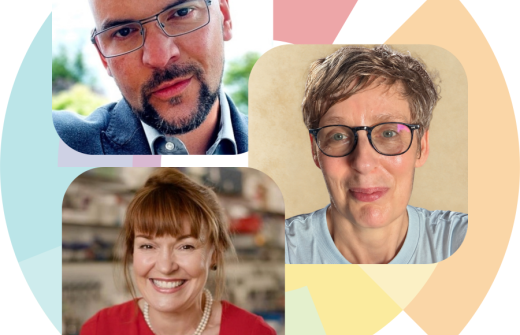
On the same day, Getting ready for school: Tips, stories & fun!turns the spotlight on families preparing children for Reception or Year 1. Researchers, a government adviser and a children’s author will mix creative activities with practical advice on managing emotions, building social skills and navigating sibling dynamics. Amid debates on polarisation, inequality and AI, the session is a reminder that the biggest societal issues often land in the classroom – in the small but pivotal moment when a child first walks through the school gates. Facilitated by Dr Stephanie Archer, with Prof Claire Hughes, Dr Sara Baker, Dr Soizie Le Courtois, Dr Kevin Cheung and children’s author Anita Lehmann.
Across its 360 events, the Cambridge Festival positions itself as a space where expertise meets everyday life. In a year marked by division and rapid change, its wager is that serious conversation still has the power to clarify more than it inflames.
Further details and the full programme can be found at festival.cam.ac.uk. A Pdf of the full programme can also be downloaded here.