One in eight pubs are in severe financial distress and at imminent risk of insolvency, up from one in 10 a year ago, according to new analysis by Price Bailey.
Price Bailey analysed the credit risk scores and balance sheets of all 38,126 pubs and bars in the UK and found that:
- 8,605 pubs (23% of the total population) now have negative net assets
- Of these, 4,800 pubs (56%) are rated in the highest category for credit risk, up from 4,244 a year earlier
- This means 13% of all pubs, around one in eight, now meet both criteria, up from 11% (around one in ten) last year
Price Bailey explains that pubs whose liabilities exceed their balance‑sheet assets are technically insolvent. The Maximum Delphi Risk score is the highest credit‑risk category used to assess the likelihood of default. When both conditions are present, businesses are at heightened risk of cash‑flow insolvency, are unlikely to secure new borrowing without personal guarantees, and are more exposed to creditor action such as winding‑up petitions.
Matt Howard, Head of the Insolvency and Recovery Team at Price Bailey, comments: “These figures reflect a sector caught between rising fixed costs and fragile consumer demand, as stubbornly high inflation and tax pressures continue to erode disposable incomes.”
“The Government’s decision to soften the impact of the 2026 ratings list will come as a relief to many publicans, but the underlying picture remains unchanged. Business rates were only one part of the pressure. Wage costs, tax rises, energy bills and inflation have been eroding margins for years. The rise from one in ten pubs to one in eight meeting both technical insolvency and maximum credit‑risk criteria shows that the structural challenges run far deeper than the ratings system alone.”
He adds: “Although there was a surge in insolvencies after last April’s tax and wage rises, which has moderated somewhat in recent months, the balance sheet position of a growing proportion of pubs continues to deteriorate. These businesses are highly vulnerable to cash flow insolvency and often unable to secure finance without personal guarantees. Many will face winding‑up petitions over the next 12 months unless trading conditions improve.”
Insolvencies of UK pub businesses
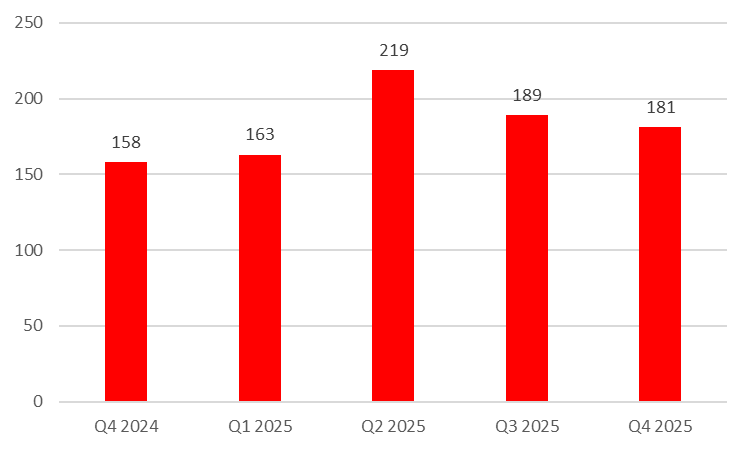
Price Bailey notes that the April 2025 rise in Employer National Insurance Contributions, increases to the National Living Wage, and persistent inflationary pressures have all contributed to the deterioration in the financial resilience of British pubs.
Matt Howard says: “Even as energy prices stabilise, wage costs and business rates remain structurally higher than pre‑pandemic levels. For many pubs, this means that even periods of strong turnover are insufficient to restore profitability.”
“December is usually the month that keeps pubs afloat. When the festive season fails to deliver a strong cash buffer, January and February become far more dangerous. The rise in pubs that are both technically insolvent and at maximum credit risk suggests many operators entered 2026 in a weakened position.”
According to Price Bailey, while some branded and experiential venues continue to expand selectively, the pace of new openings has slowed over the past year, and closures are rising across both independent and chain operators.
Matt Howard says: “While innovative market entrants have bucked the trend in recent years, their growth is starting to stall. Even the more creative concepts, such as craft‑brewery pubs, themed venues, experiential bars, are having to pause expansion or close underperforming sites.”