
The Art of Expertise: Where Confidence and Trust Are Built
This little tale is for my parents, who demonstrate to me daily what it is to have a high work ethic and all the experts at work in the hospitals and life sciences communities around Cambridge, and beyond.
When your heart gives up, long before you do……
There are people who make complex challenges appear deceptively simple. My father, Neville, is one of them.
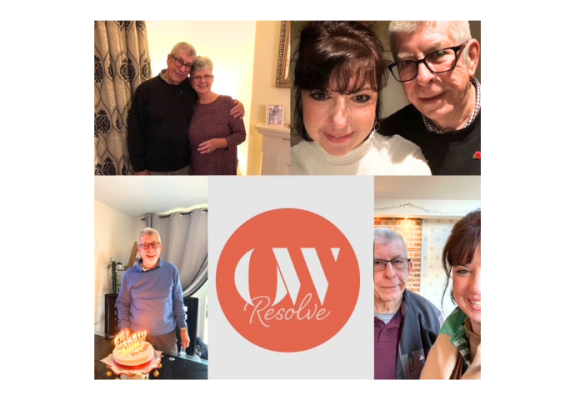
At 81, he is a modern, stylish gentleman of Suffolk: MacBook Pro permanently open, luxury car gleaming on the drive, loves a long chat, laughs at his own (terrible) jokes, and has a social calendar based almost entirely around our family’s collective obsession with birthdays. There are no big or small birthdays, they are all celebrated.
Beyond his routine of car cleaning, tea drinking, conversation, dad-jokes and celebratory cake-based gatherings is a truth we never take for granted: life is fragile. It is fleeting. And the smallest shared moments, the ones that seem almost insignificant, are often the ones that carry value.
My father’s continued ‘main character energy’ presence at these birthday gatherings is, frankly, a miracle of modern medicine. Against all odds, that were not so much stacked against him as aggressively leaning towards doom, he has endured.
What’s more he has endured without complaint, with good humour and a level of stoicism that is rare; and deserves a gold medal.
When asked how he has managed it, he credits three things:
- My mum, his wife of more than five decades, Penny aka “The Duchess”.
- “Keeping positive,” as he puts it, with characteristic Suffolk understatement.
- Seeing the humour in everything. Even the bits where humour seemed wildly inappropriate, we have laughed anyway.
In his younger years he was a marathon runner, a cricketer, a footballer. 20‑mile run before breakfast and a full day of work in financial services was the standard. That foundation of fitness and resilience has paid him back ten‑fold as an older human, facing various serious health challenges.
But, physical resilience alone cannot prepare you for the number of hospital appointments, procedures, operations (minor, major, and mega), phone calls, clinics and consultations he has navigated.
What stands out most clearly when I look back is one word: expertise.
The Effortless Illusion
There is a particular quality shared by people who are exceptionally good at what they do. They make it look easy. Effortless. Almost obvious. Modest.
My father has this calm, reserved competence quality in being himself. The clinicians who have treated him have this quality in medicine. And the synergy between the two has had an incredible result.
Expertise, when deeply embedded, creates calm. A quiet confidence. A sense that the person in front of you not only knows what they are doing, but knows it so thoroughly that they can explain it simply, act decisively and carry the weight of responsibility, without theatrics or drama.
From that confidence, trust emerges.
And trust, real trust, is hard won, challenging to deliver and a privilege to retain.
Expertise in Evidence
In 2015, my father underwent a major, as in a mega-major, heart surgery to replace his aorta plus, almost as a side issue, replacement heart valve procedure at Royal Papworth Hospital, Cambridge.
A place where concentrated expertise is not just present, but palpable.
One memory from that time remains fixed in my mind. We were meeting the surgeon for the pre‑operative consultation.
Mr Pedro Catarino explained the procedure with such modest clarity, such matter‑of‑fact confidence, that on the drive home I joked to Dad that I might as well have a go at it myself on the kitchen table using a few tools from the shed and an industrial stapler. It felt that simple.
Of course, the reality was that the 9-hour plus operation was so complex it required a lunch break halfway through, a cardiopulmonary bypass machine to manage his blood externally from his body and a partial changeover of staff on shift. But that is the point. True expertise does not need to shout. It does not need to intimidate. It does not need to hide behind jargon or showiness.
It simply is what it promises it will be.
Mr Catarino laid out the risks plainly. He compared them to the risks of not proceeding. He answered every question without hesitation. And he did all of this with the quiet assurance of someone who knew, not hoped, not guessed, that he and his team could do the job to the highest of standards.
From that moment, the decision was easy a ‘no-brainer’ as Dad would say. Trust had been earned.
To this day my dad considers Mr Catarino to be a ‘true gentleman’ because he delivered on his promise.
The Collective Genius
Anyone who has experienced major heart surgery, or supported a loved one through it, knows two things:
- It saves your life. Simple as that.
- It hits you like a lorry load of bricks. The reverses back over you, just to make sure.
Recovery is long. It is gruelling. Recovery requires a different kind of expertise.
The kind that has a lighter touch, is endlessly patient, and relational.
Enter the next wave of professionals:
- The specialist nurses
- The Health Care Assistants and Hospital Domestic Staff
- The physiotherapists
- The hospital transport teams
- The GP
- The pharmacists
- And, of course, my mum. The most consistent, feisty and determined expert of them all in husband management; and most others matters too.
Together, they formed a collective far greater than the sum of their parts. Each person brought their own skill, their own confidence, their own contribution to the trust we placed in the process.
The impact was immense.
And my father recovered. Lived to fight another day. His heart still beating.
Replacement valve ticking away in his chest, like he has swallowed a wrist-watch.
Not because of luck. Not because of chance.
But because expertise, when aligned and executed with excellence, becomes a force multiplier.
Add in a lorry load of platinum grade personal determination on the part of your patient, and his wife, and you are onto a winning formula.
Anatomy of Trust
Trust was built through:
- Confidence in the ability to deliver.
Not arrogance. Not bravado. Just the steady, grounded confidence of people who know their skills inside out and back to front. - A clearly explained and agreed process.
Expertise is not only about doing; it is about communicating. Clarity breeds calm. - Excellence in execution.
The part we rarely see, the years of training, the thousands of hours of practice, is what makes the visible part look effortless. - A plan for the next stage.
Trust is not a moment; it is a multi-touch point process. The next step must always be clear and predictable.
A Lesson for All of Us
My father’s story is, in many ways, a story about medicine. But it is also a story about leadership, professionalism, and the quiet dignity of doing one’s job (any job) exceptionally well.
Whether you are a surgeon, a carpenter, a solicitor, a cleaner, a scientist, a teacher, or a bus driver, the same principle applies. Doing your job to the highest standard that you are capable of, is everything to the people who rely on you.
My father continues to live his happy life in a gentle Suffolk village, MacBook on desk, cakes baked by mum ready for the next family birthday. He makes being alive look simple. But behind that simplicity lies a network of extraordinary expertise. Both his own, and that of the people who have cared for him.
It is a reminder that trust is not accidental.
It is earned.
It is nurtured.
And when cared for, it becomes one of the most powerful human forces we have.
Cheers to Royal Papworth Hospital. Here’s to many more birthdays for us all.