
I’m Laura Albini, a Global Compensation Analyst at AVEVA, a Cambridge headquartered industrial software company. I’m also studying for a Master’s in HR Management, and my research explores how an organisation’s pay practices and skills management relate to internal lateral mobility.
The research context
Rapid technological change, including AI, is reshaping the demand for and supply of skills. Skills shortages are now reported across many industries, most notably in technology, making external hiring harder and pushing organisations to focus on developing their internal talent. Reskilling, upskilling and internal mobility are increasingly used to close skills gaps and stay agile.
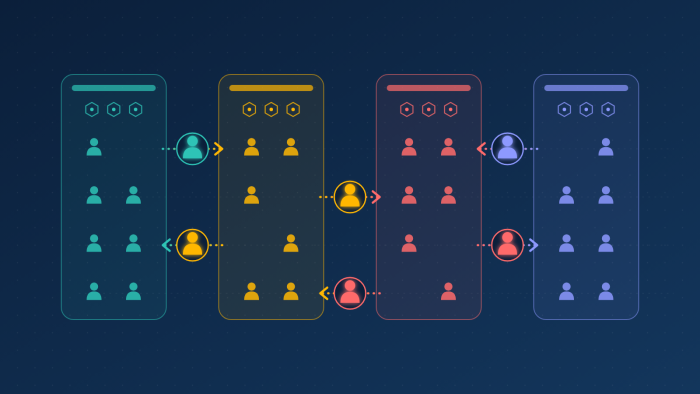
Lateral mobility is particularly interesting as it allows organisations to redeploy talent across projects, functions and business units without relying on hierarchical promotion. Many organisations are investing in skills architectures, skills taxonomies and internal talent marketplaces to match employee capabilities with emerging opportunities.
A focus on skills isn’t new, and it has long been used in manufacturing, where skills are easier to measure. What has changed is that technology, including AI, now makes it far more feasible to track and maintain skills data in near real time.
What I’m exploring
My research examines whether pay practices that incorporate a skills element, together with greater visibility of skills and job opportunities, are associated with higher levels of lateral mobility. The underlying idea is that these practices could help organisations deploy talent more effectively, while giving employees more opportunities to develop in other parts of the business.
How you can help
I’m currently recruiting participants. If you are an HR professional working in any organisation, in any sector or industry, I’d be grateful if you could spend 10-15 minutes completing my survey:
https://forms.cloud.microsoft/e/Rrm8D4AwRn
I’m happy to share the aggregated results once the research is complete. If you know colleagues or peers who might be suitable, please feel free to pass the link on.
Thank you for your time and support.
Laura
References:
Arora, R. and Beazer, A. (2023) Career experience is enhanced through skills. Available at: https://www.wtwco.com/en-us/insights/2023/11/career-experience-is-enhanced-through-skills
Collings, D. G. and McMackin, J. (2025) Skills-first HR: a key enabler of future global strategy. Organizational Dynamics, 54(3).
https://doi.org/10.1016/j.orgdyn.2025.101140
Jooss, S., Collings, D. G., McMackin, J. and Dickmann, M. (2023) A skills-matching perspective on talent management: Developing strategic agility. Human Resource Management, 63(1), 141-157. DOI: https://doi.org/10.1002/hrm.22192
Kniebel, K., McMullen, T. and Miner, T. (2025) Mind the Skills Gap: Moving From Skills-Based Pay to Skills-Based Reward. Compensation & Benefits Review, 57(3), 214-221. https://doi.org/10.1177/08863687251337554
McKinsey & Company (2022) Taking a skills-based approach to building the future workforce. Available at: https://www.mckinsey.com/capabilities/people-and-organizational-performance/our-insights/taking-a-skills-based-approach-to-building-the-future-workforce
Mercer (2026) Attract and retain top talent by advancing pay-for-skills. Available at: https://www.mercer.com/solutions/talent-and-rewards/skills-based-talent-practices/pay-for-skills/
WTW (2025) Skills-focused organizations see better performance across multiple key metrics of success. Available at: https://www.wtwco.com/en-us/insights/2025/05/skills-focused-organizations-see-better-performance-across-multiple-key-metrics-of-success