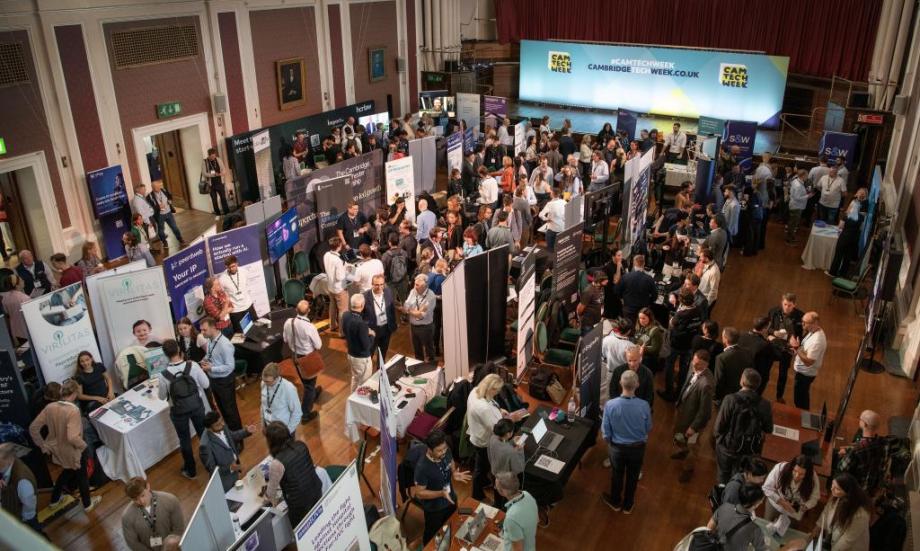
Held from 14-18 September under the theme How Deep Tech Changes the World, this year’s event drew more than 1,700 unique delegates from 52 countries round the world, a 15% increase on last year’s event.
Many of the delegates came from Europe but also from as far afield as New Zealand, Australia, Indonesia, Chile, Singapore, Paraguay and Brazil. Serbia, Finland and Romania also came with Ambassadorial representation.
Across the week, discussions ranged from artificial intelligence and quantum computing to Health Tech, Med Tech, energy, infrastructure and security. But beneath the breadth of the programme was a consistent question: What does it take to move deep technology beyond the laboratory and into the market?
This question was reflected in the strong emphasis on commercialisation, investment and collaboration, with founders and technology companies using the week to meet potential investors, customers and partners alongside researchers and other businesses.
Top-tier keynotes and influential speakers included BenevolentAI Founder, Kenneth Mulvany; AI/AGI author, Calum Chace; CMR Robotics co-founder and CMO, Mark Slack; Balderton General Partner and technology entrepreneur, Suranga Chandratillake; Linkgevity Founder, Dr Carina Kern; His Excellency Mr Teemu Turunen, Ambassador, Embassy of Finland, London; and Catherine Page OBE, Deputy Director in the UK Government's Department for Business, Innovation, Science & Trade (BIST); to name just a few.
Innovation Alley at Cambridge Guildhall brought more than 80 emerging companies and scaleups together, providing a concentrated showcase of the technologies being developed across the Cambridge ecosystem and beyond.
The Cambridge Tech Week Pitch Competition provided another snapshot of that emerging pipeline. Myonerv won the 2026 competition, taking first prize for its wearable neurostimulation technology aimed at helping stroke patients regain movement. The motivation behind the technology was founder and CEO Sam Kamali’s cousin Nader, who, aged 11, suffered a sudden stroke on a playground caused by a bleeding brain tumour from undiagnosed leukaemia.
LAMBDA, a pioneering agritech company revolutionising greenhouse agriculture with advanced photonic materials, also celebrated as the people's choice winner. Both companies shared the £7.5k prize.
The international dimension of the week was also significant, and not just because of the multi-national visitors. The British-Serbian Chamber of Commerce brought more than 20 companies to Cambridge, with eight Serbian businesses exhibiting in its pavilion across areas including AI, telecommunications, cybersecurity, AgriTech, Health Tech and biotechnology.
Cambridge Tech Week also welcomed delegations from Finland, Romania and Estonia.
The programme also examined the infrastructure required to support the next generation of technology, including the energy demands of AI, the development of sovereign computing capability and the implications of dual-use technologies for national security.
The Big Tech Debate brought some of those questions together, examining the increasingly blurred boundary between civilian and defence technology, while dedicated deep-dive sessions explored the development and commercialisation of AI, quantum and advanced health technologies.
For Cambridge, the event points to a broader role for the city’s technology ecosystem: not simply generating breakthrough science, but creating the conditions in which that science can be commercialised, financed and deployed at scale.
Michaela Eschbach, CEO, CWConnected, organisers of the event, said: “Cambridge Tech Week was a powerful demonstration of Cambridge’s global leadership in deep tech. Across five extraordinary days, we brought together the people, ideas and technologies with the potential to change the world, creating connections and conversations that will continue long beyond the event itself.”
This year’s event was made possible thanks to a string of sponsors including HMGCC, Amazon Web Services, NatWest & Coutts, Platform Recruitment, TTP plc, Advantage Austria UK, the Cambridgeshire & Peterborough Combined Authority and Cambridge Consultants.
Photo credit Stephen Bond