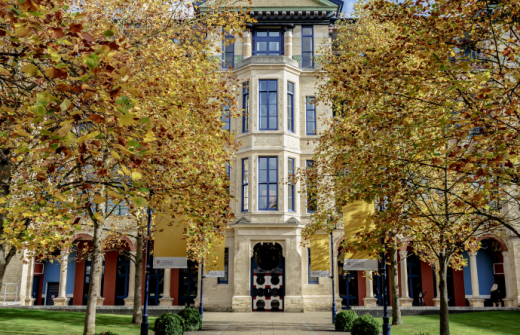
The start of the new academic year at Cambridge means a lot of teaching of the foundations of communication.
The one I cover last is also the hardest…
But arguably, the most important:
- Character
.
There are so many great quotations about character.
As Oscar Wilde is reputed to have said, but may not:
- Be yourself: everyone else is already taken.
As Oasis definitely said:
- I need to be myself, I can't be no one else.
And as I sometimes say, with all my usual hilarity:
- You just can’t fake authenticity.
.
As all those quotations suggest, character is critical in communication.
It doesn’t much matter what it may be, just so long as it’s there, clear and obvious to an audience.
After all, if you compare and contrast the characters of Margaret Thatcher and Nelson Mandela…
You’d quickly conclude they were very different.
But both were also highly effective in influencing, persuading and inspiring, albeit in their contrasting ways.
And much of that was down to their character, or authenticity.
.
So, how to make sure you can be yourself, and be no one else (which might just help you feel Supersonic!):
Here’s an exercise I use, which, I hope, will stay with at least some of my students for many years...
And perhaps even the whole of their lives.
.
First, we discuss a famous character, like Mandela or Thatcher.
Then we agree on a few adjectives, normally six seven, to describe their character.
Next comes the curious, often awkward, but always telling part:
- I get the students to write a similar number of adjectives to describe their own character.
(Whilst reassuring them that they won’t have to read these out, of course!)
.
When they have their own brief outlines of their characters…
I tell the students to keep them, refer to them every day, and ensure their own authenticity is always on show.
Whether in a formal presentation, talking to friends, colleagues and bosses, writing a report, a blog, even a social media post.
And then ask: Is being myself making more of an impact on those around me?
Are they listening more, responding more, am I influencing them more?
.
Then, finally, often after many months, when the students know they're being themselves, whatever the occasion…
I give them the option:
Throw the list away, burn it, or even frame it and put it on the wall.
Whatever, its vital work is done.
.
But most importantly of all:
They know themselves, they can be themselves, and express themselves as their true selves.
Which is critical in communication…
And also, of course, in life.
.
PS. You might be wondering about the picture of the tree, which illustrates this blog.
It wasn’t just chosen as it’s so wonderful.
It's because I always think of that magnificent tree as an example of the beauty of showing your true self.
.
PPS. It's at the Cambridge University Botanic Garden if you want to enjoy the spectacle in person.