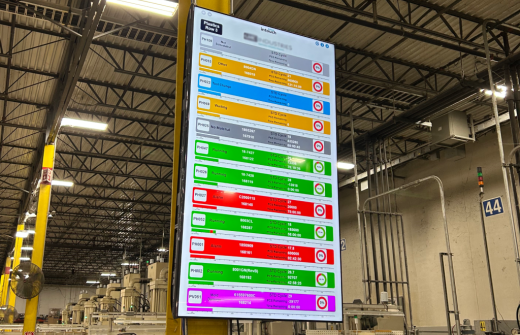
In this day and age, with technology dominating so many aspects of business operations, automation has arguably become the linchpin for progress, particularly for SMEs. Whilst large enterprises have benefited from sophisticated automation solutions, advances in artificial intelligence (AI) and cloud-based technology now make these tools accessible and affordable for small and medium-sized businesses across Cambridgeshire and the rest of the UK.
The salient point about modern automation is that it’s not inherently designed to replace human expertise, but rather augment it. Freeing skilled workers to focus on high-value work, while routine, arduous, administrative tasks are handled by software and algorithms, sounds like a panacea. However, sectors ranging from manufacturing to professional services are seeing more businesses embrace and implement automation, and in turn, they themselves are positioned ahead of the competition who are unwilling or unaware of how to adopt such technology.
This guide explores how Cambridgeshire businesses can leverage automation across key operational areas, using examples to demonstrate practical applications and tangible outcomes.
Entry/Exit Processes and Access Control
Automation isn’t exclusively confined to complex software and application tech which seamlessly performs actions in the cloud without many of us truly understanding how. Sometimes, an impactful change can be as simple as entering, exiting or accessing physical premises. Automated entry and exit systems offer convenience, enhanced security, and improved workflow management for businesses with warehouses or facilities that see frequent vehicle or pedestrian traffic.
Consider automotive workshops and garages, where automated garage doors allow operation via remote controls or motion sensors. As experienced installers Wessex Garage Doors highlight, “Electric garage doors offer many benefits, and the increase in accessibility and convenience is just part of their appeal. They also assure high levels of security”. Eliminating the need for manual button-pressing speeds up turnaround times and logistics, and similarly improves overall asset and vehicle visibility. Most door types, whether up-and-over, side-hinged, roller, or sectional, can be retrofitted with electronic openers, making this an easy first step in automating parts of your business.
The same principle applies across sectors and industries; for example, distribution centres benefit from automated loading bay doors, professional offices can implement smart access control systems, and retail premises can deploy automated shutters, to name a few. These solutions reduce bottlenecks during peak hours whilst upholding security standards outside operating times.
Centralised Management Systems
Recent FSB data suggests that SMEs now account for 99.8% of the business population in the UK (roughly equating to 5.5 million companies). Scaling and growing SMEs do, often, find themselves under pressure to use an array of incumbent, disconnected systems or software, each with their own costs and limitations.
Such a business may have one platform for project management, another for compliance documents, a third for asset management, a fourth for inventory, and another for third-party customer communications, among others. This fragmented approach is not as effective as if it were fully intertwined.
Contemporary business management systems provide more visibility and oversight across multiple functions and teams, enabling management to automate routine tasks such as:
- Appointment scheduling
- Query handling
- Diary management
- Data entry and aggregation
- Handling business administration
- Sending reminders
For professional services firms, legal practices, and consultancy businesses, similar systems can manage client onboarding, project timelines, billing cycles, and compliance requirements. The key is selecting platforms that integrate with existing accounting software and CRM systems to create a unified operational outlook.
Inventory and Resource Management with AI
For businesses that maintain physical stock, such as car parts, manufacturing components, or retail products that customers can buy in-store or online, manual stock management becomes harder as operations scale upwards. Overstocking ties up capital and storage space, while understocking leads to delays, lost revenue, and disappointed end users.
AI-led inventory management analyses demand patterns, seasonal fluctuations, real-time sales data, and delivery timelines to predict optimal stock levels. Orders can be triggered autonomously when supplies reach a predetermined threshold, with systems recommending particular products based on forecasted demand.
This might mean that when stock levels drop below a certain level, frequently used products can be re-ordered to suit a store’s capacity, reducing long-term storage costs while maintaining sufficient shelf lives. The result is reduced overheads, improved cash flow, and shorter customer wait times, all without requiring staff to manually count stock or reorder every day.
Empowering Teams Through Automation
The most successful automation strategies recognise that technology should empower people, not replace them. The real value lies in how automation frees skilled professionals to focus on work that requires human expertise, creativity, and relationship-building.
Regardless of your sector, whether automotive, manufacturing, retail or professional services, or anything in between, achieving true success requires an investment in training and upskilling for your existing team, rather than essentially telling them that their skills are being overlooked in favour of cost-effective, automated solutions. It’s simply a case of viewing automation as a tool that supports, not threatens, existing roles. If employees buy into the concept and process from an early stage, implement automation initiatives that help them, rather than cast their valuable skills aside. When implemented alongside full team buy-in, automation can improve job satisfaction, help retain skilled talent, and create a more open, transparent workplace culture.
Scalable Solutions for Growing SMEs
With the use of modular, cloud management platforms, automation is no longer the one-size-fits-all proposition it used to be, nor does it require huge amounts of investment capital upfront. As AI consultancy, Insightful AI points out, “AI cost UK projects don’t require massive upfront investments when approached strategically” but it remains important to remember that, “Project scope and data readiness create the biggest cost variations in UK AI implementations”. Many modern solutions can be tailored to match the size, service range, staff count, and growth trajectory of any business. It all depends on the phase and level of complexity a business is at, which can vary from sector to sector.
Small businesses can start with basic booking and customer service automation, then gradually add other functions such as stock or inventory management, accounting, and analytics, and more, as they scale. Many of these cloud-based automation platforms operate on subscription models with manageable monthly costs and no upfront hardware investment.
For Cambridgeshire businesses across manufacturing, professional services, retail, hospitality, and automotive sectors, this flexibility makes automation accessible regardless of current size or technical capability. With the right choices and mindset, even traditionally manual industries can leverage technology to manage growing workloads with confidence.