For many first-time founders, developing a physical product feels like spinning multiple plates at once.
You are refining the concept, evolving the design, sourcing suppliers, tracking timelines, managing cash flow, all while hoping that when the product finally launches, there is still healthy margin left.
The challenge is that ROI rarely disappears because of one catastrophic error. More often, it fades through a series of small, seemingly reasonable decisions made without commercial alignment.
An upgraded material.
A custom component.
An added feature.
A packaging tweak.
Individually, each choice feels justified. Collectively, they can dilute margin, increase operational risk, and complicate scale.
Optimising ROI is not about stripping cost at the expense of quality. It is about aligning commercial strategy with design decisions, ensuring user value, brand positioning, manufacturing realities, and cost structure all work together.
When they do, pricing feels justified, trade-offs become clearer, and growth becomes sustainable.
1. Begin with a Problem That Truly Matters
ROI starts with relevance.
If the issue you are solving is occasional or marginal, you will spend disproportionate effort convincing people to care. Customer acquisition costs climb. Conversion weakens. Profit tightens.
The strongest indicator of ROI potential is existing behaviour. People are already paying, in money, time, effort, or frustration, to manage the problem.
Look for users who:
- Encounter the issue regularly
- Have created their own workarounds
- Can clearly articulate what an improved outcome would look like
Research with intent:
- Focus first on behaviour, not opinion. What happened last time? What did they try? Why did they switch, or not?
- Observe real-world use. Context exposes friction interviews overlook.
- Assess the competitive landscape. What exists? Where does it fall short? Is there space to improve meaningfully?
Translate insight into measurable gains:
- Time reduced
- Steps simplified
- Waste minimised
- Durability improved
- Failures prevented
Tangible value supports pricing. And pricing drives ROI. If customers cannot identify a cost they already bear, the commercial ceiling will likely remain low.

2. Create Maximum Impact Through Simplicity
Once the problem is validated, restraint becomes critical.
Feature creep introduces:
- Higher part counts
- Increased production costs
- Longer assembly times
- More potential failure points
- Greater user confusion
And complexity rarely commands equivalent price uplift. Anchor the product in a single, focused statement:
"This product helps a specific user achieve a specific outcome."
Every design choice should reinforce that clarity.
In physical products, success extends beyond functionality. A product that performs well in prototype but fails at scale quickly becomes a warranty liability, and warranty erodes margin.
Invest where users perceive value:
- Primary touchpoints
- Interface clarity
- Core functionality
- Visible cues of durability
Everything else should remain simple and efficient.
3. Use Product Brand Fusion to Elevate Perceived Value
Maximising ROI has two dimensions: managing cost and justifying price.
Customers are not simply purchasing functionality. They are buying alignment with their values, identity, and aspirations.
Brand is the promise.
Product is the evidence.
If longevity defines your brand, the product must feel robust and repairable.
If simplicity defines it, the interface must feel calm and intuitive.
If sustainability is central, materials and construction must substantiate that claim.
When brand and product evolve independently, coherence suffers. Emotional resonance weakens. Price becomes harder to defend.
When they are conceived together, communication becomes effortless. Trust strengthens. Sensitivity to price decreases. The product begins to reinforce its own value.
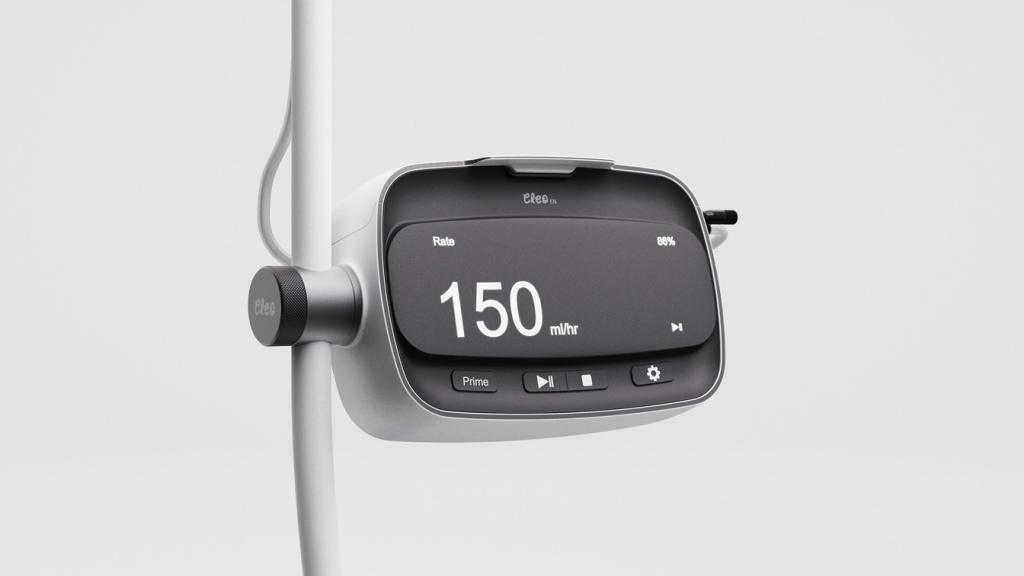
This is product-brand fusion: the deliberate integration of brand identity into the physical and functional expression of the product. When alignment is strong, perceived value increases and margin follows.

4. Approach Value Engineering as Strategy, Not Damage Control
Value engineering is often mistaken for cost cutting. In reality, when applied early, it is a strategic discipline.
With each design decision, ask: what commercial impact does this carry? Does the added cost generate proportional value?
In physical product development, cost drivers commonly include:
- Material usage and scrap rates
- Unique component count
- Manufacturing processes
- Cycle times
- Assembly duration
- Yield and rework risk
- Packaging volume and freight
- Duties and returns
Your target cost of goods must support healthy contribution margin based on your route to market. Ignore this early, and you restrict your future options.
High-impact improvements often involve:
- Consolidating parts
- Reducing unique components
- Standardising fixings
- Designing modular sub-assemblies
- Applying tight tolerances only where function demands it
5. Design for Manufacture from the Outset
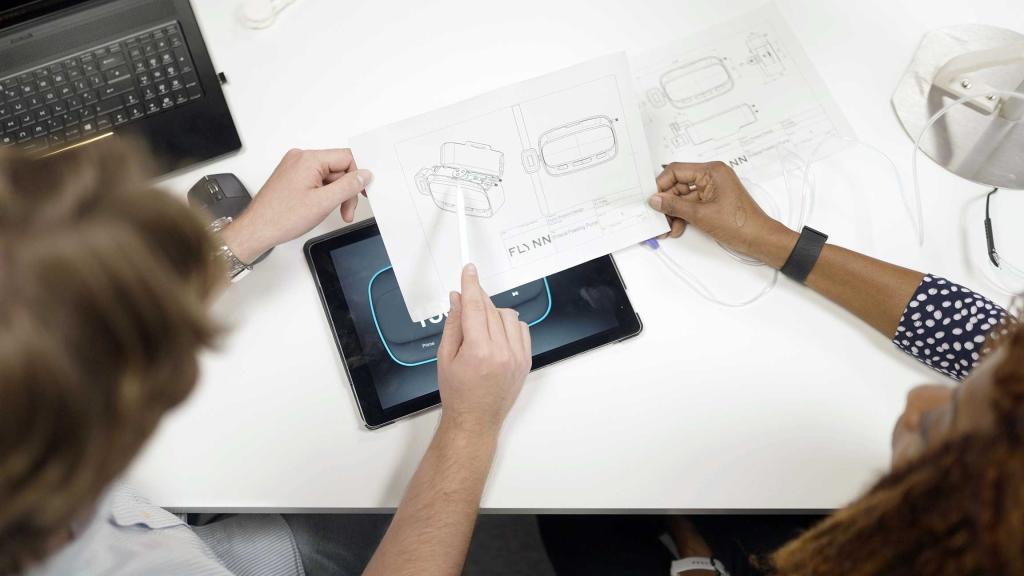
Design for Manufacture (DFM) is where projected ROI becomes tangible.
A product may look refined in CAD, yet prove slow to assemble, difficult to tool, or inconsistent in quality. These weaknesses surface during ramp-up, when modifications are most expensive.
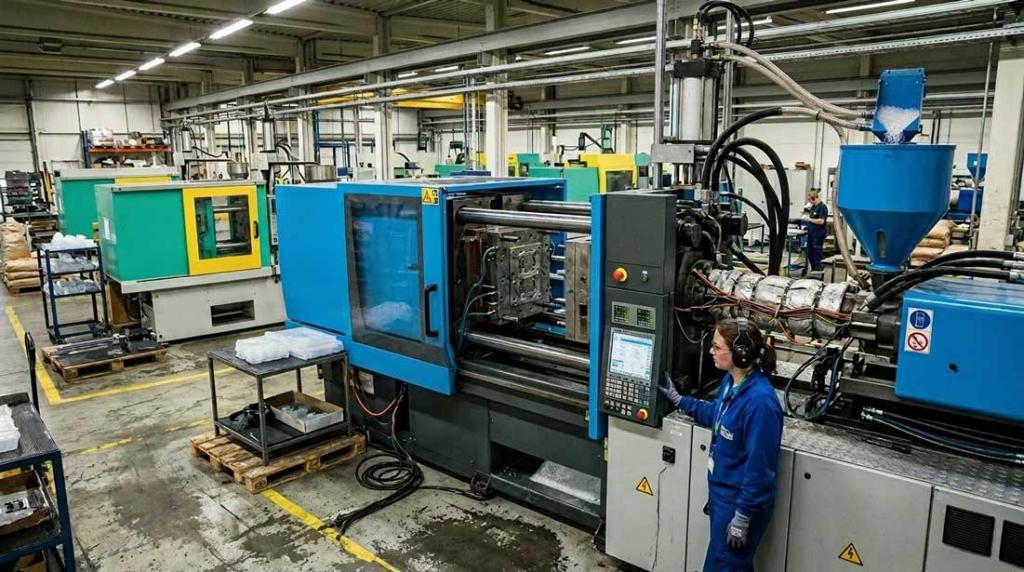
Evaluate manufacturing early:
- Tooling complexity
- Part geometry and count
- Cycle times
- Tolerance requirements
- Quality control systems
- Production risk points
Design for assembly with the same care given to form:
- Minimise steps
- Reduce tool changes
- Limit reorientation
- Incorporate self-locating features
- Prevent assembly errors
Time in assembly converts directly to cost. At scale, incremental inefficiencies accumulate rapidly.
Test under production constraints. Conduct pilot builds. Validate packaging in transit. Address compliance requirements early. Late-stage redesigns carry disproportionate financial impact.
A Guiding Question for Every Decision
Before locking any design change, ask:
Does this increase willingness to pay, enhance delivered value, or reduce risk?
If it achieves none of these, it likely weakens ROI.
Remove it.
A Product Development ROI Checklist
Before committing to production, confirm:
- The problem is validated and commercially meaningful
- The core value proposition remains focused
- Brand and product expression are aligned
- Target cost of goods supports your sales channel
- Manufacturing, assembly, and quality processes are production-ready
ROI is not a financial calculation applied at the end. It is a design principle applied throughout.
Final Thoughts
Maximising ROI in product development is not about restraint for its own sake.
It is about deliberate decision-making.
Deliberate in defining the problem.
Deliberate in shaping value.
Deliberate in managing complexity and cost.
At FLYNN, we have spent over 25 years helping founders translate ideas into physical products that succeed commercially as well as creatively. Small decisions compound, positively or negatively. Our role is to ensure they compound in your favour.
If you intend to build a product that earns loyalty and sustains a business long term, ROI cannot be an afterthought.
It must be designed in from the beginning.
We provide businesses with product design consultancy, industrial design, prototype design & related services.