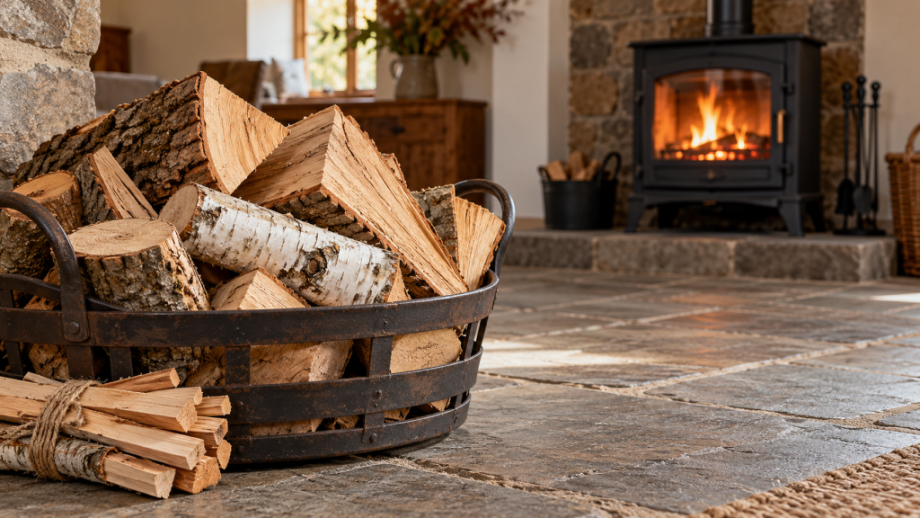
To light a log burner, use dry firewood, build a loose stack with kindling and firelighters above the logs, and follow your stove’s lighting settings. Let the logs establish a steady flame before reducing the air supply.
That top-down approach works well in many modern stoves. The important details are the condition of your wood, room for air to circulate and the instructions for your particular appliance. Here is how to get those details right.
Before you start
Have dry split logs, dry kindling, suitable firelighters, long matches or a lighter, and the protective gloves recommended for your stove ready. A wood moisture meter is useful if the condition of your logs is uncertain.
Read the stove manual first: it sets the permitted fuel, log size, loading limit and lighting procedure. Keep permanent ventilation clear, make sure the chimney and appliance are maintained, and check your carbon monoxide alarm. Keep spare logs and other combustible items outside the manufacturer’s clearance distances.
Choose firewood that is dry enough to burn
For domestic stove use, choose firewood with a moisture content of 20% or less, or the lower limit specified by your stove manufacturer. Wet wood is harder to light because the fire must drive off excess water. It can also produce more smoke and deposits.
Kiln drying and seasoning are two ways of drying logs. Kiln drying uses controlled conditions; seasoning relies on air and time. Properly seasoned wood can burn well too. What matters at the point of use is the wood’s actual moisture content, including whether it has become wet in storage.
When buying logs, check their length, stated moisture content and pack size together. For example, the kiln dried firewood from Ready Set Supplied range includes oak, ash and birch, so you can compare those options while checking that the selected logs fit your firebox.
Which wood is best for a log burner?
Ash, oak and birch are all useful hardwood choices when properly dried. Choose for the way you use the stove, rather than expecting one species to solve every lighting problem.
| Firewood | Useful characteristic | Practical choice |
| Birch | Generally easy to light; a lively burn. | Useful when getting a fire established. |
| Ash | A steady flame and a versatile everyday fuel. | A straightforward choice for regular use. |
| Oak | Dense wood, generally suited to a longer burn. | Useful once a good fire is established. |
These are broad characteristics, not guaranteed burn times. Log thickness, moisture, fuel load and the appliance’s air settings all affect the result. Even oak will disappoint if it is damp or packed too tightly.
How to check firewood moisture
Use a pin meter intended for wood and follow its instructions, including any species or temperature settings. Safely split a sample log and test the freshly exposed inner face, rather than relying on the bark or an old cut end. Check several logs from different parts of the batch.
A surface reading alone can miss a damp centre. If the logs are too wet, set them aside to dry and use a suitable dry batch. More firelighters will not turn wet firewood into good fuel.
How to light a log burner using the top-down method
HETAS and several stove manufacturers describe top-down lighting. The logs sit below the kindling, so the first flames help warm the flue while the larger pieces begin to catch. Follow any different arrangement specified in your own manual.
1. Prepare the firebed and air controls
With the stove cold, remove excess ash as instructed. Some wood-burning stoves use a shallow ash bed; multifuel appliances may have different requirements. Set the air controls to the manufacturer’s lighting position. Do not assume every control should remain fully open throughout the burn.
2. Place a small base layer of logs
Lay a couple of small or medium dry split logs on the firebed, leaving space between them. Keep the stack stable and within the appliance’s loading limits. A modest starting load is easier to manage than a tightly filled firebox.
3. Build an open layer of kindling above them
Arrange dry kindling across the logs in loose, crossing layers. Leave gaps for air. Use pieces thin enough to catch from a firelighter; a few thick chunks are a poor substitute for proper kindling.
4. Position and light the firelighters
Place suitable firelighters in the upper kindling according to the stove and firelighter instructions, then light them with a long match or lighter. Never use petrol, methylated spirits or another liquid accelerant.
5. Follow the correct door position for your stove
Many top-down instructions say to close the door after lighting. Some appliances specify a short period with it ajar. Follow your model’s instructions, stay with the appliance during lighting and never leave it unattended with the door open. Do not use an open ash-pan door to force the fire.
6. Adjust the air once the logs are burning
Wait until the logs have caught and the fire is established, then move the controls towards the normal running settings. Use the condition of the fire and the manual, rather than a universal timer. Avoid starving the flames or trying to make the load last by leaving it smouldering.
Why will my log burner not stay alight?
Check the fuel and the lighting sequence first. Persistent problems can also involve the chimney, ventilation or appliance, so repeated relighting is not always the answer.
| What you notice | Possible cause | What to do |
| Kindling burns, but the logs do not catch. | Wet or oversized logs; insufficient kindling. | Check moisture and log size. When cold, rebuild a smaller, airier starting stack. |
| The fire fades when you reduce the air. | The logs are not established yet, or the setting is too low. | Use the manual’s lighting and running settings. Do not choke a developing fire. |
| The fire dies whenever the door closes. | Fuel, air supply or flue draw needs attention. | Check the specified lighting procedure. If the problem persists, have the installation assessed; do not keep running with the door open. |
| The glass quickly becomes black. | Poor combustion, damp fuel, restricted air or inadequate flue draw. | Check fuel and operation. Arrange professional advice if blackening persists. |
| Smoke or fumes enter the room. | Possible draught, ventilation, blockage or appliance problem. | Stop using the stove and have it checked by a competent installer or chimney sweep. |
If a carbon monoxide alarm sounds, get everyone outside and seek emergency advice. Do not go back in until it is safe. If someone has serious symptoms such as breathing difficulty, confusion or chest pain, call 999.
How to add more logs without smothering the fire
Refuel while there is a useful bed of glowing embers, following the manual. Have your gloves and fuel ready. Open the door slightly, pause, then open it slowly. Add the recommended amount of wood without blocking the air gaps and close the door.
Allow the new logs to ignite using the specified refuelling settings before returning to normal operation. Adding a large load to a nearly extinguished fire can leave the new wood struggling to catch.
Keep your firewood dry between deliveries and use
Store logs off the ground, sheltered from rain and with good airflow. A roofed, ventilated log store protects the top of the stack without enclosing damp wood in an airtight cover. Avoid packing the logs so tightly that air cannot move between them.
Keep already-dry logs separate from freshly cut wood, and check any batch that has been exposed to wet weather. Buying dry fuel is only the first step: poor storage can undo that work. Do not use the stove or hearth as a place to dry damp logs.
Firewood and log burner questions
Should the air vents be open or closed?
Use the lighting setting while establishing the fire, then the normal running setting once the logs are burning. Control layouts vary, and a stove may have more than one air supply. The manual is the right reference for which control to move and when.
Can you light a log burner without kindling?
A purpose-made starting product may be suitable if the appliance manufacturer allows it. Otherwise, dry kindling gives the flame a manageable next step between the firelighter and the logs. Large logs alone are much less forgiving during a cold start.
Are kiln dried logs better than seasoned logs?
Kiln dried logs offer a convenient route to dry fuel, but properly seasoned logs can also be suitable. Compare the actual moisture content, condition and dimensions. Neither label compensates for damp storage or an unsuitable log size.
Can you burn pallet wood or treated timber?
Avoid painted, varnished, treated or contaminated timber, and pallets of uncertain history. Use clean firewood approved for your appliance. Do not use household rubbish as a substitute fuel.
What does Ready to Burn mean?
For firewood, Ready to Burn certification confirms moisture content of 20% or less. In England, wood fuel sold in quantities below 2 cubic metres for domestic burning must be certified. Check the logo, supplier details and certification number. The certification concerns the fuel; it does not approve every stove or fireplace for burning wood.
Can I burn wood in a smoke control area?
Wood can be burned in an appropriate Defra-exempt appliance in a smoke control area, using the fuel and operating conditions approved for that appliance. Dry logs or a Ready to Burn label do not make an ordinary open fireplace exempt. Check your appliance and local council guidance before use.