
The UK Landscape: Strengths and Challenges
The UK’s life sciences sector is a global leader in innovation, but sustaining that leadership requires fresh capital, new markets, and collaborative R&D partnerships. China’s life sciences industry, now the second largest in the world, is rapidly advancing in biomanufacturing, AI-enabled drug discovery, and precision medicine — offering complementary strengths to the UK’s deep research base and regulatory expertise.
Strengths
- Leadership in genomics, AI drug discovery, and advanced therapies.
- The Golden Triangle accounts for over 60% of UK life sciences venture capital.
- The Midlands region offers complementary strengths in medtech, diagnostics, and manufacturing, anchored by networks such as Medilink Midlands and innovation consultancies like TBAT Innovation.
- The North of England — including Greater Manchester and Leeds — has growing medtech and diagnostics clusters supported by organisations like the Northern Health Science Alliance (NHSA).
- Scotland’s Edinburgh–Glasgow corridor is strong in precision medicine and data-driven health, supported by initiatives like Scotland’s Life Sciences Strategy and innovation hubs such as the BioQuarter.
- Northern Ireland’s Belfast is developing as a centre for precision diagnostics and cancer research through institutions like the Centre for Cancer Research and Cell Biology and Invest Northern Ireland.
- Regulatory frameworks across the UK remain conducive to early-stage clinical trials.
Challenges
- Early-stage funding gaps: Many innovators, particularly outside the Golden Triangle, struggle to secure seed and Series A funding.
- Limited scale-up capacity: A shortage of GMP-compliant manufacturing facilities slows the path from prototype to market, especially for medical devices and advanced therapies.
- Fragmented regional support: Access to talent, mentorship, and growth capital is uneven across regions.
- Barriers to NHS adoption: Regulatory and procurement processes delay commercialisation for healthtech and medtech startups.
- Global competition for talent and partnerships: The UK competes with the US, Europe, and Asia for top scientific and regulatory expertise.
- Regulatory complexity: Divergent international standards and evolving post-Brexit frameworks can add delays and costs.
These challenges underline the need for coordinated national policy, targeted regional support, and expanded international partnerships.
Where China Could Add Constructive Value
From an innovation perspective, China’s strengths align with several UK needs:
- Strategic capital – Patient, scale-focused investment from institutional and corporate sources.
- Industrialisation speed – Advanced biomanufacturing capacity to help UK firms scale without compromising quality.
- Co-development for global markets – Early collaboration enabling dual regulatory approvals and faster market access.
Investment Trends
After peaking in 2021 at £4.5bn, UK life sciences equity investment dipped sharply in 2023 before recovering in 2024. This volatility underscores the importance of diversifying funding sources, including international investors.
Figure 1 – Investment rebounded in 2024 to £3.54bn after post-pandemic correction.
Technology Hotspots in 2025
AI drug discovery leads activity (28%), followed by precision medicine (22%) and biomanufacturing (15%). These align with areas where China is also investing heavily, suggesting clear potential for co-development projects.
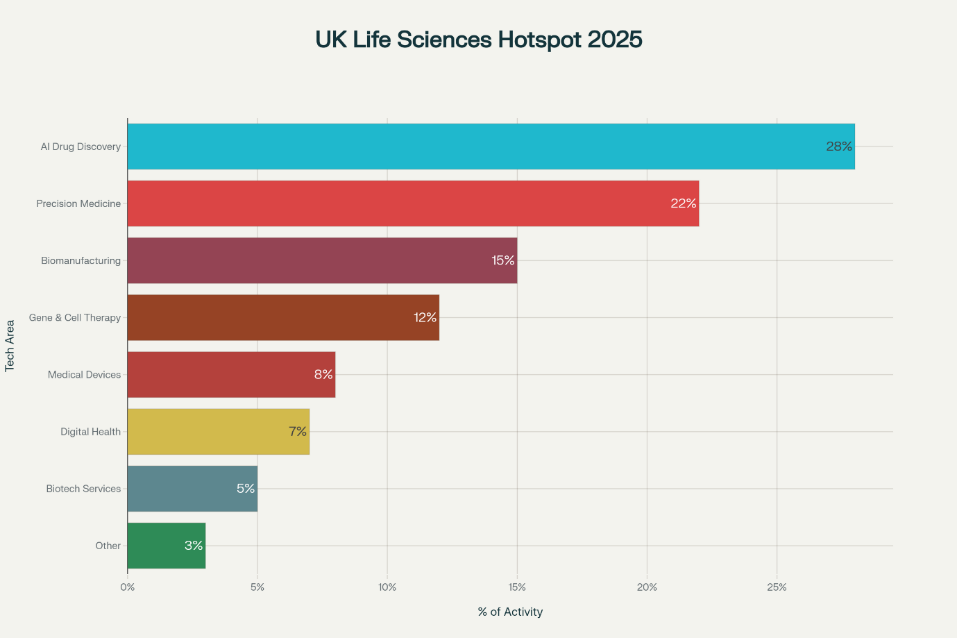
Figure 2 – AI drug discovery and precision medicine account for nearly half of innovation activity.
The Golden Triangle and Beyond
London, Cambridge, and Oxford remain the UK’s primary magnets for investment, but regions like the Midlands, the North, Scotland, and Northern Ireland are building competitive niches in medtech, diagnostics, precision medicine, and biomanufacturing — all vital to a resilient national life sciences ecosystem.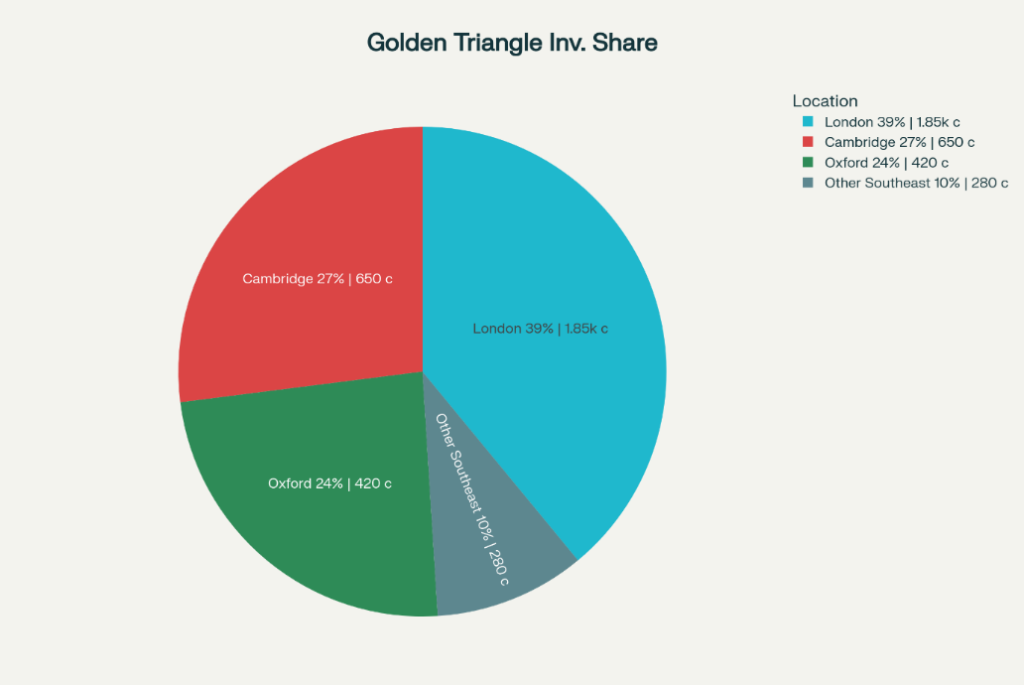
Figure 3 – The Golden Triangle remains the UK’s innovation powerhouse.
Risk Mitigation for UK–China Partnerships
Successful UK–China life sciences partnerships require robust frameworks to address concerns around IP, regulation, and data security:
- Structured IP protection aligned with UK and Chinese legal frameworks.
- Regulatory pathway mapping for dual-jurisdiction compliance.
- Due diligence processes meeting international investor standards.
- Transparent governance to build stakeholder confidence.
EFEC’s Bridge-Building Role
Founded in 2006 and focused on life sciences since 2024, Excellence First Enterprise Consultancy (EFEC) connects UK and Chinese life sciences ecosystems through:
- UK–China Life Sciences Innovation Hub – Currently in its foundation-building phase (2025), with plans to scale from 2026, hosting collaborative R&D, investor engagement, and two-way market access.
- CognateUK – A new talent platform aiming to integrate Chinese-origin STEM talent in the UK into the life sciences economy, using AI-supported academic and career planning to build a high-value talent pool.
- IN2UK and IN2China services – Facilitating smooth, culturally-informed market entry in both directions.
A Distinctive Approach to Collaboration
EFEC’s model draws on 19 years of UK–China collaboration:
- Cultural integration – Operational teams fluent in both business environments reduce friction in cross-border projects.
- Ecosystem building – Creating enduring bilateral platforms rather than single engagements.
- Sector-focused network development – Engagement with Cambridge Network since 2018 and collaboration with Medilink Midlands strengthen connections across the Golden Triangle and the Midlands’ medtech and healthtech sectors. In parallel, EFEC is developing UK and China networks in emerging fields, building on experience in facilitating bilateral collaboration.
- Aligned success – Long-term partnership models linking EFEC’s growth to client outcomes.
Conclusion
The UK’s life sciences sector stands at a pivotal moment. Its recognised strengths in biotech, AI-driven drug discovery, precision medicine, healthtech, and medical devices are supported by a world-class research base and expanding regional innovation hubs. At the same time, funding gaps, scale-up constraints, and global competition for talent highlight the need for smarter, more inclusive partnerships.
By combining the UK’s scientific excellence and regulatory strengths with China’s market potential and industrial capacity, focused UK–China collaboration can accelerate the translation of breakthroughs into real-world healthcare solutions — delivering benefits for both economies and for global health.