While today's businesses explore the challenges and opportunities AI presents for transforming productivity and automation, few people realise that the first successful business application run on a computer took place 75 years ago, and that Cambridge played a pivotal role in making it possible.
Without the pioneering work of Maurice Wilkes and the EDSAC team at the University of Cambridge's Mathematical Laboratory, LEO (Lyons Electronic Office) might never have existed.
In the late 1940s, Maurice Wilkes and his team at the University of Cambridge's Mathematical Laboratory developed EDSAC, one of the world's earliest practical computers. Looking for new ways to improve productivity and business efficiency, J. Lyons & Co., then Britain's largest catering company, provided funding and staff to support the development of EDSAC and used the knowledge gained from the project to develop LEO, recognised as the world's first business computer.
In November 1951, LEO completed a business application in just a few hours that had previously taken teams of clerks several days to perform manually. For the first time, a computer demonstrated that technology could be used to automate business processes, not just scientific or military calculations.
New research commissioned by the Leo Computers Society has found that around 80% of the general public are unfamiliar with LEO, while nearly three-quarters are surprised to learn that Britain, not Silicon Valley, pioneered business computing.
On Saturday 28th November 2026, the Centre for Computing History will host a special celebration exploring the journey from LEO to modern AI. Visitors will discover how a project inspired by Cambridge computing research helped lay the foundations for today's digital economy through exhibits, workshops, talks and a virtual recreation of the original LEO computer room.
The event will also showcase highlights from the internationally significant LEO Archive, which is being preserved and digitised by the Centre for Computing History. The archive contains original technical drawings, manuals, photographs, business documents, correspondence and records created by the LEO’s engineers, programmers and systems designers. These materials give an insight into the emergence of business computing and many of the business management processes still used in modern organisations across the globe.
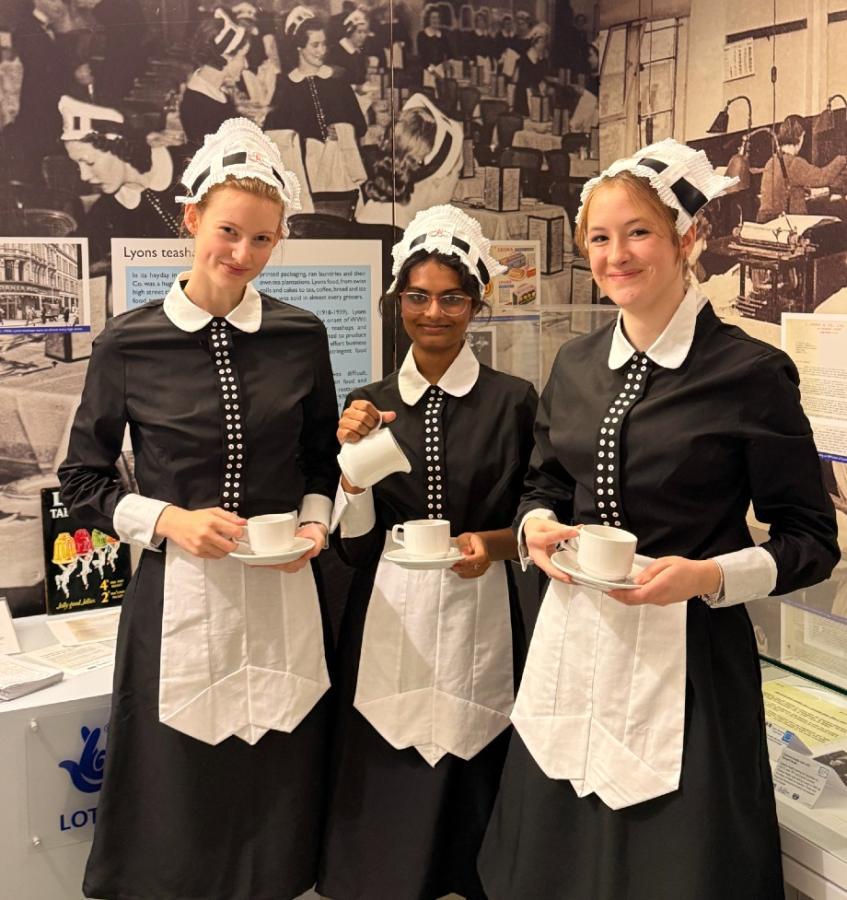
A recreated 1950s Lyons Tea Shop, complete with complimentary tea and coffee, period entertainment, family activities and discounted family admission, will bring the story of one of Britain's most important computing achievements to life for a new generation.
Lizzie Salter, Museum Director at the Centre for Computing History, said:
"LEO marks the point where computing moved from the laboratory into the workplace. Today’s questions about AI, productivity and automation have their roots in the same challenge that inspired LEO more than seventy years ago: how can technology help people work more effectively? This anniversary provides an opportunity to learn more about Cambridge's role in that story and the remarkable innovators who helped create the foundations of modern business computing."
The event forms part of nationwide celebrations organised by the Leo Computers Society to mark 75 years since LEO's first successful operational run.