
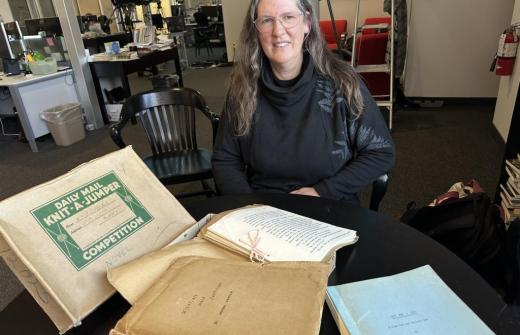
From family archive to stage: the remarkable journey of ‘Not for a cat’ play at the Cambridge Festival
The upcoming Cambridge Festival is set to feature the premiere of Not for a Cat: A Play for the Nuclear Age on 5 April, a play originally written in the 1950s by Wallace R. Harper, a student at the Cavendish Laboratory at the University of Cambridge in the 1920s.

Unlocking the mysteries of the brain: highlights from the Cambridge Festival
As discussions around mental health and cognitive wellbeing continue to dominate headlines, the Cambridge Festival (19 March - 4 April 2025) offers a timely, in-depth exploration of the brain’s complexities.
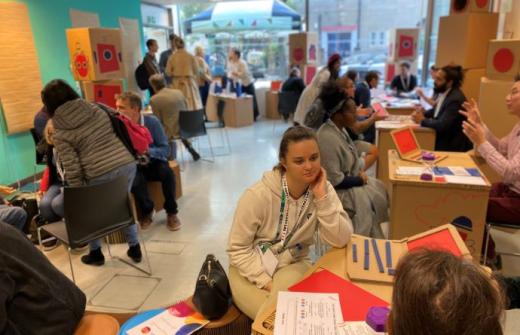
Exploring the impact of artificial intelligence at the 2025 Cambridge Festival
The 2025 Cambridge Festival, taking place from March 19 to April 4, is diving deep into the transformative role of artificial intelligence (AI) on both individuals and society.

Cambridge Festival showcases pioneering health research and innovations in medicine
The Cambridge Festival is returning from March 19 to April 4 with a series of events that bring together cutting-edge health research and the latest innovations in medical science.
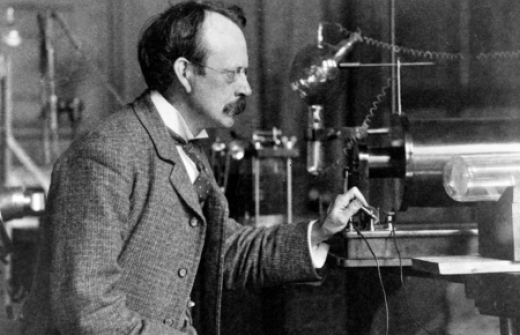
Unlocking the secrets of the past: how Cambridge Festival sheds light on today’s biggest issues
As political extremism, identity tensions, and migration concerns intensify, the Cambridge Festival (March 19 – April 4) emerges as a vital platform to explore how history shapes today's most pressing issues. This timely event promises fresh insights into the challenges of our time, offering a compelling opportunity for reflection and conversation.

Cambridge Festival 2025: tackling crisis, controversy, and change
The Cambridge Festival 2025 will take place from March 19 to April 4, bringing together experts, activists, and thought leaders to engage in critical discussions and workshops on some of the most pressing political and societal issues of our time.
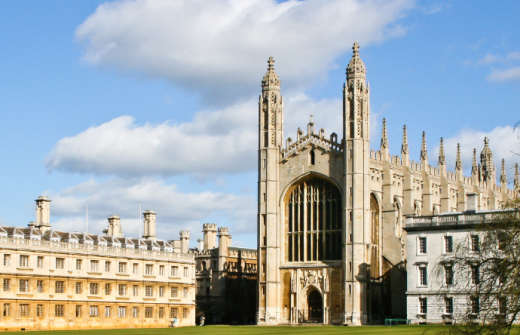
Chancellor of the Exchequer: Cambridge to drive rapid research-led economic growth
Cambridge is at the heart of Government plans announced today to go ‘further and faster’ to kick start economic growth in the UK.
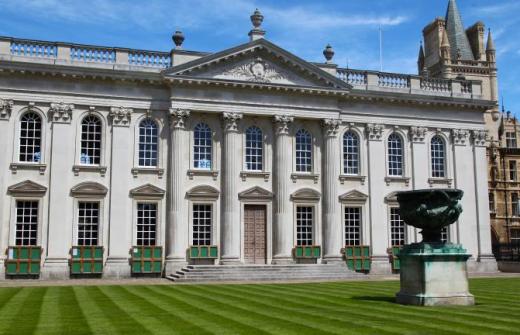
Cambridge talent recognised in 2025 New Year Honours
Academics and staff at both the University of Cambridge and Colleges feature in the 2025 list, which recognises the achievements and service of people across the UK.
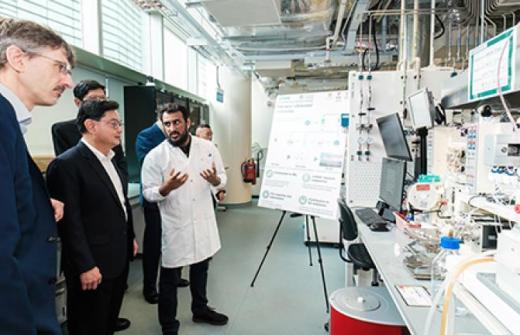
Deputy Prime Minister of Singapore visits Cambridge overseas research centre
Mr Heng Swee Keat, Deputy Prime Minister of Singapore and Chairman of the National Research Foundation (NRF) paid a visit to the University of Cambridge’s overseas research centre in Singapore and viewed its technical capabilities for decarbonisation research.

Planting trees in the Arctic could make global warming worse, not better, say scientists
Tree planting has been widely touted as a cost-effective way of reducing global warming, due to trees’ ability to store large quantities of carbon from the atmosphere.
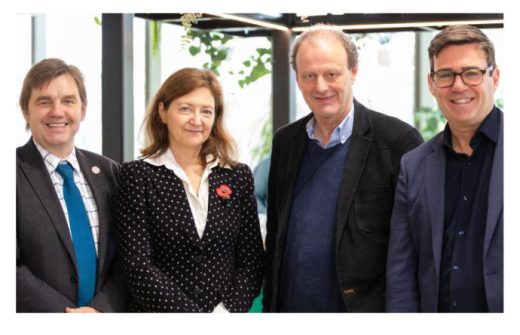
Greater Manchester and Cambridge strengthen Innovation Partnership to drive economic growth
Visit from Manchester Mayor signals a new era of collaboration between two UK innovation hubs with a focus on boosting regional economies and fostering inclusive growth.
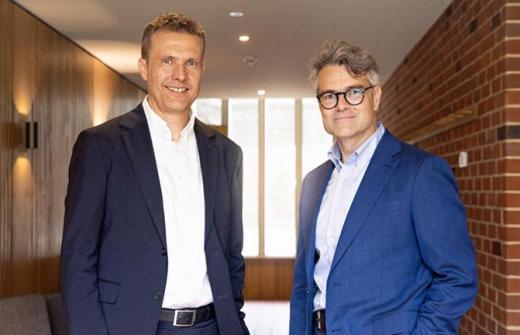
Cambridge and GSK announce new five-year collaboration aiming for improved outcomes for patients with hard-to-treat kidney and respiratory diseases
The ambition of the partnership is to treat immune-related diseases more precisely with existing therapies and to rapidly develop new ones.

University of Cambridge alumni awarded 2024 Nobel Prize in Chemistry
Two University alumni, Sir Demis Hassabis and Dr John Jumper, have been jointly awarded this year’s Nobel Prize in Chemistry for developing an AI model to solve a 50-year-old problem: predicting proteins’ complex structures.

Removing pint glasses could reduce beer sales by almost 10%
Cambridge researchers have shown that reducing the serving size for beer, lager and cider reduces the volume of those drinks consumed in pubs, bars and restaurants, which could have wider public health benefits.

Civil rights icon Reverend Al Sharpton to give youth empowerment speech at Homerton College
US civil rights leader Reverend Al Sharpton will fly to the UK to give a lecture at Homerton College, Cambridge University, on Monday (26 February) about why he thinks young people must be at the forefront of global change.
Historic landmarks and rare gems to be showcased during Open Cambridge
Open Cambridge kicks off next Friday 8th September. The hugely popular 10-day annual event offers over 80 FREE events across the city and county.
University of Cambridge team scale 15 mountains in Wales in aid of Marie Curie
Eight colleagues from the University of Cambridge Estates Division scaled 15 mountains in Wales at the end of June in aid of leading end of life charity Marie Curie.
Free drop-in events at Open Cambridge next month
The annual event boasts over 30 drop-in events and a further 70 bookable events
Assisted dying and a new treatment for Peyronie’s disease form part of a series of health events at Cambridge Festival 2023
Should assisted dying be legalised? Could erectile dysfunction caused by fibrosis (Peyronie’s disease) be cured by a new drug combination? What can dogs teach us about obesity? Why do young people eat what they do?These questions are part of a
Cambridge Festival launches extensive programme for 2023
Could a new theory of the Universe be Stephen Hawking’s biggest legacy? How has popular music addressed political conflict? Are the big tech firms the new colonialists? And is the education system making the crisis in mental health in young women and girls worse?
Hercules Cambridge: a student-led design consultancy
Hercules Cambridge, a Cambridge university society working with firms to deliver engineering solutions, shares details of latest projects.
Early-career researchers win major European grants
Nine Cambridge researchers have risen to the top of over 4,000 proposals to secure prestigious European Research Council (ERC) Starting Grants, the most achieved by any UK institution.
Learning through ‘guided’ play can be as effective as adult-led instruction
Play-based learning may also have a more positive effect on younger children’s acquisition of important early maths skills compared with traditional, direct instruction.
Cambridge launches new Leverhulme Centre for Life in the Universe
With a £10 million grant awarded by the Leverhulme Trust*, the University of Cambridge is to establish a new research centre dedicated to exploring the nature and extent of life in the universe.