

China’s digital ecosystems: what UK organisations often misread
For many UK organisations, interest in engaging with China remains present, even as the global environment becomes more complex. In particular, digital engagement — whether through platforms, partnerships, or customer-facing channels — is often seen as an accessible starting point.

Mission science, AI infrastructure and responsible international collaboration
The UK government’s recent announcement of Sunrise, a new AI-optimised supercomputer at the Culham fusion campus in Oxfordshire, illustrates how scientific ecosystems are evolving. Built to support modelling for fusion energy research, the system represents a growing trend in which advanced computing capability, research infrastructure and industry collaboration are organised around long-term…
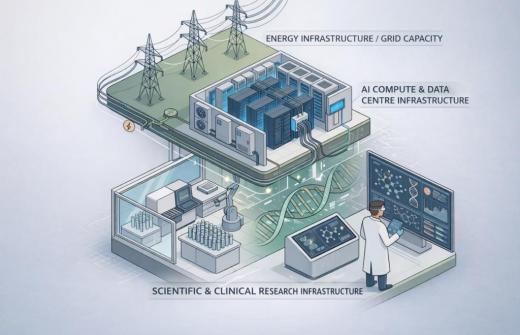
AI infrastructure and grid reform: what it could mean for life sciences ecosystems
Recent discussions about reforming the UK’s electricity grid connection process have drawn attention to rapidly expanding demand for AI data centres. Government proposals to prioritise strategically important projects — including new AI infrastructure and designated AI Growth Zones — reflect a growing recognition that compute capacity is becoming a component of national economic infrastructure,…

When platforms step back: what Unity’s “soft decoupling” signals for UK–EU–China life sciences
Unity’s recent decision to delist China-based developers from its global Asset Store, alongside reports that the company may explore selling its China business, has prompted strong reactions across the technology sector. At first glance, this appears to be a story about the gaming industry. Yet beneath the headlines, it offers a useful lens for thinking about a broader pattern emerging in…

From enrichment to judgement: What should pre-university AI learning look like?
Artificial intelligence and data-driven tools are reshaping modern life sciences at remarkable speed. From genomics to diagnostics, students entering university today will encounter research environments where computational reasoning and biological understanding are increasingly intertwined.

Before Partnership: Why Qualification Determines Whether Innovation Can Scale
Why early governance readiness determines whether proof can become practice

Doing business with China: Governance, trust and decision logic in practice
On 5 February 2026, Medilink Midlands hosted an in-person session on Doing Business with China at Mills & Reeve, Cambridge, bringing together UK medtech and life sciences leaders to explore what effective engagement with China looks like in practice.

Knowing when not to move forward: why pausing is an execution skill in life sciences
In life sciences, progress is often associated with momentum. Funding is secured, proof is generated, partnerships are announced, and timelines accelerate. Moving forward is widely seen as a sign of confidence and capability.
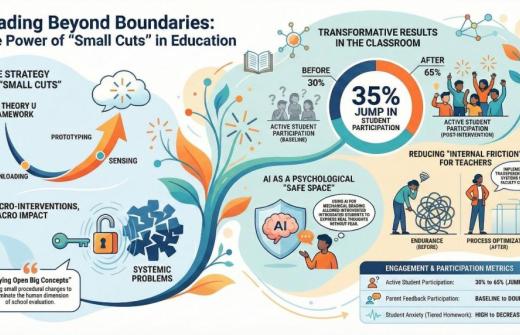
When small changes reveal bigger leadership truths
Reflections from an Action Research Review with School Leaders in Shanghai Pudong.

When market value outpaces human capability investment
Why capability must be treated as infrastructure in life sciences innovation.

Why cultural literacy has become an execution skill in life sciences
In life sciences, execution failures are often explained in familiar terms: regulatory complexity, funding constraints, or technological readiness. Yet in practice, many promising initiatives stall or unravel for a quieter reason — misaligned assumptions between people, professions and systems.

From speed to proof: what happens when innovation meets system maturity
For many founders, the early phase of innovation is familiar territory. A strong idea gains traction, early pilots show promise, and momentum builds around speed — speed to prototype, speed to market, speed to scale.

AI, Credit, and Our Human Future: A Question of Capability, Not Just Technology
Visibility and value: As AI-generated outpu
Life sciences talent development when the half-life of knowledge shrinks
By Excellence First Enterprise Consultancy (EFEC).

Human-centred school innovation: Insights from EFEC’s work with school leaders in China
By EFEC (Excellence First Education Consultancy).

Toward a UK-China healthy longevity dialogue: System-level insights for an ageing innovation-driven future
Note: This article was informed by discussions at a recent International Longevity Centre (ILC) roundtable, which offered valuable framing for understanding demographic transitions and healthy longevity in a global context. The reflections also draw on our current field study in China, where we are observing demographic change, digital adoption and evolving health behaviours across local…


Inside Nanjing’s Biopharma Valley: A new phase of China–UK innovation synergy
By EFEC, UK–China life Sciences Innovation Hub Initiative.

Graduates, AI agents, and the changing nature of work: rethinking human–AI collaboration in life sciences
Human–AI collaboration in life sciences: a vision of scientists, educators, and intelligent systems working together to advance capability and innovation.

The UK's responsible AI ambition: From vision to reality by 2030
Cambridge, London, Oxford and beyond: the UK’s distributed AI ecosystem.

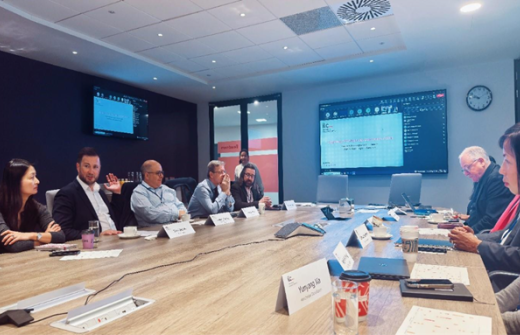
Supporting a thriving longevity economy in China – ILC–UK Round Table
Introduction
On 16 October 2025, the International Longevity Centre – UK (ILC) convened a round table at Phoenix Group in London, chaired by ILC Trustee Tim Fassam, to explore “Supporting a Thriving Longevity Economy in China.”

AI innovation in geriatric care: A global development with UK relevance
Disclaimer - this article is provided by Excellence First Enterprise Consultancy (EFEC) , reflecting our role as a trusted bridge between the UK and China in talent, innovation, and life sciences - connecting people and ideas to advance collaboration across borders.

Why ambition needs new infrastructures: A reflection from the AI era
After spending over two decades working between China and the UK in education and innovation, and more recently focused on the life sciences sector, I’ve started to see a quiet gap — one that affects many entrepreneurs with international ambition. This piece is a reflection on that gap, and why I believe new forms of support are needed in the AI era. By Lily Lin, Co-founder of EFEC and long…

Unlocking China’s next wave of innovation — why it matters for the UK
China is testing a bold new approach to economic growth: a set of “factor market” pilot reforms across ten leading regions designed to make it easier for talent, capital, technology, and data to flow where they create the most value.