Many businesses invest heavily in employee benefits, from free snacks to generous health plans, but the question remains: are these perks genuinely translating into increased engagement and loyalty, or are they just expected amenities now?
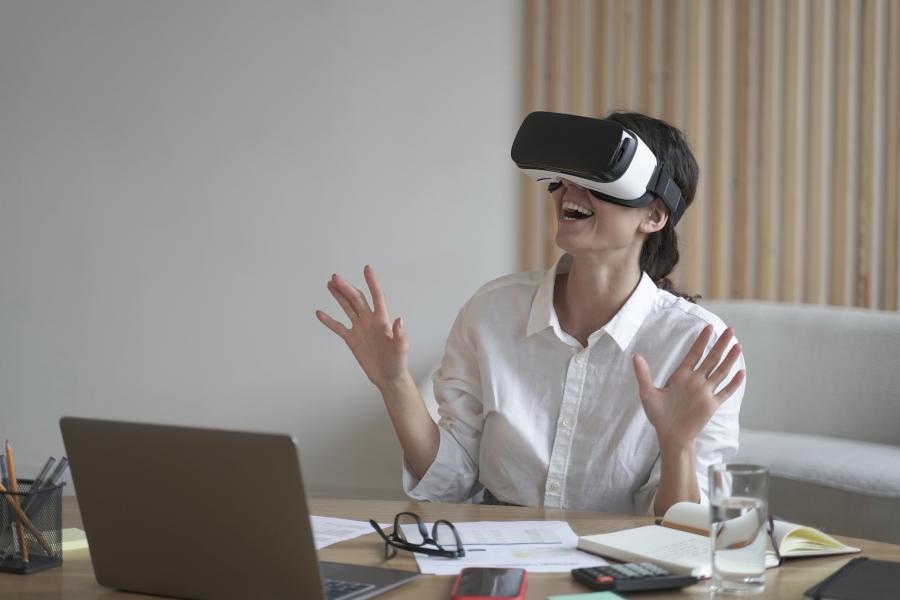
Forward-thinking organisations are discovering that true engagement and motivation at work goes further than these traditional benefits packages. The answer lies in creating immersive experiences that have the potential to transform how employees work, learn, and connect within virtual corporate enterprises.
The Evolution of Enterprise Technology
The corporate world has witnessed a dramatic transformation in how technology shapes workplace experiences. What began with desktop computers and flat-screen monitors has evolved into sophisticated immersive environments that blur the lines between physical and digital workspaces.
More than just a technological advancement, this signifies a fundamental shift in how businesses conceptualise employee engagement, training, and collaboration. The traditional office setup, with its static displays and limited interaction capabilities, no longer meets the dynamic needs of today's workforce.
Immersive Corporate Experiences
Realistic virtual simulations allow new hires to explore workflows, business premises, and customer service scenarios without real-world risks or costs. These repeatable, consistent experiences improve retention and speed up time to productivity, regardless of where they are located.
It provides engaging, consistent training for dispersed teams, replicating the interactivity of in-person sessions. This approach equalises development opportunities, lowers travel costs, and simplifies scheduling across multiple locations.
Virtual environments help employees build communication, leadership, and empathy too, by simulating challenging interpersonal scenarios. Safe, feedback-rich settings encourage learning without real-world consequences, enhancing professional growth.
Collaboration and Communication
Immersive virtual rooms enhance global collaboration by offering more natural interactions than traditional video calls. With spatial audio, document sharing, and 3D model manipulation, these environments boost engagement and productivity, and customisable spaces can improve the meeting experience even further.
Shared virtual environments allow the likes of engineers and designers to inspect 3D models, make real-time changes, and catch issues early. This collaborative approach shortens development cycles, cuts costly revisions, and ensures all stakeholders understand the final product. Meanwhile, AR overlays enable remote experts to guide on-site technicians in real time, improving service quality and reducing issue resolution times. This approach lowers travel costs, supports less experienced staff, and enhances organisational knowledge transfer.
Social and Team Building for Hybrid Workers
In hybrid work environments, where consistent face-to-face interaction can be limited, immersive technology provides a powerful solution for fostering team cohesion and social engagement. These tools blend physical presence with digital innovation, making them ideal tools for building stronger workplace relationships and enhancing collaboration among distributed teams.
Simulation Platforms
High-end simulators recreate realistic sporting experiences—such as golf, racing, flight, and shooting—offering employees opportunities to engage in casual yet competitive activities regardless of weather or location. These platforms support team bonding, client engagement, and wellness initiatives, serving as informal spaces for conversation, laughter, and friendly competition.
The gamified structure encourages participation across all personality types, creating shared memories that strengthen team dynamics. Which platform you choose for creating such experiences will need careful consideration. For example, if golf is a favoured interactive medium, Golf Swing Systems advise that before deciding on a commercial simulator three questions should be asked: who am I aiming to serve, what is my budget, and do I want a radar, a camera or a ceiling-based unit?
Enhanced Interactive Team Activities
AR/VR-enhanced escape rooms and interactive games are another option. These activities combine physical puzzles with augmented or virtual reality, immersing teams in problem-solving scenarios that require communication, trust, and strategic thinking. The blend of tactile and digital interaction reveals individual strengths and uncovers team dynamics in a low-stakes, enjoyable setting. For hybrid teams, such activities re-establish collaborative rhythms and deepen interpersonal connections that may be missing from day-to-day remote workflows.
Employee Wellness and Engagement
VR environments designed for stress reduction and mental wellbeing provide employees with accessible tools for managing workplace stress and maintaining psychological health. These spaces offer guided meditation experiences, virtual nature retreats, and breathing exercises that can be accessed during work breaks or dedicated wellness time. The immersive nature of these experiences provides more effective stress relief than traditional relaxation techniques while offering measurable wellness outcomes.
Similarly, the integration of immersive technology into corporate gyms and wellness programs transforms exercise from a solitary activity into engaging, social experiences. Virtual fitness classes, competitive challenges, and progress tracking through immersive interfaces all increase participation rates and help employees maintain consistent fitness routines. These programmes can adapt to individual fitness levels while providing group experiences that build camaraderie among participants.
Ultimately, the move from traditional employee benefits to immersive corporate experiences is a fundamental redefinition of how organisations create value for their employees and customers. Companies that embrace these technologies aren’t merely offering new perks—they’re building the foundation for more engaged, productive, and satisfied workforces.