
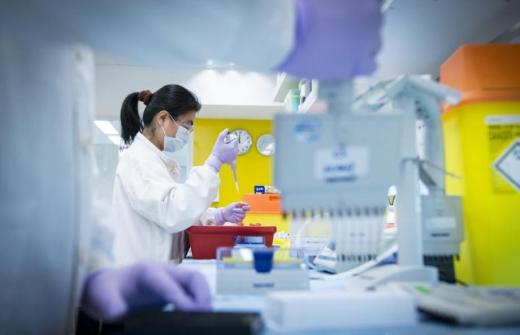
Cambridge and AstraZeneca extend programme to support PhD students
Cambridge and AstraZeneca are extending their longstanding and highly successful PhD programme, the latest chapter in a partnership that has already supported nearly 200 early-career scientists.
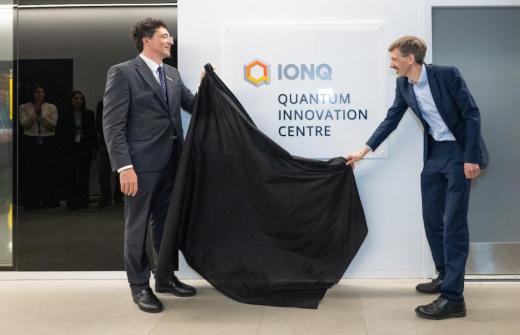
IonQ and the University of Cambridge open the IonQ Quantum Innovation Centre at Cavendish Laboratory's Ray Dolby Centre
Opening marks the next phase of the university's largest corporate research partnership, with a research portfolio spanning quantum computing, networking, sensing, and security.

Cambridge Mind and Brain Institute launches to address challenges facing our brain health
Cambridge announces a new institute focused on understanding and improving brain health across our lifespan, from early childhood through to old age.

Cambridge to lead new £50 million centre to study mitochondrial DNA diseases
The Medical Research Council (MRC) has announced a £50 million investment in the new MRC Centre of Research Excellence in Mitochondrial Genome Therapeutics, which aims to enable new treatments into potentially fatal mitochondrial DNA diseases.
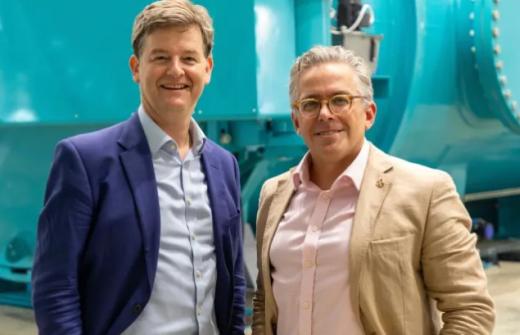
Landmark summit at Cambridge’s New Whittle Laboratory aims to reignite Britain’s industrial engine in aerospace, energy and defence
Frank Whittle Summit – which also marks the official opening of the New Whittle Laboratory – will bring together government, business and tech giants to kickstart innovation missions and potentially add £30 billion in economic value to the UK.

Cambridge receives $34.5million donation for research to help improve the health and wellbeing of autistic people and their families
The University of Cambridge has received US$34.5 million from philanthropist K Lisa Yang to support autism research aimed at improving the health and wellbeing of autistic people and their families. The gift is one of the largest ever philanthropic gifts for autism research to a UK university.

Cambridge South train station opens
Making everyday life, travel and work easier while unlocking new opportunities for innovation and growth.
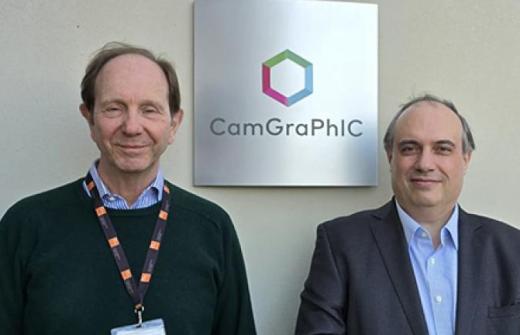
European Commission greenlights €211 million funding for Cambridge graphene photonics spinout
University spinout, CamGraPhIC, has received the EC greenlight for €211 million funding (about £183 million) from Italy to support the development of photonic optical transceivers based on graphene.

50,000 join Cambridge Festival for ideas, debate and discovery
Cambridge turned curious, noisy and gloriously hands on this spring as the Cambridge Festival wrapped its 2026 edition with a surge of public energy, big ideas and record numbers.

Cambridge to establish Rokos School of Government
Record-breaking donation will enable new School to prepare tomorrow’s leaders to tackle the world’s biggest problems.
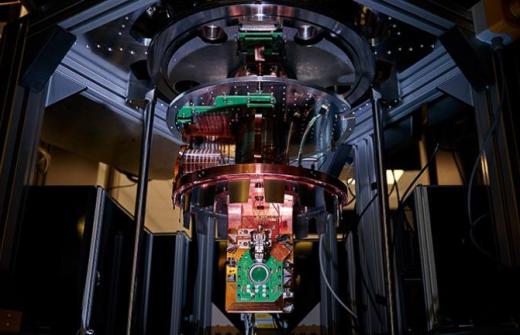
Cambridge launches major strategic partnership with IonQ to ‘supercharge’ quantum research in the UK
The UK’s most powerful quantum computer, which will accelerate research and discovery in quantum science, engineering, and a range of other applications, will be based at the University of Cambridge as part of a new partnership with the quantum technology company IonQ. The collaboration is the University’s largest-ever corporate research partnership.
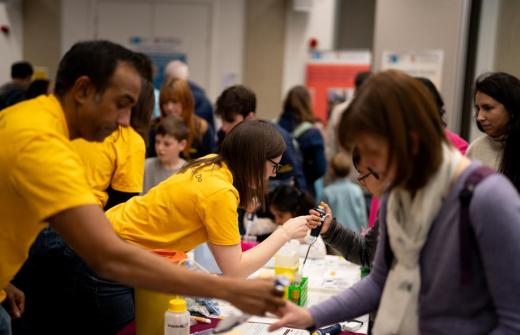
Big Ideas, bold stories – Cambridge Festival launches next week
From peace talks to Georgian theatre rebels: Cambridge Festival gets underway next week.

From classrooms to campuses: Cambridge Festival maps the challenges facing education today
The battle over immigration, the promise and peril of artificial intelligence in the classroom, and the stubborn grip of class inequality on exam results will come under scrutiny at this year’s Cambridge Festival, as the University of Cambridge throws open its doors for more than 360 largely free events exploring the forces reshaping society.

From AI to climate repair: Cambridge Festival returns with bold questions for an uncertain world
What happens when truth fractures, technology accelerates, the climate destabilises, and the world’s centre of gravity keeps shifting at once?
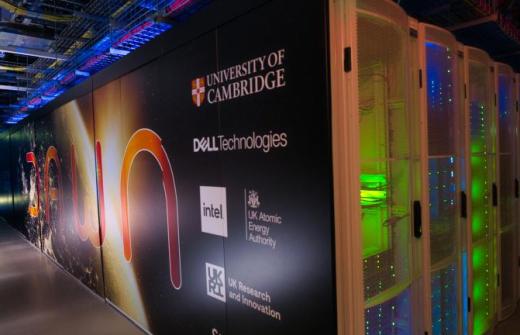
Government funding boost for Cambridge supercomputer
In a boost for UK innovation, the University of Cambridge’s supercomputer is set to get six times more powerful thanks to a £36 million funding injection.
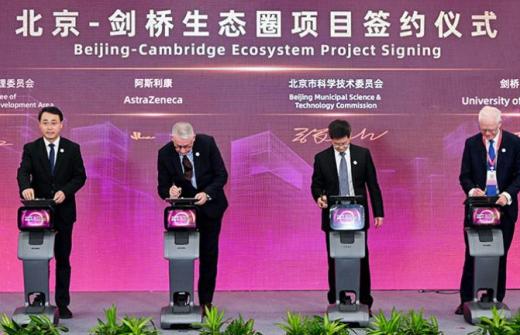
University announces new partnership with AstraZeneca and Beijing municipal parties to accelerate innovations in healthcare
The University of Cambridge, AstraZeneca and Beijing municipal parties (the Beijing Science and Technology Commission and the Beijing Economic and Technological Development Area), have signed an agreement that will enhance collaboration between the University, AstraZeneca and Cambridge and Beijing’s life sciences ecosystems.

Share your views - The Institute for Biomedical Innovation (IBI)
The Institute for Biomedical Innovation (IBI) is a new major investment by the University of Cambridge. Based in the Department of Engineering, the IBI aims to turn early-stage medical technologies into safe, sustainable, clinically ready devices.

Cambridge alumnus awarded 2025 Nobel Prize in Physics
University of Cambridge alumnus Professor John Clarke has been awarded the 2025 Nobel Prize in Physics, jointly with Michel H Devoret and John M Martinis, for their work revealing quantum physics in action.

Join University of Cambridge's Community Engagement Advisory Board
Community engagement at the University of Cambridge is working in new ways - and we want you to be a part of it.

£6.25 million gift to secure the future of pioneering STEM access programmes
Joint major gift to Cambridge and Oxford Universities helps boost initiatives to address challenges in science education and increase the number of pupils progressing to STEM degrees.

British - French research partnership on AI
The Saclay Cluster, which includes Institut Polytechnique de Paris, HEC Paris and Université Paris-Saclay, the University of Oxford and the University of Cambridge, are joining forces to build AI excellence.

Dr Jordan Lane, CSO of Ignota Labs, appointed Industry and Enterprise Fellow of Clare Hall Cambridge
Dr Jordan Lane, Chief Scientific Officer at Ignota Labs, has been appointed Industry and Enterprise Fellow of Clare Hall, Cambridge, for his extensive experience in the AI drug discovery space.
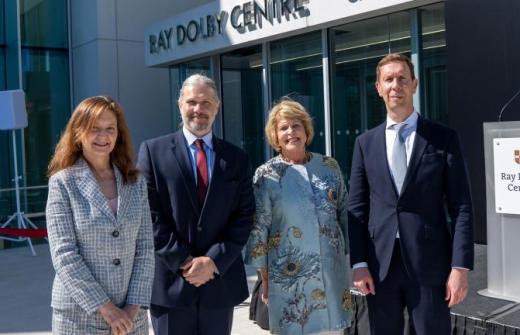
Growth Minister opens Cambridge's Ray Dolby Centre
Lord Spencer Livermore, Financial Secretary to the Treasury and Minister for Growth, visited Cambridge to officially open the Ray Dolby Centre – a state-of-the-art facility that will redefine the future of physics research and innovation in the UK.
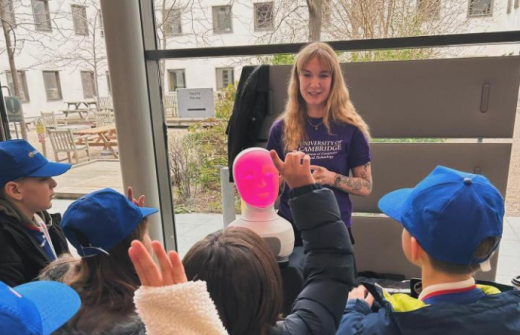
Record-breaking Cambridge Festival 2025 ends on a high, uniting 45,000 visitors in celebration of ideas, discovery and dialogue
The fifth Cambridge Festival has drawn to a triumphant close, having welcomed a record-breaking 45,000 visitors across 385 events during 17 inspiring days.
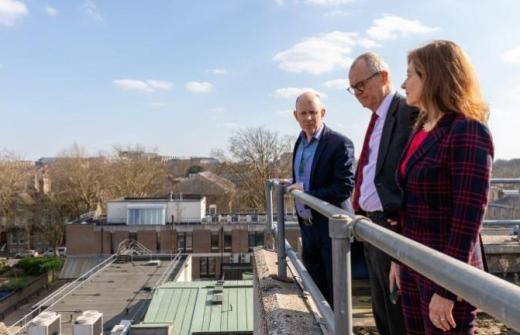
Lord Patrick Vallance, Science Minister and Oxford-Cambridge Innovation Champion, visits Cambridge
Science Minister and Oxford-Cambridge Innovation Champion, Lord Patrick Vallance, visited Cambridge to see how the world’s most intensive science and technology cluster can drive economic growth.