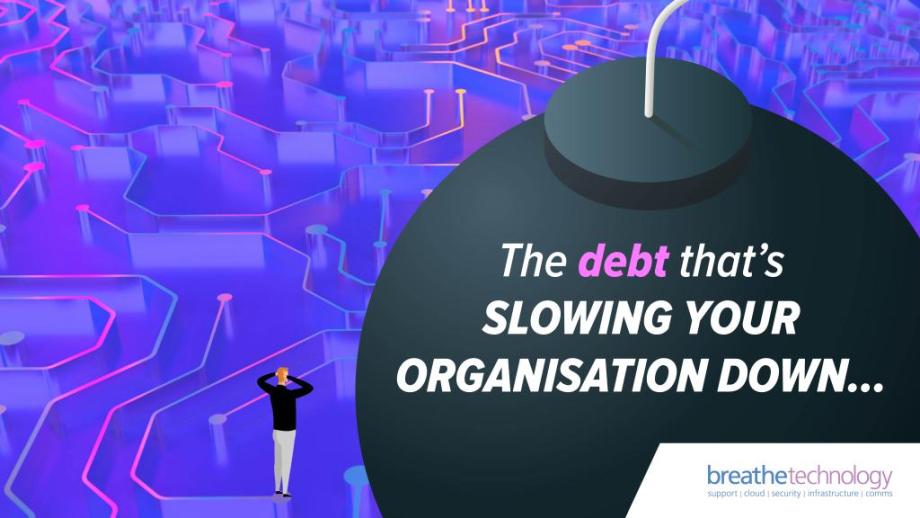
You know that feeling when everything should be running smoothly… but something in your IT just keeps getting in the way?
Not a big dramatic failure.
Just a constant sense that your systems are slower, fussier, or more fragile than they used to be.
That’s usually a sign of technical debt.
Now that Windows 10 has reached end of life, many schools, trusts, and businesses are discovering just how much hidden technical debt has quietly built up over time.
Technical debt happens when organisations delay upgrades or continue using systems that should have been replaced.
The problem is, the longer you leave it, the more it piles up.
Eventually it starts to limit productivity, increase downtime, and open the door to security risks.
A recent survey found that nine in ten businesses are dealing with Windows-related technical debt, and half have already experienced downtime because of it.
It often starts with good intentions.
You keep devices running for another year. You hold onto older software because a key application still depends on it. You postpone upgrades while budgets or priorities sit elsewhere.
But over time, the impact grows.
- Systems become slower and harder to manage
- Staff lose time dealing with small IT frustrations
- Downtime becomes more likely
- Security risks increase
For schools, this can disrupt teaching, administration, and access to learning platforms.
For businesses, it can slow teams down and affect productivity.
A recent survey found that nine in ten organisations are dealing with Windows-related technical debt, and half have already experienced downtime because of it.
Yet only 14% plan to address it soon.
Why the hesitation?
Upgrading can feel like a big step. It takes time, planning, and budget. Many organisations also worry about disrupting systems that still appear to work.
But leaving unsupported systems in place often creates greater risk. Older platforms are more vulnerable to cyber attacks and far harder to maintain.
The good news is that technical debt does not need to be fixed all at once.
A phased approach works well:
- Replace devices gradually
- Move older applications into modern environments safely
- Use automation to monitor and manage risk
- Plan upgrades as part of a long-term IT roadmap
This spreads the cost, reduces disruption, and keeps systems moving forward.
For schools, it supports reliable learning environments. For businesses, it creates a stable platform for growth.
When you deal with technical debt step by step, your IT becomes stronger, safer, and easier to manage.
And with the right foundations in place, your organisation is far better prepared to adopt new technologies, including AI.
If your IT feels slower, more fragile, or harder to manage than it should, ask yourself:
Is technical debt starting to build up in your environment?
We can help you unlock smoother operations and faster growth. Get in touch.
☎️ Camb: 01223 209920 ☎️ London: 0203519012
☎️ Suffolk: 01440592163 ☎️ Sheffield: 0114 349 8054