

Are we still solving the problem we started with?
By Lily Lin, CEO, Excellence First Enterprise Consultancy (EFEC), and Founder, CognateUK.

Built by one person, relied on by many: small AI tools in life sciences organisations
By Lily Lin, CEO, Excellence First Enterprise Consultancy.
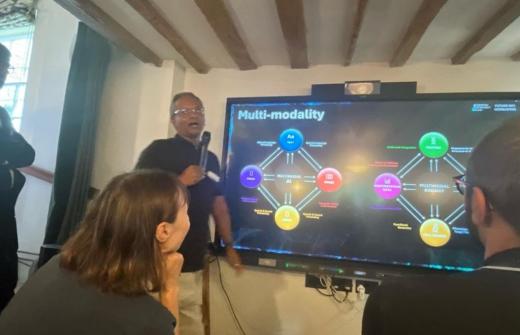
What AI in life sciences looks like up close
Reflections from the Cambridge TechBio Caucus working lunch during Cambridge Tech Week.

What counts as an entry route into work?
By Lily Lin, CEO, Excellence First Enterprise Consultancy.

When a company enters another system
By Lily Lin, CEO, Excellence First Enterprise Consultancy.

Can a life sciences system be read without reference to its anchor?
By Lily Lin, CEO, Excellence First Enterprise Consultancy

Where does judgement develop when AI produces the answer?
By Lily Lin, CEO, Excellence First Enterprise Consultancy (EFEC).
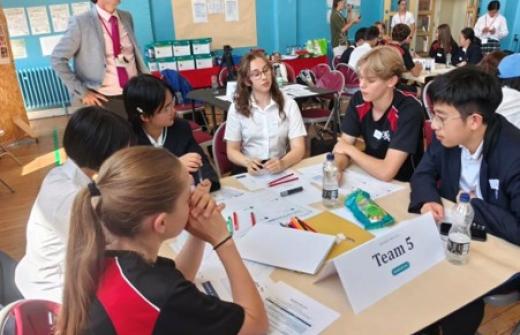
If AI can write the application, what evidence will employers trust?
By Lily Lin, CEO of Excellence First Enterprise Consultancy.

The skills gap in life sciences has not disappeared - what used to close it is changing
The UK's new Life Sciences Jobs Plan sets out how the sector can build the workforce it needs. It also points to something the Plan doesn't quite name: the informal ways professional judgement used to form on the job are changing shape.

The Exposure Gap
What shapes a young person's understanding of work long before they enter it? By Lily Lin, CEO of Excellence First Enterprise Consultancy
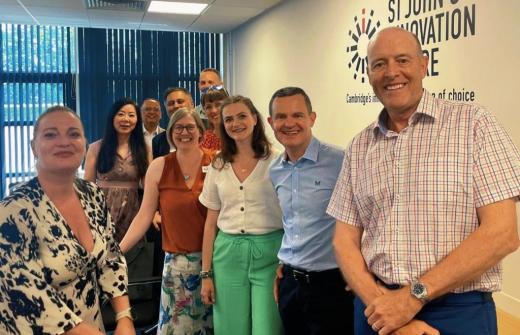
Learn to innovate, innovate to learn
By Lily Lin, CEO of Excellence First Enterprise Consultancy.
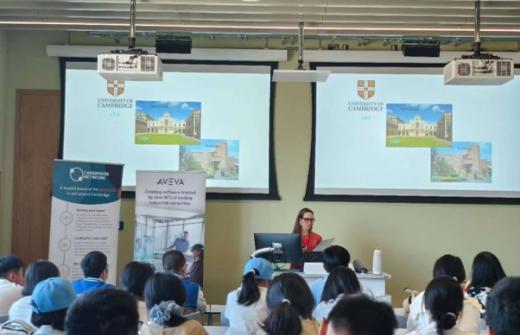
Learning through people, places and innovation ecosystems
International school partnerships can easily become defined by the places students visit. The more interesting question is what students are invited to do once they arrive.

Beyond capability: The questions I’m hearing
By Lily Lin, CEO of Excellence First Enterprise Consultancy.

Beyond assets: access is not navigation
Reflections on the work that makes life sciences ecosystems trusted and usable.

The discipline of not pursuing
How do organisations decide which opportunities deserve attention when time, expertise, capital, and institutional capacity become more constrained?

When capability matters more than performance
Last week, we published observations from the first international delivery of FutureReady — a pilot cohort in China that surfaced three findings about capability formation in high-performing students. One of those findings was that reflective capability and cross-disciplinary thinking do not emerge automatically, even in academically excellent environments. The ISE Student Development Survey,…

What we learned delivering FutureReady internationally: insights from a pilot in China
Reflective capacity is not a by-product of academic achievement; it is a separate capability requiring deliberate cultivation. --- FutureReady (CognateUK)
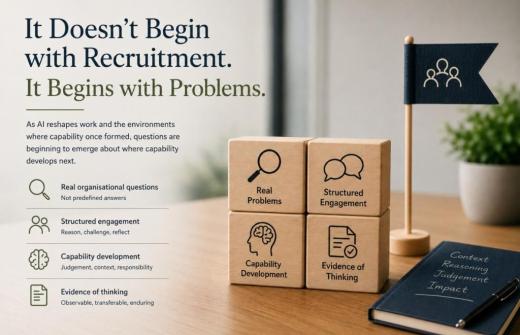
It doesn't begin with recruitment
As AI reshapes the environments in which early-stage capability has historically formed, a quieter question is beginning to surface alongside the more visible debates about productivity and automation: where does that capability now develop, and who is responsible for the conditions that produce it?

When the conversation stalls
Readiness and International Engagement in Life Sciences.

The scaffolding of expertise: rethinking capability formation in an AI-enabled system
Recent reporting from Accenture, Jisc, and the Institute of Student Employers points to a subtle but consequential shift in early-career development. While large-scale entry-level job loss has not yet materialised, a quieter change may already be underway: growing uncertainty about how professional capability actually develops in AI-enabled environments.

The conditions of delivery: navigating the UK’s evolving industrial strategy
The UK’s latest Modern Industrial Strategy Quarterly Update (January–March 2026) points to a more coordinated approach to growth.

From licensing to integration: is decision-making in life sciences moving upstream?
Recent cross-border licensing activity involving China-origin biopharmaceutical assets suggests a subtle but important shift in how global partnerships are being structured. While attention often focuses on total deal value, the more meaningful signal may lie in the underlying terms.

When both sides have rules: What this means for UK–China life sciences collaboration
For UK life sciences businesses engaging with China, the operating environment has become more structured than many still assume. Not because the opportunity has diminished — it has not — but because the conditions for realising it now require a different level of preparation.

Oil, Inflation, and the innovation budget question: what UK-China life sciences collaboration looks like when conditions tighten
Excellence First Enterprise Consultancy (EFEC). When oil moves sharply, life sciences people can be tempted to see it as someone else’s problem. Energy is macroeconomics; biotech and MedTech are innovation. But that separation is usually an illusion.

Divergence as a working condition
Over the past two decades, the UK and China have followed increasingly distinct economic trajectories. The ways in which each system allocates resources, values expertise, and defines progress have not converged — they have diverged.